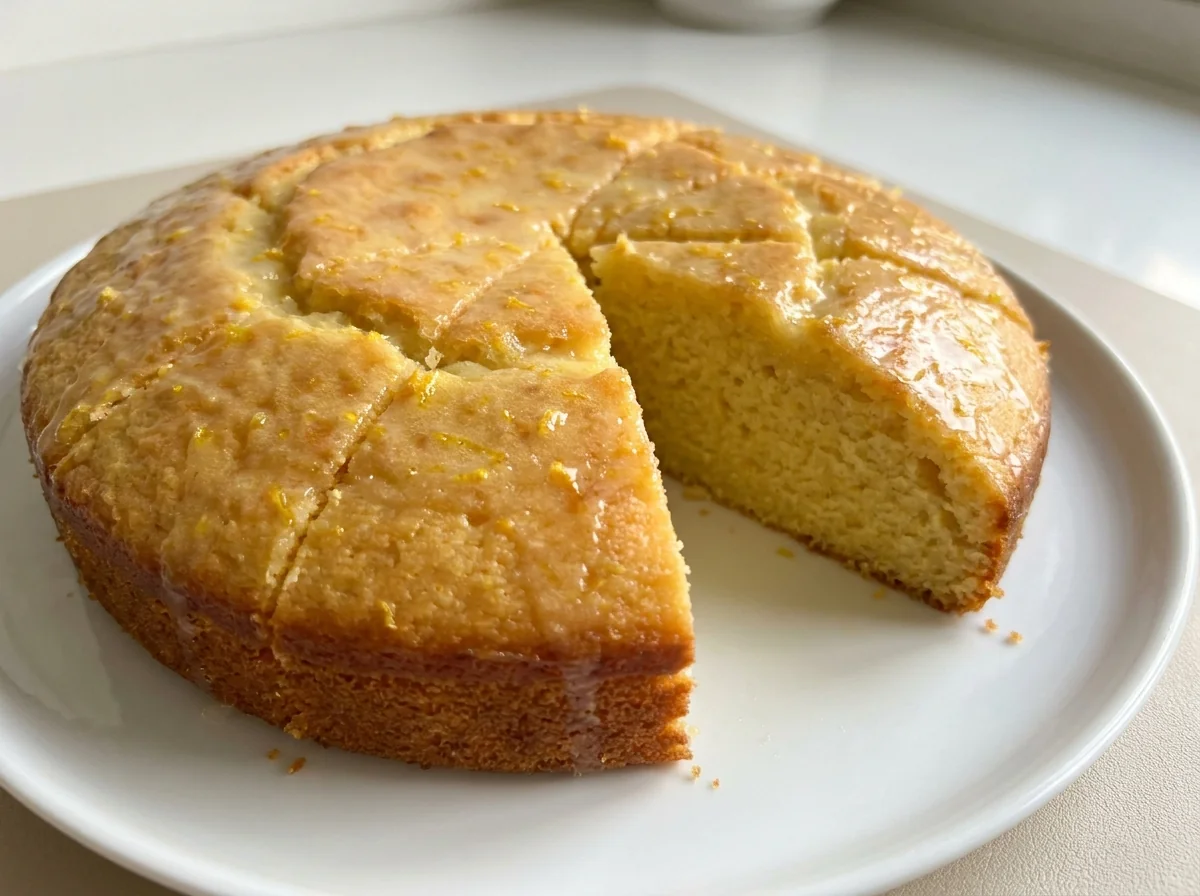
Gateau au yaourt, the yogurt cake, the first cake French children bake: the yogurt cup is its entire measure and it needs no mixer, no scale, and no experience.
The yogurt moistens and the lemon brightens. The cake built to be impossible to fail.
Preparation Steps
The French cup cake. No scale
This is the 'gateau au yaourt' that French children learn as their first cake: the yogurt cup itself is the measure for everything, and our scales above are for anyone who likes precision, the spirit being one.
Rub the zest with the sugar and whisk the wet
The zest of the two lemons is rubbed with the sugar (the familiar citrus rule) then the yogurt, eggs, oil, juice, and vanilla whisked simply with a fork. A cake with no mixer at all.
Fold in the dry without enthusiasm
The flour, baking powder, and salt are folded in only until they disappear. A thick, smooth batter.
Bake the golden loaf pan
A greased English loaf pan at 175 degrees for forty minutes until the famous golden lengthwise crack and a clean skewer.
Soak it with lemon honey syrup while hot
The juice and honey are whisked and poured over the hot, pierced cake. It drinks it in and stays moist for days with a bright sourness: the French tea cake that does not fail.
Blood Sugar Impact
The glycemic index (GI) measures how quickly a food raises blood sugar, while the glycemic load (GL) measures how much a full serving raises it. Together they give the complete picture.
Glycemic Index
GI
68Medium
Low0–55Medium56–69High70+
A low value (≤55) means a gradual rise in blood sugar — the most suitable range for diabetes and insulin resistance.
Glycemic Load
GL
22High
Low0–10Medium11–19High20+
Glycemic load reflects the impact of the full serving. To lower it: take half a serving, or pair the recipe with a source of protein and fiber.
Nutritional Information
Per ServingMakes 10 servings · one serving is about 95 g of raw ingredients
Calories259 kcal13%of Daily Value*
Protein5 g10%of Daily Value*
Carbohydrates33 g12%of Daily Value*
Fat12 g15%of Daily Value*
Fiber1 g4%of Daily Value*
Sodium439 mg19%of Daily Value*
* Percent Daily Values are based on a 2,000-calorie diet per FDA food-label reference values — your daily needs may be higher or lower. Values are derived from the recipe's ingredients via the USDA database.
Troubleshooting
The most common problems when preparing French Lemon Yogurt Cake, and how to fix them:
It came out rubbery
The flour was whisked enthusiastically. Fold until it disappears. The easiest cakes tolerate only the lightest hands.
The lengthwise crack did not appear
Not a flaw, but its absence along with a sinking means a lukewarm oven: an honest 175 cracks it.
Quiet sourness
Zest with no rubbing or a single lemon. The rubbing, the two, and the syrup. Lemon is built in layers.
It stuck to the pan
Insufficient greasing. The grease and flour or parchment paper, and a quarter-hour of rest before turning out.
Storage and Make-Ahead
At room temperature
Four days covered. The syrup keeps it moist.
In the freezer
Slices for two months. The ideal emergency cake.
With hospitality
Five o'clock tea with its plainness, and a slice next to our frozen yogurt is a cafe plate.
Tested Ingredient Substitutions
Original Ingredient
Tested Substitute
Ratio
Flavor Difference
Lemon
Orange or mandarin
~
The whole citrus family
Yogurt
Greek yogurt with two spoonfuls of milk
~
The same texture
A third of the flour
Ground almond
1:1 for the third
A deeper French richness
The syrup
A dusting of powdered sugar for anyone wanting an elegant dryness
~
The two schools of serving
How Much Does It Make? Scaling Guide
Ingredient
1 loaf pan (10 slices)
Half a pan
2 pans
Yogurt
240 g
120 g
480 g
Flour
240 g
120 g
480 g
Sugar
130 g
65 g
260 g
EEINA Nutrition Tip
Soak the cake hot, not cold. The pores of a cake coming out of the oven are open and drink the syrup right in, and cooling closes their doors; and piercing with a thin skewer before pouring are delivery routes: syrup on a cold cake stays a sticky layer over a silent surface. The heat of the moment is the difference between a soaked cake and a glazed one.
Add This Recipe to Your Plan
The EEINA app saves your favorite recipes, calculates them from their real ingredients, and shows your daily numbers toward your goal. Try it free now.
The yogurt cup is the measure, the whisking is with a fork, and failure is nearly impossible. The first confidence lesson in the kitchen: bake it with your children on purpose.
How does it differ from our olive oil orange cake?
That one is Mediterranean with semolina and olive oil, its character strong; this is French with neutral oil and yogurt moisture. Neighbors on the citrus shelf.
How is it counted?
A slice of ~260 calories. A tea cake counted as a dessert: its merit is the simplicity of its ingredients and its full homeliness, not an exceptional lightness.
Does it accept hybridizing?
It is France's white canvas. Berries dusted with flour, or cardamom in place of vanilla, or orange-blossom water: every touch suits it.