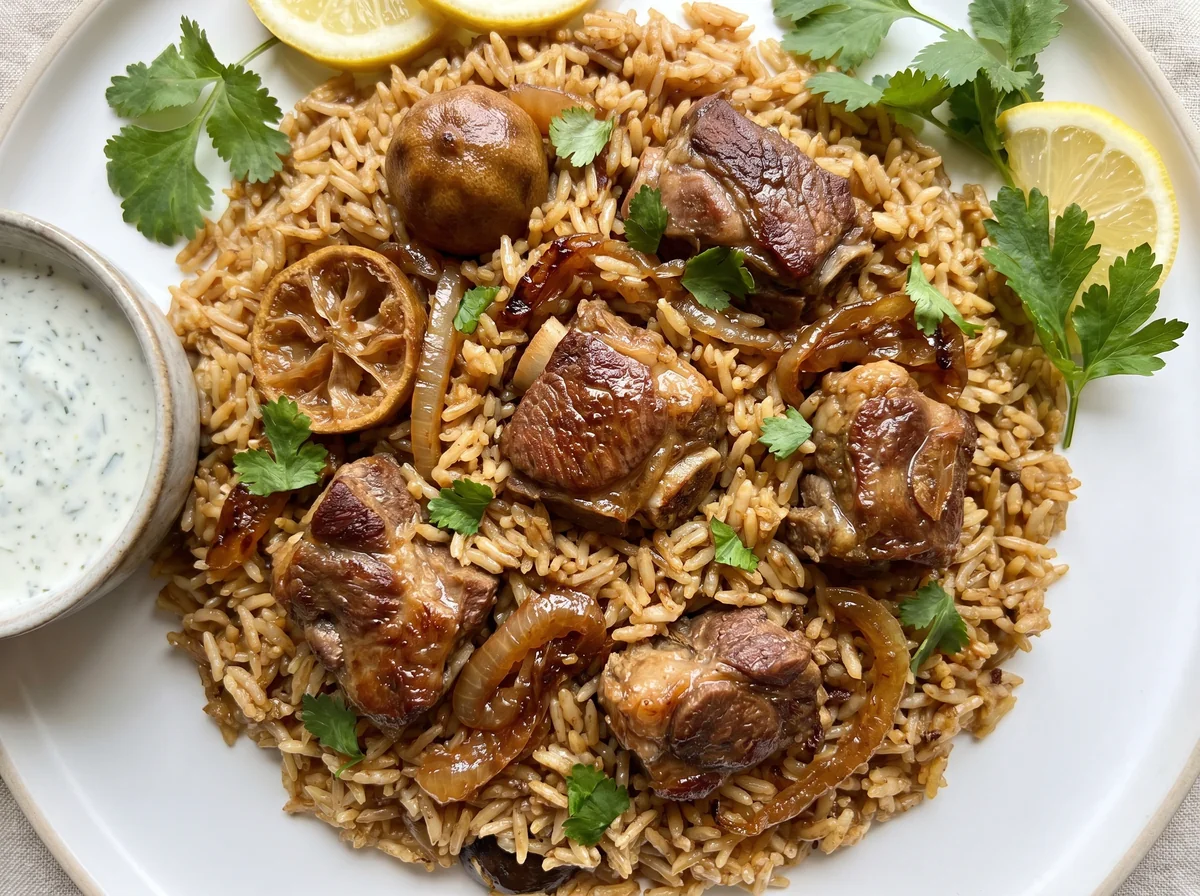
A Gulf pressure-cooker rice dish — lamb, rice, tomatoes, spices, and loomi (dried black lime) cooked together in a pressure cooker so the rice absorbs the rich meat flavor quickly. A fast, hearty lunch dish. May contain trace gluten from spices; free from common allergens.
Madghout is a beloved hearty Gulf lunch dish — its name comes from the pressure cooker (madghout means compressed/pressured) in which it is cooked. The lamb, rice, tomatoes, spices, and loomi (dried black lime) are cooked together in the pressure cooker so the rice absorbs the concentrated meat flavor rapidly (instead of hours of traditional cooking).
Madghout resembles Kabsa (Saudi spiced rice dish) in ingredients and flavor but is distinguished by quick pressure-cooker cooking (for those who want a rich dish without long waiting) and generally a more pronounced tomato flavor. Served with daqoos (spicy tomato sauce), salad, and yogurt. Madghout is a clever practical solution for a rich Gulf rice-and-meat dish quickly — its rice saturated with lamb, tomato, and loomi (dried black lime) flavors is a delight, a symbol of practical Gulf cooking and its generous daily hospitality.
Preparation Steps
Brown the meat
In the pressure cooker, heat the ghee and brown the onion and garlic, then add the lamb and stir until browned. Madghout is a pressure-cooker dish (the name comes from the Arabic word for pressure). It cooks the lamb and rice together quickly, so the rice absorbs the concentrated meat flavor (similar to Kabsa (Saudi spiced rice dish) but faster).
Add tomatoes and spices
Add the grated tomatoes, tomato paste, spices, pierced loomi (dried black lime), and salt. Stir to combine. The tomatoes, loomi (dried black lime), and spices give madghout its distinctive red, tangy, warm Gulf flavor (distinguishing it from Kabsa (Saudi spiced rice dish), which often uses fewer tomatoes).
Pressure-cook the lamb
Add enough hot water to cover the lamb, seal the pressure cooker, and cook until the meat is tender (about 30 minutes under pressure instead of hours). The pressure cooker saves significant time (the advantage of madghout: a rich lunch quickly), tenderizing the lamb fast and concentrating the broth.
Add the rice
Open the cooker safely (after releasing pressure), check that the broth is plentiful and well-seasoned (the rice will absorb it), and add the drained soaked rice. The broth-to-rice ratio is important (approximately double), and adjust salt (the rice needs a slightly seasoned broth to become flavorful).
Cook the rice
Seal the cooker again and cook the rice under low pressure for a short time (minutes), or leave on gentle heat covered until the rice cooks through, absorbs the broth, and becomes fluffy. Take care not to overcook the rice (it turns mushy); rice cooks quickly in the pressure cooker.
Steam and serve
Leave the madghout covered to rest and steam for a few minutes (rice firms up and becomes fluffy), then spread it on a platter and place the meat on top. Serve hot with daqoos (spicy tomato sauce), salad, and yogurt. A beloved hearty Gulf lunch dish (a faster alternative to Kabsa (Saudi spiced rice dish) thanks to the pressure cooker). Its rice, saturated with the flavor of lamb, tomato, and loomi (dried black lime), is a delight — a symbol of practical Gulf cooking and its daily generous hospitality.
Blood Sugar Impact
The glycemic index (GI) measures how quickly a food raises blood sugar, while the glycemic load (GL) measures how much a full serving raises it. Together they give the complete picture.
Glycemic Index
GI
71High
Low0–55Medium56–69High70+
A low value (≤55) means a gradual rise in blood sugar — the most suitable range for diabetes and insulin resistance.
Glycemic Load
GL
63High
Low0–10Medium11–19High20+
Glycemic load reflects the impact of the full serving. To lower it: take half a serving, or pair the recipe with a source of protein and fiber.
Nutritional Information
Per ServingMakes 5 servings · one serving is about 330 g of raw ingredients
Calories692 kcal35%of Daily Value*
Protein29 g58%of Daily Value*
Carbohydrates91 g33%of Daily Value*
Fat23 g29%of Daily Value*
Fiber2 g7%of Daily Value*
Sodium74 mg3%of Daily Value*
Potassium619 mg13%of Daily Value*
Phosphorus341 mg27%of Daily Value*
* Percent Daily Values are based on a 2,000-calorie diet per FDA food-label reference values — your daily needs may be higher or lower. Values are derived from the recipe's ingredients via the USDA database.
Troubleshooting
The most common problems when preparing Gulf Lamb Madghout (Pressure-Cooker Rice), and how to fix them:
The rice turned mushy
Too much pressure or too much water. Rice cooks quickly in the pressure cooker — cook it for a short time (or on gentle heat after the lamb is done) with the correct broth ratio (not excessive). Too much pressure or water mushes the rice.
The rice is raw or dry
Too little broth. Ensure enough broth (about twice the volume of rice) before adding the rice, and add hot water if it dries out before the rice is done. Rice needs enough liquid to soften and become fluffy.
The lamb is tough
Too short under pressure. Cook the lamb under pressure until completely tender before adding the rice (about 30 minutes for lamb). Tough meat ruins the dish — the pressure cooker tenderizes it quickly but needs enough time.
The flavor is bland
Too few spices, loomi (dried black lime), or seasoning in the broth. Make the broth rich and well-seasoned before adding the rice (the rice absorbs its flavor) — use loomi, spices, tomatoes, and enough salt. Bland broth gives bland rice.
Burnt bottom
High heat or too little liquid when cooking the rice. Cook the rice on gentle heat with enough broth, and you can coat the bottom with a little fat or broth. Gentle heat and adequate liquid prevent burning (or intentionally keep the prized crispy crust layer).
Storage and Make-Ahead
Refrigerator (4°C)
Madghout keeps in a sealed container in the refrigerator for 3 days. Reheat with a splash of water (to refluff the rice) over gentle heat or steamed. Separate the meat from the rice for better reheating if desired.
Freezer
Madghout (rice and meat) freezes for one month in a sealed container. Thaw and reheat with steam or a splash of water. Frozen-then-reheated rice is lower quality than fresh, but practical for portions.
Advance preparation
Prepare the lamb and its seasoned broth in advance (keep refrigerated or frozen), then add the rice and cook it fresh at serving time (rice is best fresh). This speeds up serving a rich meal.
Food safety
Cook the lamb until fully done, follow pressure cooker safety instructions (release pressure before opening), cool leftovers quickly, do not leave unrefrigerated for more than two hours (cooked rice is sensitive), and reheat thoroughly.
Tested Ingredient Substitutions
Original Ingredient
Tested Substitute
Ratio
Flavor Difference
White rice
Brown rice, mixed rice, or a smaller portion
same amount
Lowers the high glycemic index and load. Brown rice adds fiber (needs more time and broth); smaller portion lowers the load.
Lamb
Chicken or lean meat
same amount
Chicken is lighter and cooks faster (pressure-cooker chicken madghout is popular). Lean meat is healthier; lamb is the traditional richer choice.
Ghee
Vegetable oil or less ghee
as desired
Lowers saturated fat. Ghee is traditional flavor; a little less or replacing with oil is a lighter option.
How Much Does It Make? Scaling Guide
Number of servings
Rice
Meat
Tomatoes
3 (small)
2 cups
450 g
2
5 (base)
3 cups
700 g
3
10 (banquet)
6 cups
1400 g
6
EEINA Nutrition Tip
Madghout is a rich lunch dish — it provides good protein (from the lamb), but its biggest challenges are the high glycemic load (large amount of white rice), saturated fat (lamb and ghee), and sodium (salt, loomi, and tomato paste). For a better version: reduce the rice portion and increase meat and vegetables, use brown or mixed rice (lowers the glycemic index), lean skinless lamb, reduce ghee and salt, and balance with a large salad and yogurt (yogurt lowers the glycemic response). A festive rich dish — enjoy in moderation with controlled rice portions.
Add This Recipe to Your Plan
The EEINA app saves your favorite recipes, calculates them from their real ingredients, and shows your daily numbers toward your goal. Try it free now.
A Gulf lunch dish of lamb, rice, tomatoes, spices, and loomi (dried black lime) cooked together in a pressure cooker so the rice absorbs the concentrated meat flavor very quickly. Similar to Kabsa (Saudi spiced rice dish) but faster (thanks to the pressure cooker) and generally with a stronger tomato flavor. A rich, practical dish served with daqoos (spicy tomato sauce), salad, and yogurt.
What is the difference between madghout and Kabsa (Saudi spiced rice dish)?
Very similar (rice, meat, and Gulf spices), but madghout is cooked in a pressure cooker (much faster — the name comes from the pressure) and typically with a more pronounced tomato flavor, whereas Kabsa (Saudi spiced rice dish) is usually cooked in a regular pot for a longer time. Madghout is the quick solution for Gulf rice-and-meat; the flavors are close.
Do I need a pressure cooker?
The pressure cooker saves significant time (the key advantage of madghout: rich lunch in a short time), but the dish can be made in a regular pot with a longer cooking time (it becomes closer to Kabsa (Saudi spiced rice dish)). If using a pressure cooker, follow its safety instructions (release pressure before opening). The pressure cooker is the origin of the name and the advantage.
Is madghout healthy?
It provides good protein, but challenges include the high glycemic load (lots of white rice), saturated fat (lamb and ghee), and sodium. Reduce the rice portion and increase meat and vegetables, use brown rice and lean meat, reduce ghee and salt, and balance with salad and yogurt. A rich dish to enjoy in moderation with controlled rice.
Sources: University of Sydney · Gulf GSO · Our methodology · Updated on