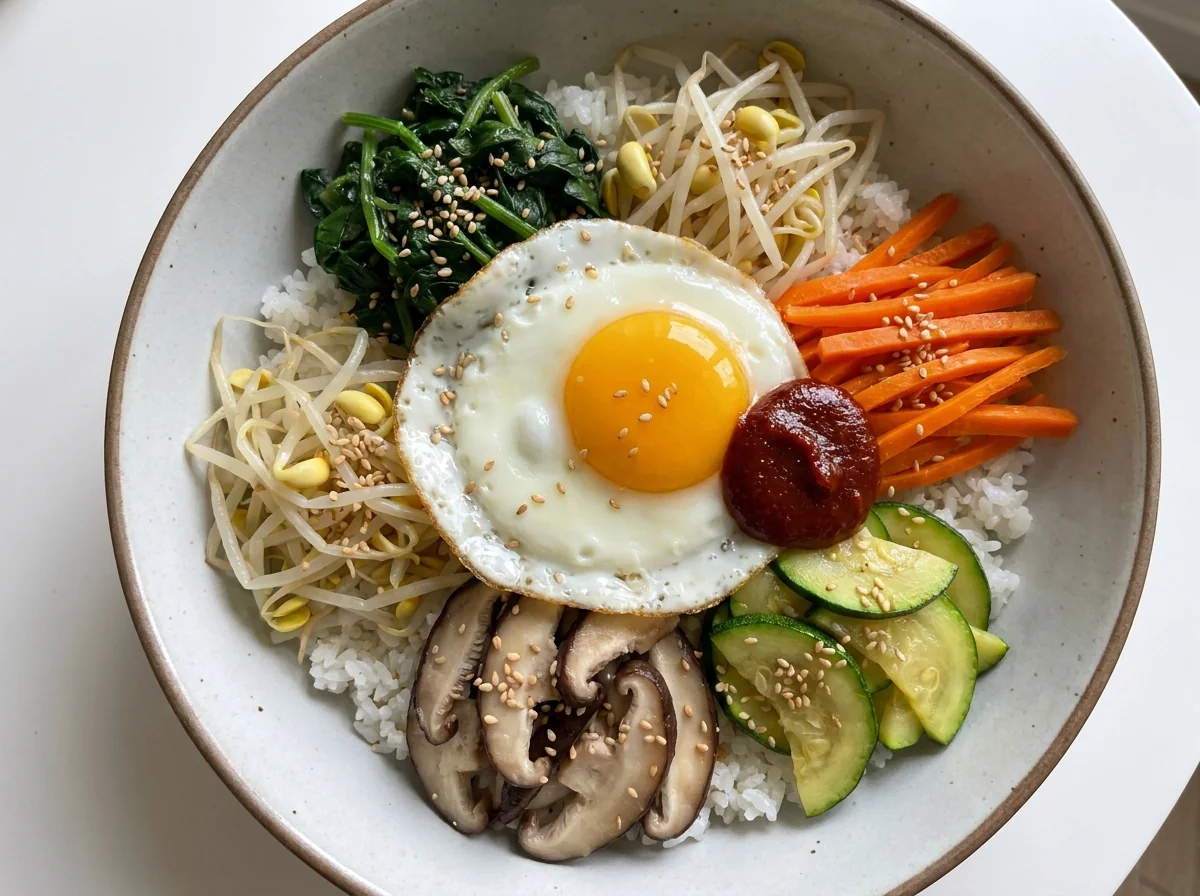
Bibimbap is a time-honored Korean dish whose name means mixed rice: rice topped with a number of vegetables each seasoned separately (called namul) along with egg and gochujang sauce.
It is arranged with its colors side by side, then all of it is mixed when eating, and it is sometimes served in a hot stone bowl that makes the bottom of the rice crispy. Its vegetable-and-egg version without meat is authentic and common in Korea.
Preparation Steps
Blanch and season the spinach
Blanch the spinach in salted water for just half a minute until it wilts, then drain and squeeze it well of water. Season it with a little sesame oil, minced garlic, and a pinch of salt. This separate seasoning of each vegetable is called namul and is the foundation of bibimbap.
Blanch the soybean sprouts
Blanch the soybean sprouts in salted water for three minutes until tender while keeping their crunch, then drain and season with a few drops of sesame oil and a pinch of salt.
Sauté the carrot, zucchini, and mushrooms each separately
In a pan over medium heat, sauté the carrot slices for two minutes with a pinch of salt and lift them out, then the zucchini for two minutes, then the mushrooms for three minutes until they release their water and it cooks off. Sautéing each kind on its own preserves its color and distinctive flavor.
Prepare the gochujang sauce
Mix the gochujang paste with soy sauce, rice vinegar, sugar, half a tablespoon of sesame oil, and a little water until it becomes pourable. This sweet-spicy sauce is the soul of the dish.
Fry the eggs
Heat the vegetable oil in a pan, crack in the eggs, and fry over medium heat until the white sets and the yolk stays runny (internal temperature 71 degrees Celsius for anyone who wants them fully cooked, per food safety guidelines).
Arrange the bowl and serve
Place the hot rice in the bottom of the bowl, arrange the seasoned vegetables over it each in its own section by color, and place the egg in the center. Sprinkle with toasted sesame seeds and add the gochujang, and everything is mixed before eating.
Blood Sugar Impact
The glycemic index (GI) measures how quickly a food raises blood sugar, while the glycemic load (GL) measures how much a full serving raises it. Together they give the complete picture.
Glycemic Index
GI
60Medium
Low0–55Medium56–69High70+
A low value (≤55) means a gradual rise in blood sugar — the most suitable range for diabetes and insulin resistance.
Glycemic Load
GL
37High
Low0–10Medium11–19High20+
Glycemic load reflects the impact of the full serving. To lower it: take half a serving, or pair the recipe with a source of protein and fiber.
Nutritional Information
Per ServingMakes 2 servings · one serving is about 500 g of raw ingredients
Calories518 kcal26%of Daily Value*
Protein18 g36%of Daily Value*
Carbohydrates67 g24%of Daily Value*
Fat21 g27%of Daily Value*
Fiber6 g21%of Daily Value*
Sodium872 mg38%of Daily Value*
* Percent Daily Values are based on a 2,000-calorie diet per FDA food-label reference values — your daily needs may be higher or lower. Values are derived from the recipe's ingredients via the USDA database.
Troubleshooting
The most common problems when preparing Korean Bibimbap Rice Bowl with Vegetables and Egg, and how to fix them:
The vegetables came out watery or their colors faded
Sauté each kind on its own over medium to high heat for just a few minutes, and squeeze the spinach well of its water before seasoning it.
The dish is bland in flavor
Bibimbap relies on seasoning each vegetable on its own with sesame oil and salt, then on the gochujang sauce. Do not skip the separate seasoning and do not be stingy with the sauce when mixing.
The gochujang sauce is too thick
Add a little water or rice vinegar gradually until it becomes pourable and coats the rice easily.
The egg yolk dried out
Fry it over medium heat and lift it out as soon as the white sets so the yolk stays runny, as it blends with the sauce when mixed.
Storage and Make-Ahead
Immediately
Bibimbap is served fresh with the rice hot and the egg just fried, and it is mixed in the bowl before eating.
In the refrigerator
Keep the seasoned vegetables and rice separately for two days in sealed containers, and prepare the egg fresh at serving.
Freezing
Not suitable for freezing because the seasoned vegetables and egg lose their texture.
Tested Ingredient Substitutions
Original Ingredient
Tested Substitute
Ratio
Flavor Difference
Soybean sprouts
Mung bean sprouts
1:1
A common substitute with the same crunch
Zucchini
Sliced cucumber
1:1
Seasoned raw with a little salt and sesame oil
White rice
Brown rice
1:1
Raises the fiber and lowers the glycemic load
Soy sauce
Gluten-free soy sauce (tamari)
1:1
For anyone avoiding gluten, along with choosing a gochujang free of it too
How Much Does It Make? Scaling Guide
Ingredient
2 servings
1 serving
4 servings
Cooked rice
300 g
150 g
600 g
Spinach
120 g
60 g
240 g
Eggs
2
Piece
4
Gochujang
30 g
15 g
60 g
EEINA Nutrition Tip
The variety of vegetables in a single dish raises the amount of fiber and antioxidants, and fiber slows the rise of blood sugar after a meal. It is recommended to cook the egg until the white sets, and anyone who wants it fully done should bring the internal temperature to 71 degrees Celsius per food safety guidelines.
Add This Recipe to Your Plan
The EEINA app saves your favorite recipes, calculates them from their real ingredients, and shows your daily numbers toward your goal. Try it free now.
Korean fermented red chili paste, made of hot chilis, glutinous rice, salt, and fermented soybeans. Its taste is sweet, spicy, and salty, and it is the base of bibimbap's flavor. It is available ready-made in stores.
What does namul mean?
These are the boiled or sautéed vegetables seasoned each on its own with sesame oil, salt, and garlic. Seasoning each kind separately is what distinguishes bibimbap from mere rice with vegetables.
Does it work without meat?
Yes, the vegetable-and-egg version is authentic and common in Korea. Anyone who wants more protein can add seasoned beef or fried tofu pieces.
How is it eaten the right way?
The sauce is poured over the bowl, then everything is mixed well, the rice, vegetables, egg, and sauce, until the flavors blend before starting to eat.