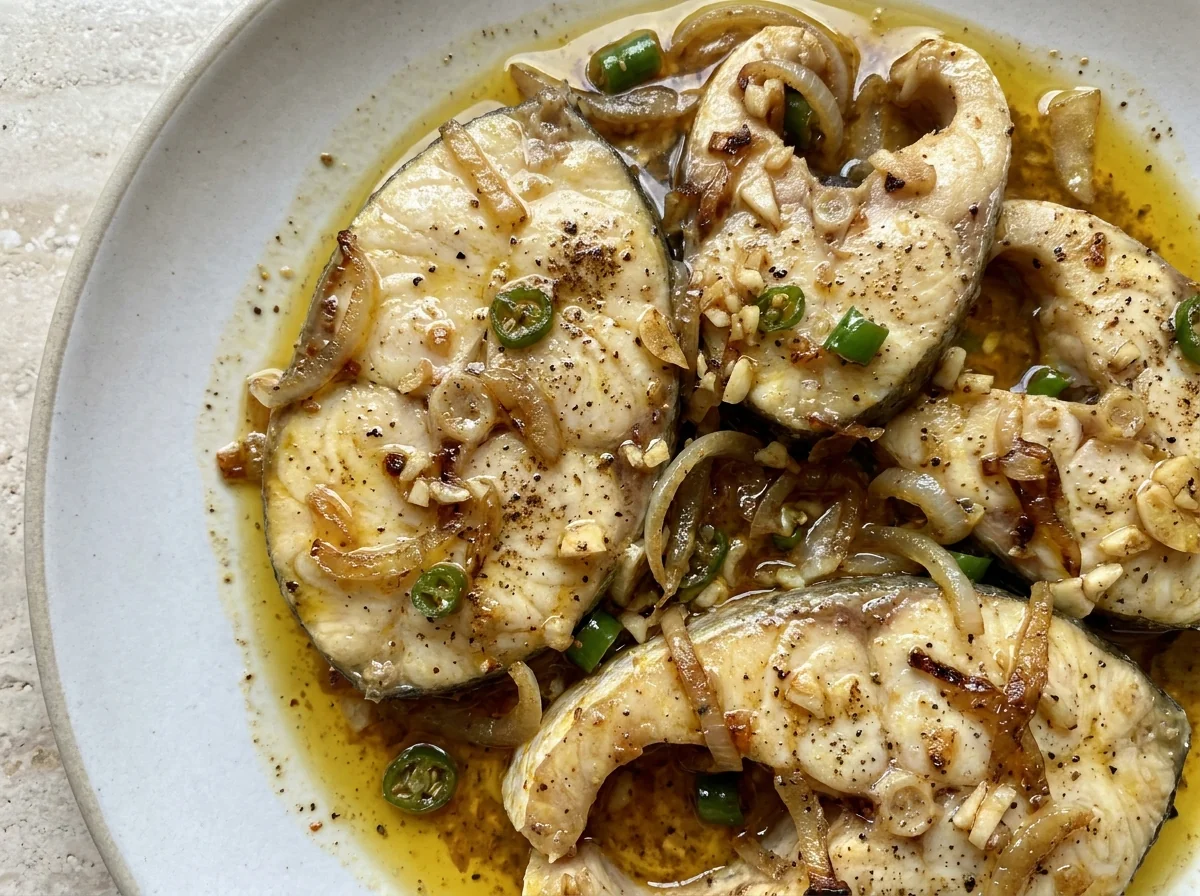
We make mukshen the way it is cooked in the homes of Jazan and Tihama, where the local fish is fried in sesame oil with onion and hot green chili and almost no water, so it comes out rich with the sesame flavor that marks Jazani cooking.
We rely on the oil, simple spices, and the fish's own fat so it cooks in its own juices, the way of the coastal people who make sesame oil the signature of their table.
Preparation Steps
Cleaning
Clean the fish well of scales and innards, cut it into large slices, and pat it dry a little so the oil does not spatter during cooking.
Building the aromatics
Heat the sesame oil in a wide pot, add the onion and the hot green chili, and stir for about three minutes until they soften and the aroma of the sesame rises.
The spices
Add the garlic, cumin, black pepper, and salt, and stir for a few moments until their flavor blooms in the oil.
Cooking the fish
Arrange the fish slices in the pot and turn them every five minutes on each side, keeping the pot covered until the flesh is cooked and has soaked up the flavor of the sesame and spices.
Serving
Leave it over low heat until the flesh firms up and flakes easily, then serve it hot with rice or bread.
Blood Sugar Impact
The glycemic index (GI) measures how quickly a food raises blood sugar, while the glycemic load (GL) measures how much a full serving raises it. Together they give the complete picture.
Glycemic Index
GI
7Low
Low0–55Medium56–69High70+
A low value (≤55) means a gradual rise in blood sugar — the most suitable range for diabetes and insulin resistance.
Glycemic Load
GL
0Low
Low0–10Medium11–19High20+
Glycemic load reflects the impact of the full serving. To lower it: take half a serving, or pair the recipe with a source of protein and fiber.
Nutritional Information
Per ServingMakes 4 servings · one serving is about 320 g of raw ingredients
Calories501 kcal25%of Daily Value*
Protein43 g86%of Daily Value*
Carbohydrates9 g3%of Daily Value*
Fat32 g41%of Daily Value*
Fiber2 g7%of Daily Value*
Sodium442 mg19%of Daily Value*
Potassium1263 mg27%of Daily Value*
Phosphorus405 mg32%of Daily Value*
* Percent Daily Values are based on a 2,000-calorie diet per FDA food-label reference values — your daily needs may be higher or lower. Values are derived from the recipe's ingredients via the USDA database.
Troubleshooting
The most common problems when preparing Jazani Fish in Sesame Oil (Mukshen), and how to fix them:
The fish breaks apart when turned
Turn it gently only every five minutes and do not stir it often, for frequent turning breaks the flesh apart.
The dish is dry
Keep the pot covered to trap the fish's steam, and lower the heat so it cooks in its own juices without drying out.
The oil spatters a lot
Dry the fish before placing it in the pot, for the water left on it reacts with the hot oil.
Storage and Make-Ahead
Refrigerator
Keep it covered in the refrigerator for up to two days, and reheat it gently over low heat.
Freezing
Freeze it in an airtight container for up to a month, and thaw it in the refrigerator before reheating.
Tested Ingredient Substitutions
Original Ingredient
Tested Substitute
Ratio
Flavor Difference
sesame oil
no substitute gives the same flavor
—
Sesame oil is the base of mukshen's flavor and cannot be replaced without changing the identity of the dish
hot green chili
mild green pepper
same weight, 40 g
The heat eases for those who prefer a milder flavor
sliced onion
chopped onion
same weight, 200 g
It melts faster into the oil and the flavor is comparable
cumin
mixed spices
same weight, 4 g
The flavor varies depending on the blend on hand
How Much Does It Make? Scaling Guide
Ingredient
Half amount
Base amount (base)
Double
Cut fish
450 g
900 g
1800 g
Sesame oil
60 ml
120 ml
240 ml
Sliced onion
100 g
200 g
400 g
Minced garlic
7 g
15 g
30 g
Hot green pepper
20 g
40 g
80 g
Salt
3 g
6 g
12 g
EEINA Nutrition Tip
Use sesame oil alone and do not substitute it, for it is the core flavor of mukshen that sets it apart from other fish stews.
Add This Recipe to Your Plan
The EEINA app saves your favorite recipes, calculates them from their real ingredients, and shows your daily numbers toward your goal. Try it free now.