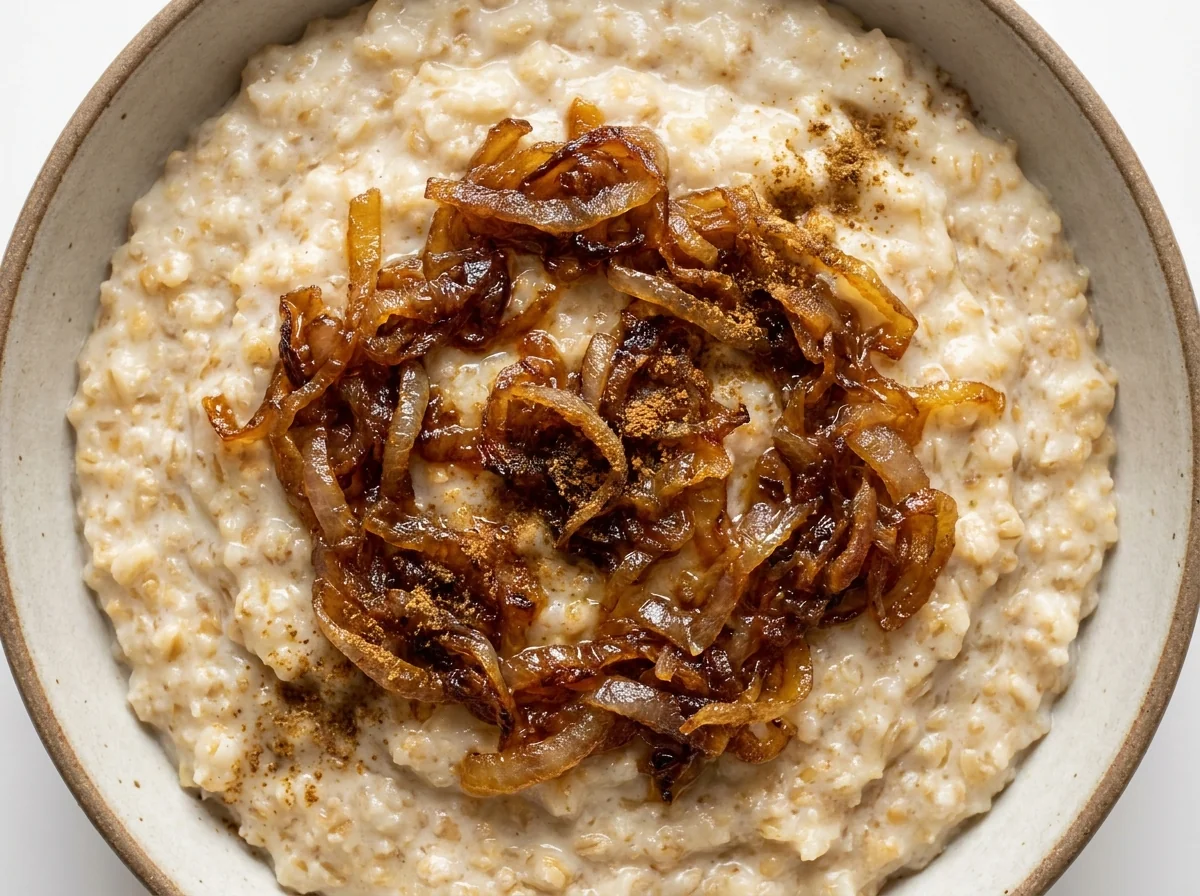
Jareesh is the dean of Najdi dishes, and Saudipedia notes that it is one of the staples of the Suhoor of the people of Al-Jouf and the north.
This white yogurt version is the 'Suhoor' jareesh: meatless, lighter, and quicker to digest than the meat lunch version we have as a separate recipe.
Preparation Steps
Boil the jareesh until the grains open
Drain the soaked jareesh and put it with the water and salt in a heavy-bottomed pot over medium heat. Bring it to a boil, then lower the heat and leave it for forty minutes, stirring intermittently, until the grains burst, break down, and the texture thickens.
Brown the onion in the ghee
In a separate skillet melt the ghee and brown the chopped onion until it turns golden and sweet, then add it with its ghee to the pot along with the cumin.
Add the yogurt over low heat
Lower the heat to its minimum, whisk the yogurt in a bowl, then add it gradually with constant stirring for five minutes without boiling. Boiling splits the yogurt and ruins the velvety texture.
Beat the jareesh until velvety
With a wooden jareesh beater or a pestle, beat the mixture inside the pot until it becomes uniform, half-mashed. This 'beaten' texture is the hallmark of Najdi home-style jareesh.
Crown it with the kishna
Ladle the jareesh into bowls and scatter the browned onion (kishna) with its ghee over the top. The Najdi crown without which jareesh is never complete.
Blood Sugar Impact
The glycemic index (GI) measures how quickly a food raises blood sugar, while the glycemic load (GL) measures how much a full serving raises it. Together they give the complete picture.
Glycemic Index
GI
4Low
Low0–55Medium56–69High70+
A low value (≤55) means a gradual rise in blood sugar — the most suitable range for diabetes and insulin resistance.
Glycemic Load
GL
2Low
Low0–10Medium11–19High20+
Glycemic load reflects the impact of the full serving. To lower it: take half a serving, or pair the recipe with a source of protein and fiber.
Nutritional Information
Per ServingMakes 4 servings · one serving is about 460 g of raw ingredients
Calories347 kcal17%of Daily Value*
Protein13 g26%of Daily Value*
Carbohydrates54 g20%of Daily Value*
Fat11 g14%of Daily Value*
Fiber8 g29%of Daily Value*
Sodium350 mg15%of Daily Value*
Potassium488 mg10%of Daily Value*
Phosphorus426 mg34%of Daily Value*
* Percent Daily Values are based on a 2,000-calorie diet per FDA food-label reference values — your daily needs may be higher or lower. Values are derived from the recipe's ingredients via the USDA database.
Troubleshooting
The most common problems when preparing Jareesh (cracked-wheat porridge) with Yogurt, Suhoor Style, and how to fix them:
The yogurt split and turned grainy
We added it over high heat or all at once. Lowest heat, gradually, with constant stirring.
The jareesh has a hard center
A short soak or undercooking. Two hours of soaking and forty minutes of gentle simmering are not to be shortcut.
It thickened to the point of stiffness
Jareesh absorbs liquid as it cools. Loosen it with hot water or whisked yogurt when serving.
Bland in character
Too little kishna or missing cumin. The browned onion with its ghee is the voice of the dish.
Storage and Make-Ahead
Hot and fresh
Its texture is finest in its first hour.
In the refrigerator
Three days, loosened with water or yogurt during gentle reheating.
In the freezer
Two months before the yogurt stage; thaw it then add fresh yogurt. Freezing it with yogurt splits on thawing.
Tested Ingredient Substitutions
Original Ingredient
Tested Substitute
Ratio
Flavor Difference
Cracked wheat (jareesh)
Coarse bulgur
1:1
Close in spirit and faster to cook (20 minutes)
Plain yogurt
Churned buttermilk
1:1
A truer Bedouin sourness
Country ghee
Olive oil
1:1
A lighter, modern Najdi touch
Onion kishna
Onion browned without ghee in a dry skillet
~
A crown with gentler calories
How Much Does It Make? Scaling Guide
Ingredient
4 servings
2 servings
8 servings
Jareesh
250 g
125 g
500 g
Laban
400 g
200 g
800 g
Water, 1 L
1 liter
500 ml
2 liters
EEINA Nutrition Tip
Add the yogurt at the very end of cooking and over the gentlest heat. This is the rule that separates a velvety jareesh from a grainy one with split yogurt.
Add This Recipe to Your Plan
The EEINA app saves your favorite recipes, calculates them from their real ingredients, and shows your daily numbers toward your goal. Try it free now.