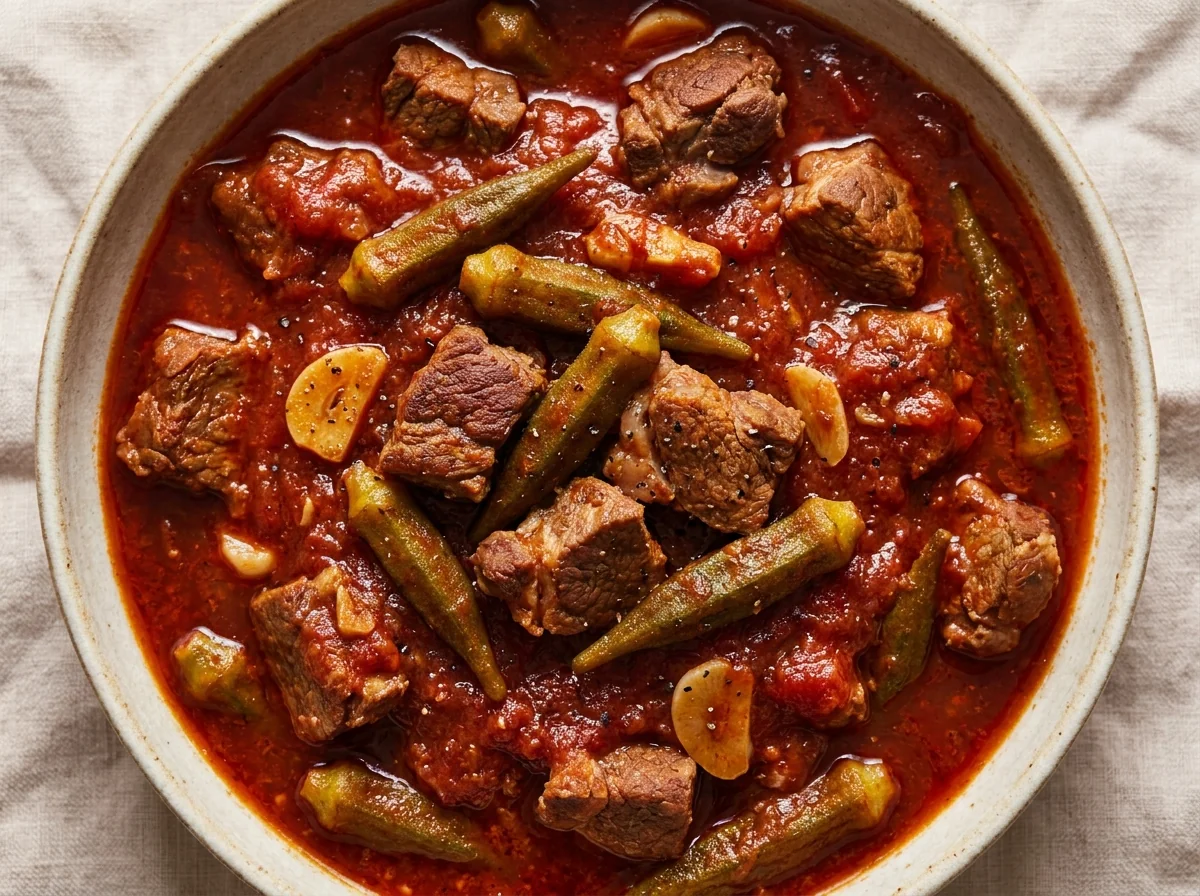
We cook bamia the Iraqi way: lamb tenderized in its own broth then brought together with small okra in a concentrated tomato and garlic sauce.
Its secret is the abundant garlic and the touch of acidity from pomegranate molasses, and we serve it with white rice or as tashreeb over bread at the lunch table.
Preparation Steps
Browning the meat
Heat the oil in a wide pot over medium heat, and brown the lamb pieces on every side until they color and firm up.
Boiling the meat
Cover the meat with boiling water without salt, let it come to a boil, then lower the heat and cook it for about forty minutes until it becomes tender, and keep the broth.
Sauteing the okra and garlic
Lift the meat aside, and in the same pot saute the okra and garlic in a little oil for a few minutes until the garlic becomes fragrant and the okra firms up, for this preserves its texture and reduces its sliminess.
Building the sauce
Return the meat and broth to the pot, add the tomato paste, pomegranate molasses, salt, and black pepper, and stir until the sauce comes together.
Cooking over low heat
Cover the pot and let the stew cook over low heat for about twenty-five minutes until the okra softens and the sauce thickens, and stir gently so the okra does not fall apart.
Serving
Serve the bamia hot with white rice, and sometimes as tashreeb over bread moistened with the broth.
Blood Sugar Impact
The glycemic index (GI) measures how quickly a food raises blood sugar, while the glycemic load (GL) measures how much a full serving raises it. Together they give the complete picture.
Glycemic Index
GI
27Low
Low0–55Medium56–69High70+
A low value (≤55) means a gradual rise in blood sugar — the most suitable range for diabetes and insulin resistance.
Glycemic Load
GL
2Low
Low0–10Medium11–19High20+
Glycemic load reflects the impact of the full serving. To lower it: take half a serving, or pair the recipe with a source of protein and fiber.
Nutritional Information
Per ServingMakes 4 servings · one serving is about 425 g of raw ingredients
Calories379 kcal19%of Daily Value*
Protein19 g38%of Daily Value*
Carbohydrates11 g4%of Daily Value*
Fat29 g37%of Daily Value*
Fiber3 g11%of Daily Value*
Sodium362 mg16%of Daily Value*
* Percent Daily Values are based on a 2,000-calorie diet per FDA food-label reference values — your daily needs may be higher or lower. Values are derived from the recipe's ingredients via the USDA database.
Troubleshooting
The most common problems when preparing Iraqi Bamia (Okra and Lamb Stew), and how to fix them:
The okra is slimy
Saute the okra in oil before adding the liquid and do not cut it too much, and add the acidity of pomegranate molasses or lemon, for it reduces the sliminess.
The meat is tough
Give the meat enough time over low heat until it becomes tender before adding the okra, for well-cooked meat is the foundation of the stew.
The sauce is watery
Let the stew cook uncovered for a little while so the excess water evaporates and the sauce thickens, and adjust the tomato paste as needed.
Storage and Make-Ahead
Refrigerator
Keep the bamia in an airtight container for up to three days; its flavor deepens the next day, and reheat it over low heat.
Freezing
Freeze the stew for up to two months in an airtight container, and thaw it in the refrigerator before reheating it gently.
Tested Ingredient Substitutions
Original Ingredient
Tested Substitute
Ratio
Flavor Difference
lamb
beef or veal on the bone
the same weight, 400 g
Meat on the bone gives the broth a deeper flavor and needs a slightly longer cooking time
pomegranate molasses
lemon juice or pomegranate seeds
one tablespoon
It provides the light acidity distinctive to the Iraqi flavor
fresh okra
frozen okra
the same weight, 300 g
Add it frozen without thawing so it keeps its texture
tomato paste
grated tomatoes
about 200 g
Fresh tomatoes are lighter, and we cook them longer until the sauce thickens
How Much Does It Make? Scaling Guide
Ingredient
Half the amount
The amount (base)
Double
lamb
200 g
400 g
800 g
okra
150 g
300 g
600 g
garlic
10 g
20 g
40 g
tomato paste
20 g
40 g
80 g
pomegranate molasses
7 ml
15 ml
30 ml
salt
1.5 g
3 g
6 g
EEINA Nutrition Tip
Choose small okra and saute it before adding the sauce, for this preserves its texture and reduces its sliminess. And do not stir too much after adding it so the pieces stay whole.
Add This Recipe to Your Plan
The EEINA app saves your favorite recipes, calculates them from their real ingredients, and shows your daily numbers toward your goal. Try it free now.
What is the difference between Iraqi and Egyptian bamia?
Iraqi bamia is distinguished by its concentrated garlic and the touch of acidity from pomegranate molasses, while the Egyptian version relies on a tomato and garlic flavor with lighter acidity.
How do I get rid of the okra's sliminess?
Saute the okra in oil before adding the liquid, add the acidity of pomegranate molasses or lemon, and avoid over-cutting and over-stirring.
What is tashreeb?
Tashreeb is an Iraqi way of serving in which we place the stew and its broth over moistened bread, so the bread soaks up the flavor and becomes a filling dish.