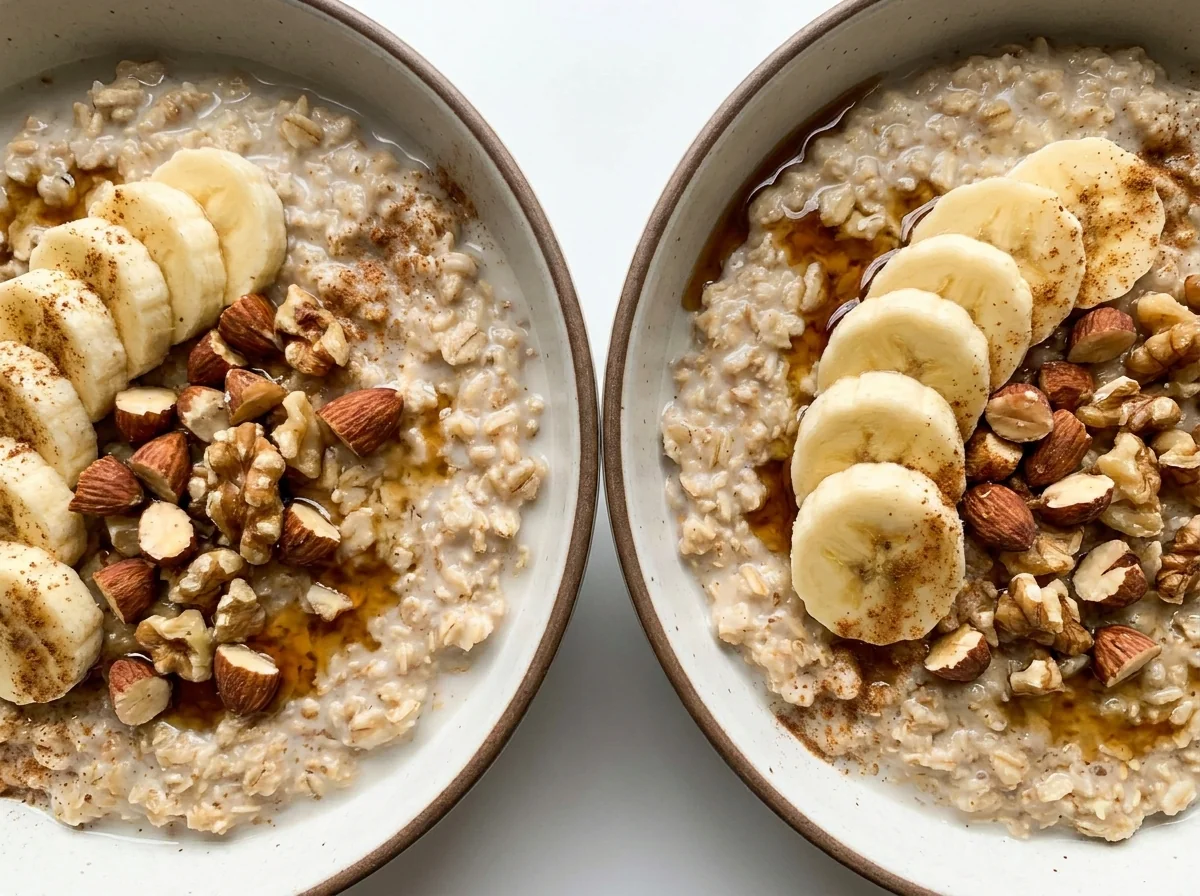
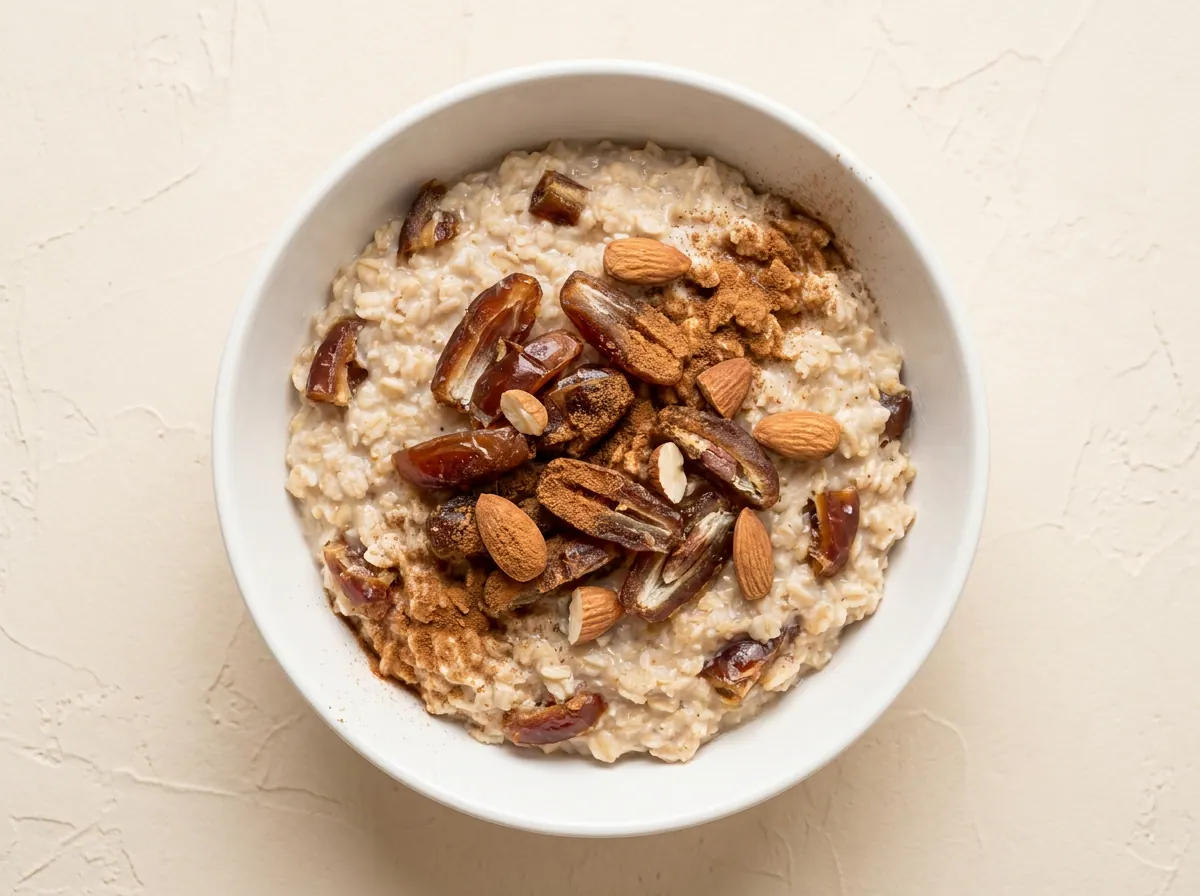
Hot oatmeal cooked in milk is the original from which all the modern oat fads branched, the old Scottish winter bowl that stayed for centuries a pillar of the warm world's breakfast, and which our Arab home adopted with dates and cinnamon.
Preparation Steps
Cook the oats in milk gently
In a small pot, gather the oats, milk, water, and pinch of salt and bring to a first boil over medium heat, then lower the heat and cook for eight minutes with frequent stirring. The milk thickens with the oats' starch and the bowl turns creamy, breathing in lazy bubbles.
Adjust the consistency to your school of thought
The thick crowd turns off the heat now, and the pourable crowd adds a splash of milk. Hot oatmeal is schools of consistency, not one recipe, and the rule is to turn it off a touch looser than you crave, for it thickens in its bowl.
Scent and sweeten
Stir in the cinnamon and half the honey or molasses. The pinch of salt that went in first is what makes the little sweetness ring loud.
Crown the bowl and serve
Pour into two bowls, arrange the banana or dates, scatter the nuts, and draw the remaining sweetness in a thread, the winter bowl on which generations have built their mornings, warm in the bite and slow in its fullness.
Blood Sugar Impact
The glycemic index (GI) measures how quickly a food raises blood sugar, while the glycemic load (GL) measures how much a full serving raises it. Together they give the complete picture.
Glycemic Index
GI
51Low
Low0–55Medium56–69High70+
A low value (≤55) means a gradual rise in blood sugar — the most suitable range for diabetes and insulin resistance.
Glycemic Load
GL
29High
Low0–10Medium11–19High20+
Glycemic load reflects the impact of the full serving. To lower it: take half a serving, or pair the recipe with a source of protein and fiber.
Nutritional Information
Per ServingMakes 2 servings · one serving is about 370 g of raw ingredients
Calories439 kcal22%of Daily Value*
Protein16 g32%of Daily Value*
Carbohydrates65 g24%of Daily Value*
Fat14 g18%of Daily Value*
Fiber8 g29%of Daily Value*
Sodium388 mg17%of Daily Value*
Potassium719 mg15%of Daily Value*
Phosphorus474 mg38%of Daily Value*
* Percent Daily Values are based on a 2,000-calorie diet per FDA food-label reference values — your daily needs may be higher or lower. Values are derived from the recipe's ingredients via the USDA database.
Troubleshooting
The most common problems when preparing Hot Oatmeal with Milk and Cinnamon, and how to fix them:
It stuck to the base and burned
Strong heat or inattentive stirring. The gentle heat after the first boil and a spoon wiping the base every two minutes.
It came out slimy like glue
Quick-cooking oats or violent, constant stirring. Whole-grain oats and frequent, not obsessive, stirring.
The milk overflowed suddenly
Covered boiling or unattended heat. No lid and heat under control, and a wooden spoon laid across the pot is an old safety valve.
It set in the bowl before it was eaten
Turned off at full consistency. A degree looser always, or a splash of hot milk refreshes it in the bowl.
Storage and Make-Ahead
Warm
A bowl within the hour. Its creamy consistency at its peak.
In the refrigerator
Three days in containers. Warmed with a splash of milk and stirred to return: the honest winter meal prep.
Not suitable for freezing
Its consistency separates and weeps when thawed.
Tested Ingredient Substitutions
Original Ingredient
Tested Substitute
Ratio
Flavor Difference
Cow's milk
Oat or almond milk
1:1
Plant-based with nearly the same creaminess
The honey
A mashed banana cooked in for the last two minutes
~
Sweetness from whole fruit. Zero added sugar
The cinnamon
Ground cardamom
~
A bowl with the flavor of Gulf tea
The banana and nut topping
Grated apple with cinnamon cooked in
~
Warm apple oatmeal. A beloved winter variation
How Much Does It Make? Scaling Guide
Ingredient
2 bowls
1 bowl
4 bowls
Oats
100 g
50 g
200 g
Milk
400 ml
200 ml
800 ml
Honey
20 g
10 g
40 g
EEINA Nutrition Tip
A pinch of salt before everything, then the sweetness last. This is the oatmeal rule the kitchens inherit: salt wakes the flavor of the cooked grain so half your usual sweetness suffices; while oatmeal without its salt swallows the honey and stays bland.
Add This Recipe to Your Plan
The EEINA app saves your favorite recipes, calculates them from their real ingredients, and shows your daily numbers toward your goal. Try it free now.
Overnight oats soak cold in the fridge for a rushed summer morning; while hot oatmeal is cooked creamy for an unhurried winter morning. One grain and two seasons.
Why is it described as the long-fullness breakfast?
The soluble beta-glucan fiber in oats slows digestion and steadies the appetite, and it is the same fiber linked to supporting healthy cholesterol in nutrition evidence.
Quick oats or whole grain?
Whole-grain steel-cut oats in consistency, chew, and value, while quick oats for the necessities come out slimy and are absorbed faster.
How do I make it a protein meal?
A spoon of peanut butter stirred in while hot or a boiled egg alongside, and it turns from a warm carbohydrate into a complete meal.