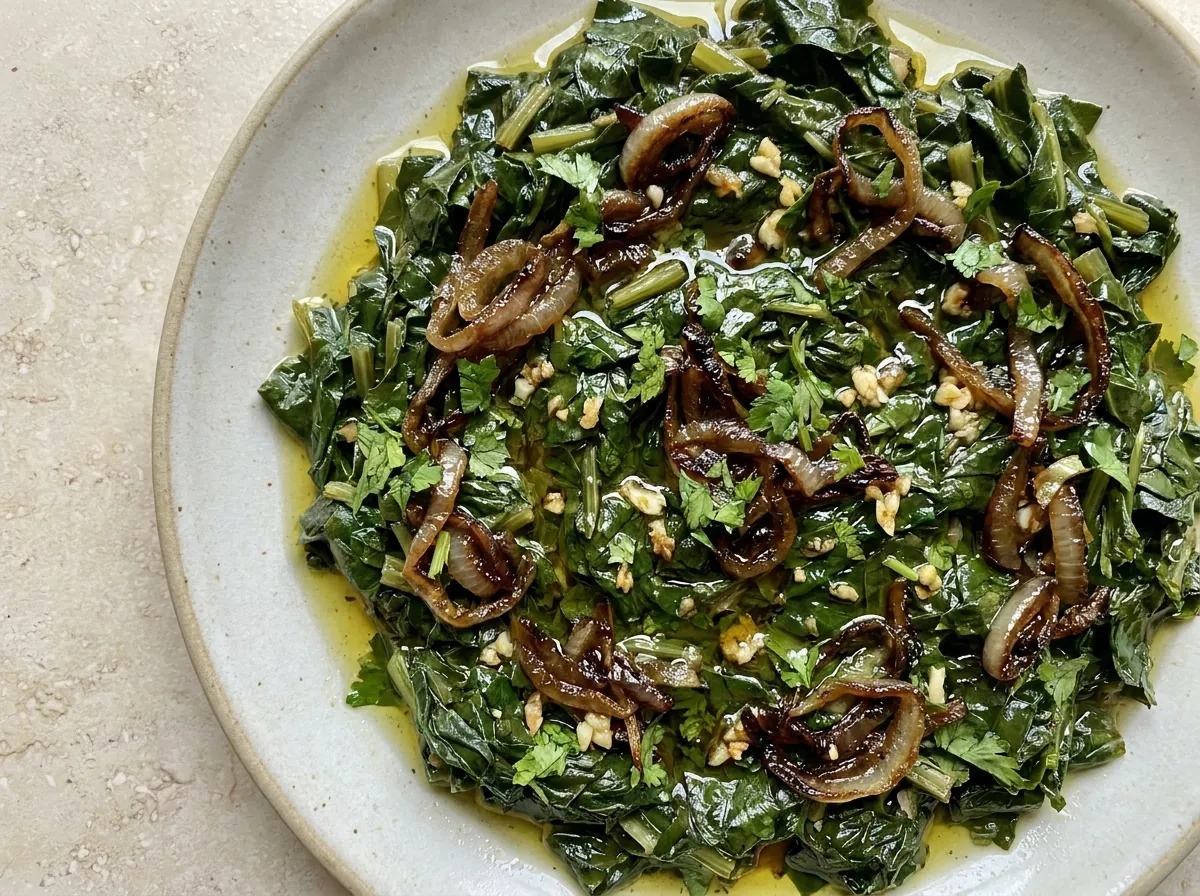
We cook chicory in oil the way it is served on the tables of the Levant and the mountains of Lebanon, bitter green leaves that we boil, then saute in olive oil and crown with caramelized onion until the taste turns sweet.
It is one of the old mezes that used to be gathered wild from the fields, and we serve it warm with bread and a slice of lemon as an appetite-whetting side dish.
Preparation Steps
Boiling the chicory
Wash the chicory well and remove the tough stems, then boil it in boiling water for about five minutes until it softens and wilts, then drain it and gently squeeze out the water.
Caramelizing the onion
Heat two-thirds of the olive oil in a pan over medium heat and fry the onion, stirring, until it wilts and turns golden verging on brown, then set half of it aside for garnish.
Sauteing the garlic and coriander
Add the garlic and fresh coriander to the remaining onion in the pan and stir for about a minute until fragrant.
Adding the chicory
Add the drained chicory with the salt and toss it with the onion and garlic for about five minutes until the flavors come together and the excess water evaporates.
Seasoning and serving
Take the pan off the heat, pour over the lemon juice and the remaining olive oil, scatter the caramelized onion on top, and serve it warm or cold with bread.
Blood Sugar Impact
The glycemic index (GI) measures how quickly a food raises blood sugar, while the glycemic load (GL) measures how much a full serving raises it. Together they give the complete picture.
Glycemic Index
GI
8Low
Low0–55Medium56–69High70+
A low value (≤55) means a gradual rise in blood sugar — the most suitable range for diabetes and insulin resistance.
Glycemic Load
GL
0Low
Low0–10Medium11–19High20+
Glycemic load reflects the impact of the full serving. To lower it: take half a serving, or pair the recipe with a source of protein and fiber.
Nutritional Information
Per ServingMakes 4 servings · one serving is about 455 g of raw ingredients
Calories147 kcal7%of Daily Value*
Protein3 g6%of Daily Value*
Carbohydrates12 g4%of Daily Value*
Fat11 g14%of Daily Value*
Fiber6 g21%of Daily Value*
Sodium350 mg15%of Daily Value*
Potassium622 mg13%of Daily Value*
Phosphorus79 mg6%of Daily Value*
* Percent Daily Values are based on a 2,000-calorie diet per FDA food-label reference values — your daily needs may be higher or lower. Values are derived from the recipe's ingredients via the USDA database.
Troubleshooting
The most common problems when preparing Chicory Greens in Olive Oil with Caramelized Onions, and how to fix them:
The chicory is very bitter
Boil it in plenty of water and change the water once after the first boil, for this reduces the bitterness and keeps the color green.
The dish is watery
Squeeze the chicory well of the boiling water before sauteing it, for excess water thins the oil and weakens the flavor.
The onion burned and turned bitter
Caramelize it over gentle medium heat with constant stirring, for high heat burns it before it sweetens.
Storage and Make-Ahead
Refrigerator
Keep it in an airtight container for up to three days; its flavor deepens the next day, and we serve it cold or at room temperature.
Make-ahead
Boil the chicory, squeeze it, and store it in the refrigerator, then saute it with the onion and oil at serving time so it stays fresh.
Tested Ingredient Substitutions
Original Ingredient
Tested Substitute
Ratio
Flavor Difference
chicory
spinach, chard, or purslane
same weight, 500 g
Spinach is less bitter and quicker to boil, while chard is closer in texture
olive oil
vegetable oil
same volume, 45 ml
Olive oil is the original and its flavor is deeper
fresh coriander
parsley
same weight, 20 g
The flavor differs slightly and stays refreshing
How Much Does It Make? Scaling Guide
Ingredient
Half amount
Base amount (base)
Double
Chicory
250 g
500 g
1000 g
Onion
100 g
200 g
400 g
Olive oil
23 ml
45 ml
90 ml
Garlic
6 g
12 g
24 g
Lemon juice
23 ml
45 ml
90 ml
Salt
1.5 g
3 g
6 g
EEINA Nutrition Tip
The secret to the dish's sweetness is caramelizing the onion slowly until it turns golden brown, for it is what balances the bitterness of the chicory. If the leaves are very bitter, change the boiling water once after the first boil.
Add This Recipe to Your Plan
The EEINA app saves your favorite recipes, calculates them from their real ingredients, and shows your daily numbers toward your goal. Try it free now.
Chicory is a bitter green leafy plant known as 'alat in some regions; it is sold fresh in vegetable markets and sometimes frozen, and it can be replaced with spinach or chard.
Why do we boil the chicory before cooking?
Boiling removes much of the bitterness and softens the leaves, then we saute them with oil and onion to round out the flavor.
Is it served hot or cold?
It is usually served warm or cold at room temperature, and it is one of the mezes whose flavor improves after it rests.