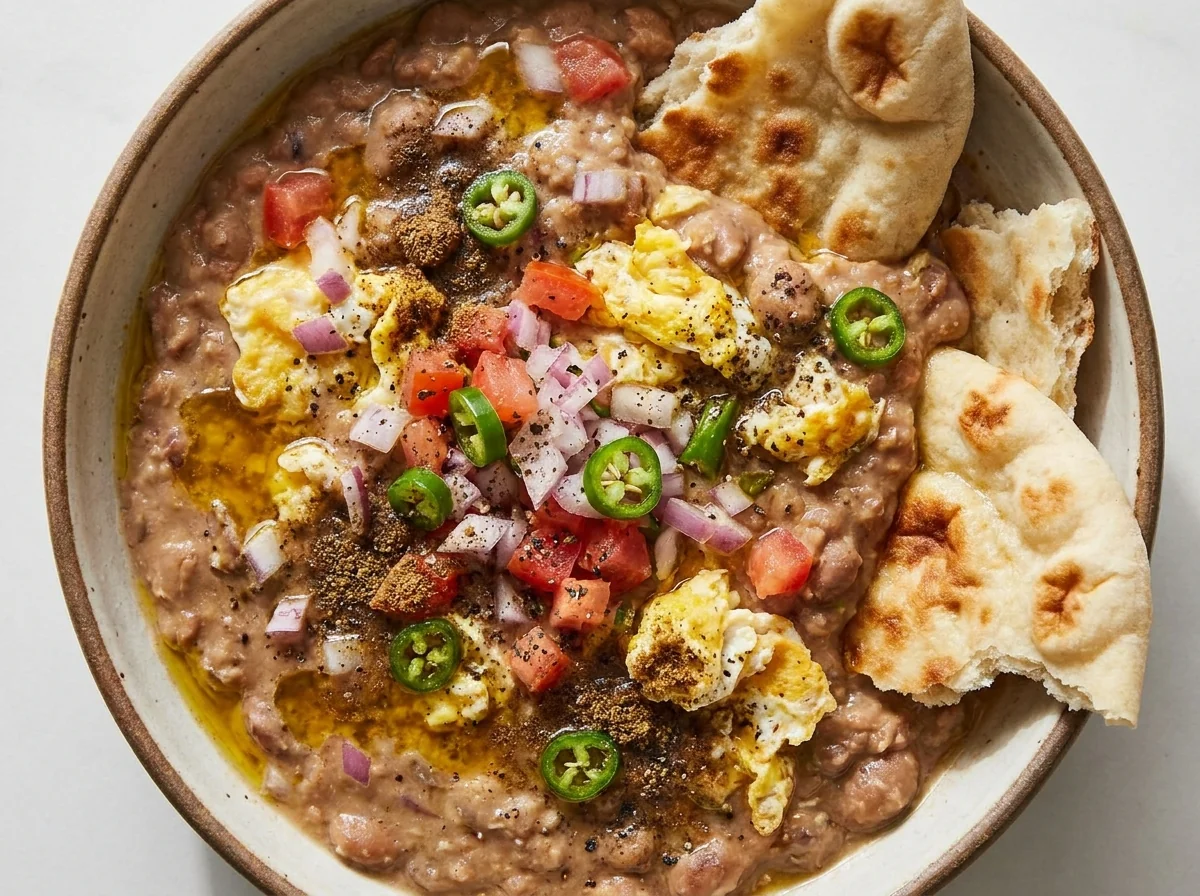
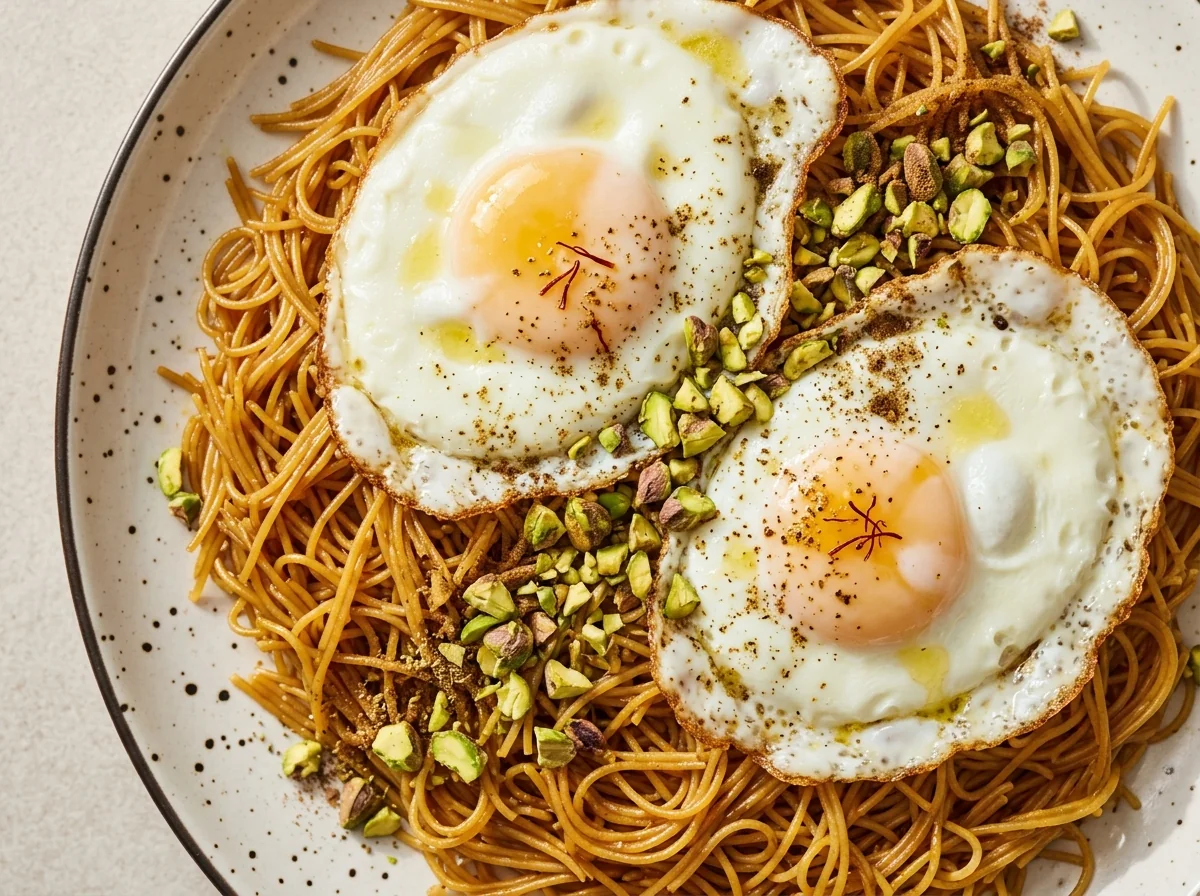
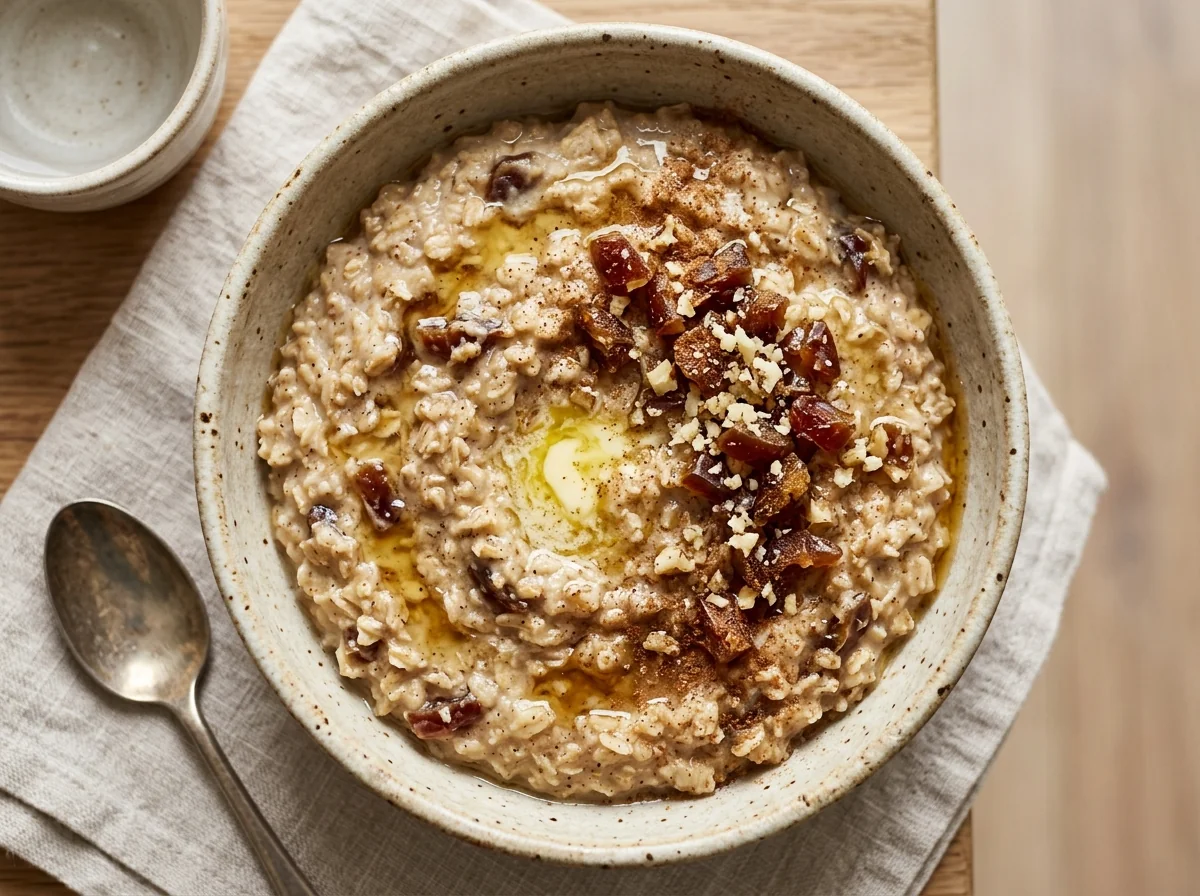
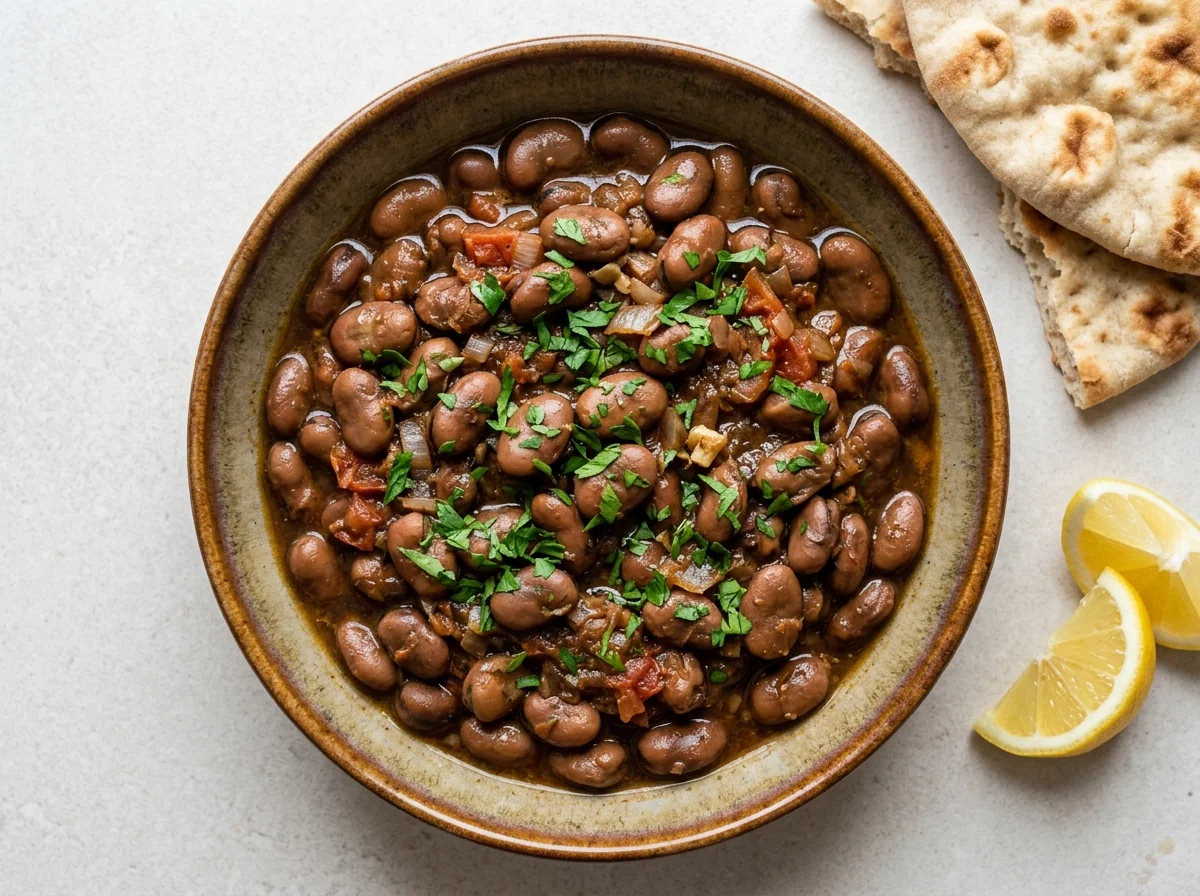
Qallabah is one of the most famous ful dishes in the Hijaz, and its name comes from the motion of tossing (qalb) the eggs into the ful over the heat.
It features strongly on suhoor tables in Mecca and Jeddah because it brings together the legumes of the ful and the protein of the eggs in a single pan.
Preparation Steps
Saute the onion in the ghee
Finely chop the onion. In a wide pan over medium heat, melt the local ghee and add the onion, stirring it for five minutes until it softens, takes on a light golden color, and becomes fragrant.
Add the tomato and pepper
Chop the tomato and hot pepper and add them (the pepper for those who like it), and leave them over the heat for five minutes until the tomato wilts and releases its water, then most of it thickens.
Add the ful and partially mash it
Add the drained ful with the cumin, salt, and black pepper and stir, then mash about half the beans with the back of the spoon inside the pan. This partial mashing gives the qallabah its cohesive Hijazi consistency that is scooped up with bread.
Toss the eggs over the ful, and that is where the name comes from
Crack the eggs directly over the surface of the hot ful, then toss them into the ful with a wooden spoon in quick circular motions until they spread into white and yellow strands and cook through with the white fully set (about three minutes). From this tossing motion the dish took its name.
Adjust the consistency and serve hot
If the consistency is too heavy, loosen it with a quarter cup of hot water. Taste and adjust the salt, then pour the qallabah into a deep dish and sprinkle a pinch of cumin over it, and serve it immediately with hot tamees bread.
Blood Sugar Impact
The glycemic index (GI) measures how quickly a food raises blood sugar, while the glycemic load (GL) measures how much a full serving raises it. Together they give the complete picture.
Glycemic Index
GI
23Low
Low0–55Medium56–69High70+
A low value (≤55) means a gradual rise in blood sugar — the most suitable range for diabetes and insulin resistance.
Glycemic Load
GL
6Low
Low0–10Medium11–19High20+
Glycemic load reflects the impact of the full serving. To lower it: take half a serving, or pair the recipe with a source of protein and fiber.
Nutritional Information
Per ServingMakes 4 servings · one serving is about 220 g of raw ingredients
Calories268 kcal13%of Daily Value*
Protein15 g30%of Daily Value*
Carbohydrates32 g12%of Daily Value*
Fat10 g13%of Daily Value*
Fiber7 g25%of Daily Value*
Sodium434 mg19%of Daily Value*
Potassium473 mg10%of Daily Value*
Phosphorus239 mg19%of Daily Value*
* Percent Daily Values are based on a 2,000-calorie diet per FDA food-label reference values — your daily needs may be higher or lower. Values are derived from the recipe's ingredients via the USDA database.
Troubleshooting
The most common problems when preparing Hijazi Ful Qallabah with Eggs, and how to fix them:
The qallabah is runny
The tomato water did not thicken before the ful was added. Leave it over higher heat for two minutes uncovered until it firms up.
The eggs clumped into large pieces
The eggs were poured in and left without stirring. The quick circular motion right after pouring is what spreads them into fine strands.
The taste of the ful is bland
It is missing cumin or salt. Add a pinch of freshly ground cumin, as the difference from old cumin is clear.
The ful is dry after cooling
The ful absorbs liquids during storage. When reheating, add two spoons of hot water and stir.
Storage and Make-Ahead
Immediately
It is eaten hot right after it is made, as the eggs lose their tenderness with waiting.
In the refrigerator
Two days in an airtight container, and reheat it in a pan with a little water.
Not suitable for freezing
Cooked egg turns rubbery after thawing.
Tested Ingredient Substitutions
Original Ingredient
Tested Substitute
Ratio
Flavor Difference
Local ghee
Olive oil
1:1
A lighter version, with slightly less depth of ghee flavor
Canned fava beans
Home-boiled fava beans
1:1
Less sodium with better control over the consistency
Hot pepper
Chopped bell pepper
1:1
For those who do not like the spicy flavor
Tamees bread
Whole-wheat country bread
1:1
Higher fiber
How Much Does It Make? Scaling Guide
Ingredient
4 servings
2 servings
8 servings
Fava beans (ful)
400 g
200 g
800 g
Eggs
3
2
6
Tomatoes
150 g
80 g
300 g
EEINA Nutrition Tip
The eggs go in at the end of cooking, not the beginning: if added early with the runny tomato they break down and turn watery. Wait until the ful firms up, then toss the eggs into it.
Add This Recipe to Your Plan
The EEINA app saves your favorite recipes, calculates them from their real ingredients, and shows your daily numbers toward your goal. Try it free now.
The ful is a slow-digesting legume and the egg is a complete protein, a combination that keeps you full for many hours per the Harvard guide on protein and fiber.
Can the onion be reduced?
Yes, or it can be left out for those whom it bothers at suhoor, and the qallabah remains a qallabah with the eggs and cumin.
How does it differ from ful with the egg fried on the side?
In qallabah the egg is cooked inside the ful itself so it absorbs its flavor, and it is not served on the side.
Is it enough on its own for suhoor?
With bread and a glass of laban it makes a complete suhoor: legumes, protein, and carbohydrates.