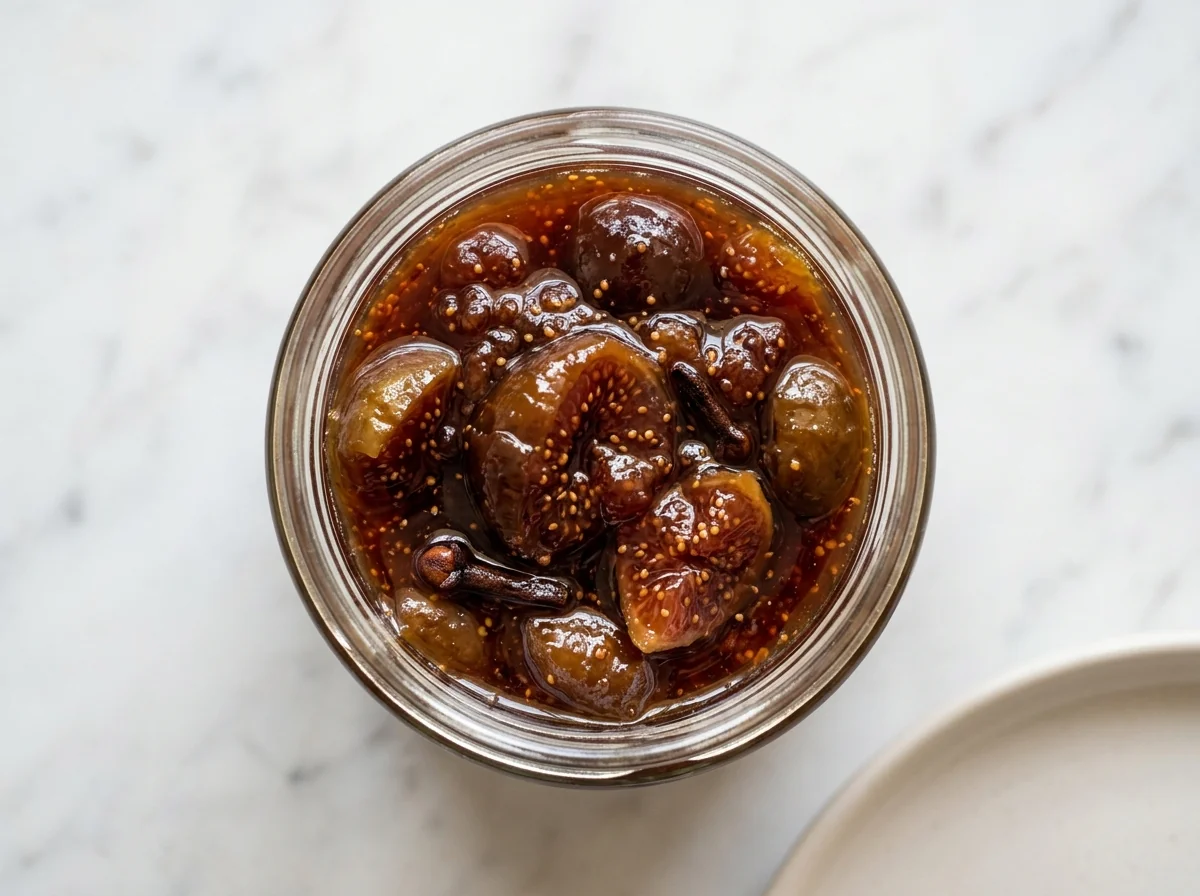
Medium-ripe figs halved and layered with sugar for three hours until they release their juice, then cooked over gentle heat with lemon juice and whole cloves until the jam sets.
The old Levantine preserve at one to one: a kilo of sugar for every kilo of figs, the ratio that keeps it a year with no preservatives.
The three hours of layering are not idle waiting, because the sugar draws the water out of the figs by osmosis, so the cooking happens in the figs' own syrup rather than in added water.
Preparation Steps
Wash and cut
Wash the figs well, drain them of water, and cut them into halves.
Layer with the sugar
In a bowl, arrange the figs with the sugar: a layer of sugar then a layer of figs, and so on until both are used up, and leave them for three hours until the water in the figs comes out.
Dissolve the sugar
In a pot over gentle heat, put the figs with the sugar and stir a little until you are sure the sugar has dissolved, then leave it.
Add the lemon and the cloves
Pour in the lemon juice and add the cloves, and leave it until it cooks down and the jam sets.
Jar it
Ladle the jam hot into clean dry jars, seal them, and leave them to cool.
Blood Sugar Impact
The glycemic index (GI) measures how quickly a food raises blood sugar, while the glycemic load (GL) measures how much a full serving raises it. Together they give the complete picture.
Glycemic Index
GI
63Medium
Low0–55Medium56–69High70+
A low value (≤55) means a gradual rise in blood sugar — the most suitable range for diabetes and insulin resistance.
Glycemic Load
GL
40High
Low0–10Medium11–19High20+
Glycemic load reflects the impact of the full serving. To lower it: take half a serving, or pair the recipe with a source of protein and fiber.
Nutritional Information
Per ServingMakes 36 servings · one serving is about 115 g of raw ingredients
Calories257 kcal13%of Daily Value*
Protein0 g0%of Daily Value*
Carbohydrates66 g24%of Daily Value*
Fat0 g0%of Daily Value*
Fiber2 g7%of Daily Value*
Sodium1 mg0%of Daily Value*
Potassium133 mg3%of Daily Value*
Phosphorus8 mg1%of Daily Value*
* Percent Daily Values are based on a 2,000-calorie diet per FDA food-label reference values — your daily needs may be higher or lower. Values are derived from the recipe's ingredients via the USDA database.
Troubleshooting
The most common problems when preparing Fig Jam with Cloves, and how to fix them:
The jam is runny and will not set
It has not cooked long enough. The sign is a drop on a cold plate that holds and does not run, and the lemon helps it set.
The sugar crystallized after cooling
The cooking ran long or the lemon was short. Lemon juice keeps the sugar from crystallizing, so stay with the source's amount.
There is white foam on the surface
It is natural at the start of the boil. Skim it off with a spoon and the jam comes out clear in color.
The figs mashed completely
The figs were overripe or the stirring was too much. The source calls for medium-ripe figs, neither soft nor firm.
Storage and Make-Ahead
Sealed jars
In a cool dark place for up to a year, since the high proportion of sugar is the preservative.
After opening
In the refrigerator for up to two months, using a clean dry spoon each time.
Jarring
Hot, into jars that are clean and completely dry, because any drop of water opens the door to mold.
Sign of spoilage
Visible mold, a fermented smell, or a swollen lid: throw out the whole jar.
Tested Ingredient Substitutions
Original Ingredient
Tested Substitute
Ratio
Flavor Difference
Sugar
Three quarters of the amount
1500 g
A gentler sweetness and more fig flavor, but the shelf life shortens so it is kept in the refrigerator.
Cloves
A cinnamon stick and cardamom
1 stick with 4 pods
A closer Gulf perfume, and gentler than the sharpness of cloves.
Fresh figs
Soaked dried figs
1000 g soaked
Available out of season, and it needs water in the cooking and less sugar.
Lemon juice
Citric acid
3 g
The old preserving pantry's substitute, and it plays the same role in preventing crystallization.
How Much Does It Make? Scaling Guide
Servings
Figs
Sugar
Cloves
Lemon juice
5 servings (half the amount)
1000 g
1000 g
1 g
45 ml
10 servings (base)
2000 g
2000 g
2 g
90 ml
20 servings (double)
4000 g
4000 g
4 g
180 ml
EEINA Nutrition Tip
Do not stir the jam much while it bubbles: constant stirring mashes the figs and turns the jam into a paste, and what you want is visible fig halves in a heavy syrup. And lift the cloves out at jarring time if you like, since their flavor sharpens over the days.
Add This Recipe to Your Plan
The EEINA app saves your favorite recipes, calculates them from their real ingredients, and shows your daily numbers toward your goal. Try it free now.
Why are the figs left with the sugar for three hours?
So the sugar draws the water out of the figs by osmosis, and the jam cooks in the figs' own syrup rather than in added water. That is what gives the jam its density and its concentrated flavor.
How do I know it is done?
The source makes the sign that it cooks down and sets. In practice: a drop on a cold plate holds and does not run, and the bubbles turn slow and thick.
Why is the proportion of sugar this high?
One to one is the traditional preserving ratio, and the sugar here is a preservative and not only a sweetener. Reducing it shortens the shelf life and makes refrigeration necessary.
How many servings are in a jar?
The source estimated the batch at ten servings. Jam is eaten by the teaspoon on bread, so the realistic serving is smaller than a usual plate serving.
Sources: USDA · University of Sydney · Our methodology · Updated on