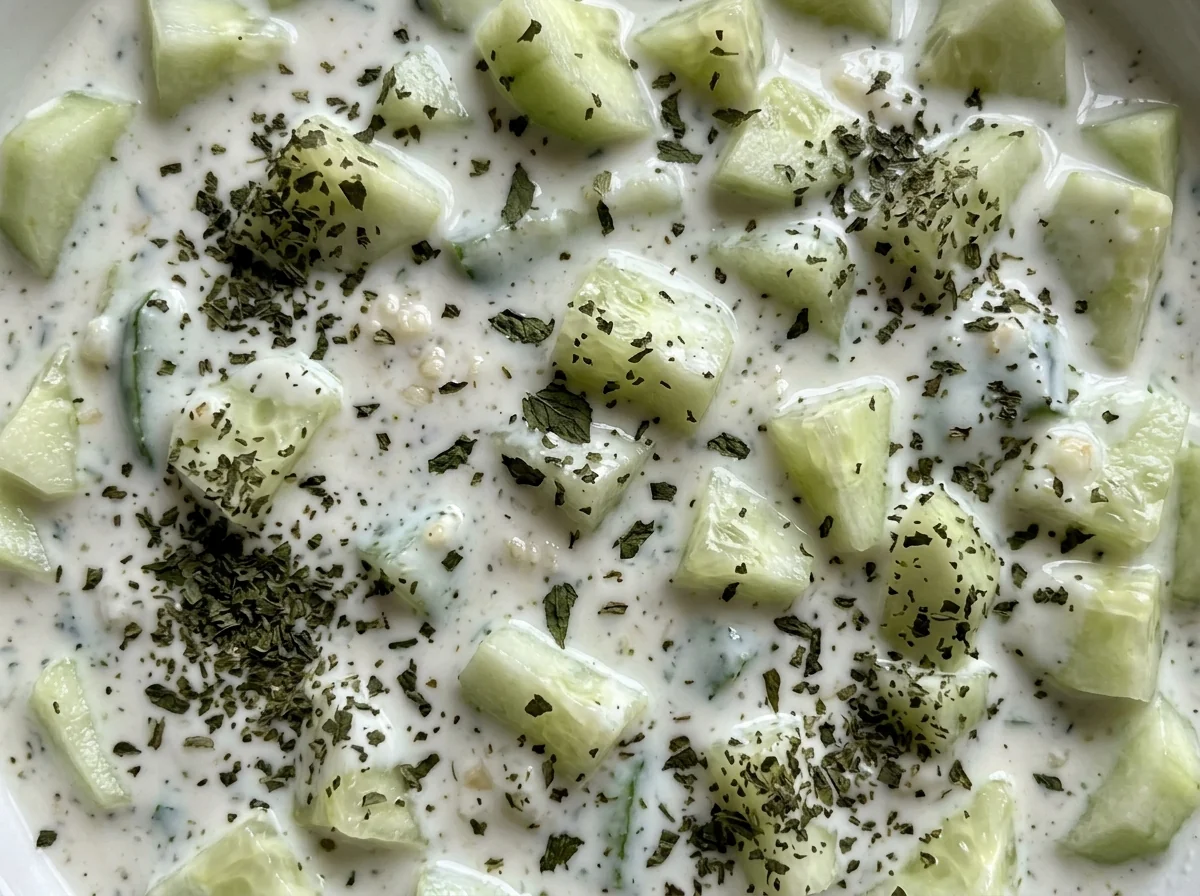
Peeled and chopped cucumber placed in a deep bowl; yogurt mixed with garlic, lemon juice, salt, and vinegar is poured over it; then dried mint is sprinkled on top and served.
The yogurt dish that accompanies grills and stuffed vegetables on every Levantine table, with its secret in the vinegar: most versions settle for lemon, and this source adds a tablespoon and a half of red vinegar, giving the salad a sharper acidity and a firmer flavor.
And dried mint, not green, because its aroma is deeper and holds up in the yogurt.
Preparation Steps
Prepare the cucumber
Place the peeled chopped cucumber in a deep bowl, and chop it into similar sizes so each bite has a uniform texture, not varying pieces.
Mix the dressing
Mix the yogurt with the finely crushed garlic, lemon juice, salt, and vinegar until the mixture blends and becomes smooth. Crush the garlic very finely because a large piece ruins the bite it lands in.
Pour and mix
Pour the mixture over the cucumber and stir well until the ingredients blend and each cube is coated with the white dressing.
Garnish and serve
Distribute the dried mint on the surface of the dish and serve, and rubbing it between the palms before sprinkling opens its fragrant oils so the aroma floats over the dressing.
Blood Sugar Impact
The glycemic index (GI) measures how quickly a food raises blood sugar, while the glycemic load (GL) measures how much a full serving raises it. Together they give the complete picture.
Glycemic Index
GI
22Low
Low0–55Medium56–69High70+
A low value (≤55) means a gradual rise in blood sugar — the most suitable range for diabetes and insulin resistance.
Glycemic Load
GL
2Low
Low0–10Medium11–19High20+
Glycemic load reflects the impact of the full serving. To lower it: take half a serving, or pair the recipe with a source of protein and fiber.
Nutritional Information
Per ServingMakes 3 servings · one serving is about 300 g of raw ingredients
Calories84 kcal4%of Daily Value*
Protein5 g10%of Daily Value*
Carbohydrates13 g5%of Daily Value*
Fat2 g3%of Daily Value*
Fiber2 g7%of Daily Value*
Sodium818 mg36%of Daily Value*
Potassium435 mg9%of Daily Value*
Phosphorus128 mg10%of Daily Value*
* Percent Daily Values are based on a 2,000-calorie diet per FDA food-label reference values — your daily needs may be higher or lower. Values are derived from the recipe's ingredients via the USDA database.
Troubleshooting
The most common problems when preparing Yogurt Cucumber Salad, and how to fix them:
The salad is watery after a while
The cucumber released its water into the yogurt. Drain the salted cucumber before mixing, and serve it immediately after preparation, not hours later.
The flavor is too sour
The vinegar and lemon together are a generous amount. Start with half the vinegar and taste before adding the rest, since the yogurt itself has acidity.
The garlic is overpowering
The clove is raw and strong. Crush it with a pinch of salt until it becomes a paste, or reduce it and leave it in the refrigerator for a quarter hour so its sharpness subsides.
The yogurt separated and became grainy
Low-fat yogurt was mixed vigorously or was near its expiry. Stir gently and use fresh thick yogurt.
Storage and Make-Ahead
Refrigerator (4°C)
In an airtight container for one day, and it's at its best in its first hour.
Advance preparation
Mix the dressing and store in the refrigerator for a day, and chop the cucumber and add when serving.
Serving
Cold with grills, stuffed vegetables, and rice, or as a dip with bread.
Not recommended
Freezing at all: the yogurt separates and the cucumber wilts and loses its texture completely.
Tested Ingredient Substitutions
Original Ingredient
Tested Substitute
Ratio
Flavor Difference
Low-fat yogurt
Thick Greek yogurt
245 g
Much thicker texture and higher protein, and doesn't run with cucumber water.
Red vinegar
Apple vinegar
22 ml
Softer acidity and a light fruity aroma.
Dried mint
Chopped dill
9 g
A completely different flavor, closer to Turkish and Persian tastes.
Salt
Half the amount
3 g
For those managing their sodium, and the acidity compensates in highlighting the flavor.
How Much Does It Make? Scaling Guide
Servings
Cucumbers
Yogurt
Vinegar
Dried mint
1.5 servings (half the quantity)
300 g
123 g
11 ml
4.5 g
3 servings (base)
600 g
245 g
22 ml
9 g
6 servings (double)
1200 g
490 g
44 ml
18 g
EEINA Nutrition Tip
The cucumber releases its water after salting; whoever wants a thick salad sprinkles a little salt on it and leaves it in a sieve for a quarter hour, then squeezes it gently before mixing. Whoever serves it immediately doesn't need that.
Add This Recipe to Your Plan
The EEINA app saves your favorite recipes, calculates them from their real ingredients, and shows your daily numbers toward your goal. Try it free now.
What is the difference between this and the corn salad with yogurt and cucumber?
That one has corn, bell pepper, mayonnaise, and dill, and this has cucumber, yogurt, garlic, lemon, vinegar, and dried mint only. The ingredients and flavor are different, so they are two different dishes, not two versions.
Why vinegar and lemon together?
This is what the source says. Vinegar has a fixed acidity that doesn't fade over time, and lemon gives a fresh aroma, so together they combine both qualities.
Should I really peel the cucumber?
The source specifies peeling it, and peeling gives a white salad with smooth texture. Whoever keeps the peel increases the fiber and gives the salad green flecks and clearer crunch.
What is it served with?
With grills, stuffed vegetables, and rice dishes, and on the Levantine table it serves as the cold sauce that balances the richness.
Sources: USDA · University of Sydney · Our methodology · Updated on