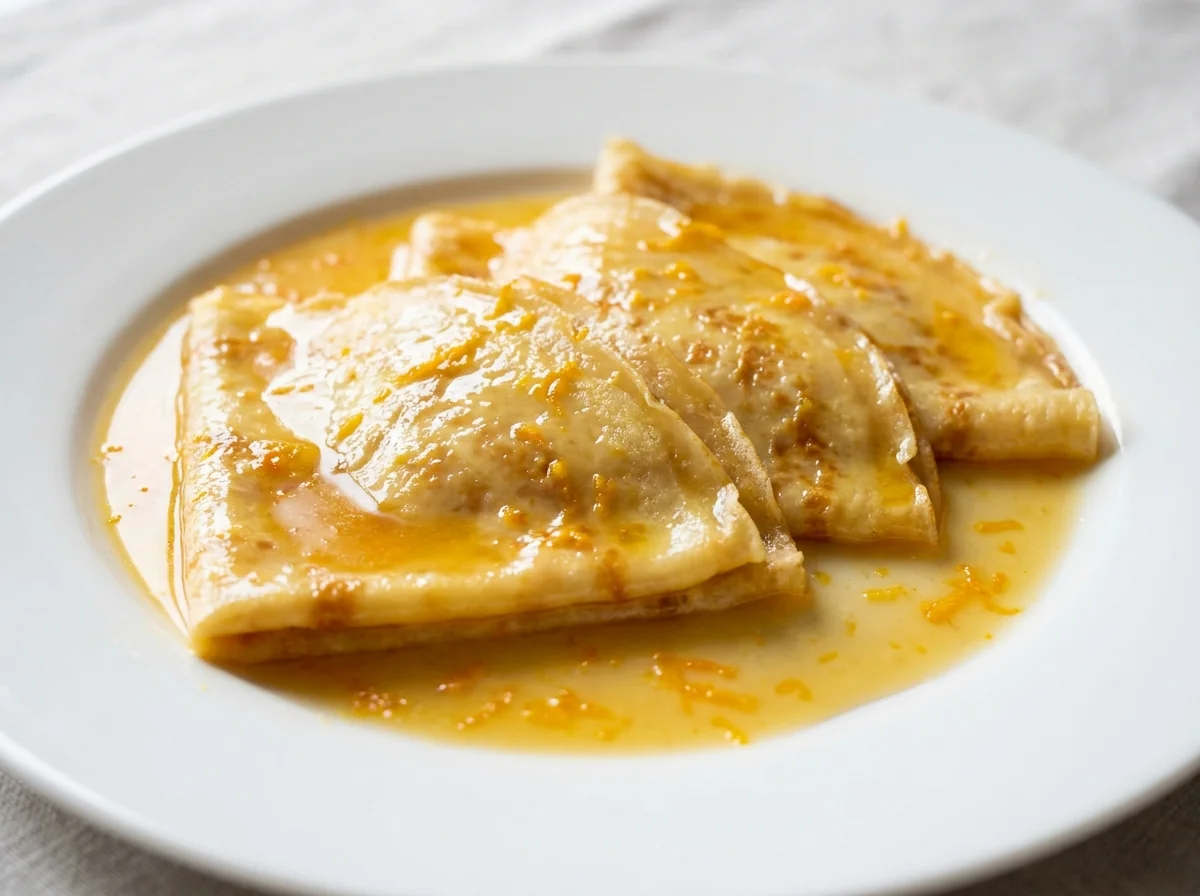
Crêpes Suzette is a classic French dish that originated in the late nineteenth century, served with an orange and butter sauce.
We make it here without alcohol, compensating for the depth of flavor with concentrated orange juice and fresh zest.
Preparation Steps
Prepare the batter
Whisk the flour, eggs, milk, sugar, salt, and melted butter until the batter is smooth with no lumps; this is the basis of a thin crêpe.
Rest the batter
Let the batter rest 30 minutes in the fridge, so the gluten relaxes and the crêpe becomes softer and less rubbery.
Fry the crêpe
Heat a non-stick pan and grease it lightly, pour in a small ladle, and swirl the pan to cover the bottom with a thin layer.
Brown both sides
Cook the crêpe half a minute on each side until lightly golden, and repeat until the batter runs out, stacking the crêpes folded.
Prepare the orange sauce
Dissolve the sauce sugar in the pan until it turns into a light golden caramel; this gives the sauce depth and color.
Add the orange
Add the concentrated orange juice and the zest carefully, as the caramel is hot, and stir until the caramel dissolves and the sauce comes together.
Incorporate the butter
Add the sauce butter and stir until the sauce turns glossy and slightly thick; the butter gives it a silky texture.
Dip the crêpes
Place the folded crêpes as triangles into the warm sauce and turn them until they soak up and are coated, then serve them warm immediately.
Blood Sugar Impact
The glycemic index (GI) measures how quickly a food raises blood sugar, while the glycemic load (GL) measures how much a full serving raises it. Together they give the complete picture.
Glycemic Index
GI
65Medium
Low0–55Medium56–69High70+
A low value (≤55) means a gradual rise in blood sugar — the most suitable range for diabetes and insulin resistance.
Glycemic Load
GL
23High
Low0–10Medium11–19High20+
Glycemic load reflects the impact of the full serving. To lower it: take half a serving, or pair the recipe with a source of protein and fiber.
Nutritional Information
Per ServingMakes 6 servings · one serving is about 160 g of raw ingredients
Calories298 kcal15%of Daily Value*
Protein6 g12%of Daily Value*
Carbohydrates36 g13%of Daily Value*
Fat14 g18%of Daily Value*
Fiber1 g4%of Daily Value*
Sodium112 mg5%of Daily Value*
Potassium198 mg4%of Daily Value*
Phosphorus108 mg9%of Daily Value*
* Percent Daily Values are based on a 2,000-calorie diet per FDA food-label reference values — your daily needs may be higher or lower. Values are derived from the recipe's ingredients via the USDA database.
Troubleshooting
The most common problems when preparing Crêpes Suzette with Orange Sauce, and how to fix them:
The crêpe tears when flipping
The layer is thick or the pan is cold; heat it well, pour a thinner layer, and flip it after its edges dry.
Lumps in the batter
The flour was added all at once; whisk well or pass the batter through a sieve before frying.
The caramel hardens when adding the juice
The juice is too cold; add it gradually and stir over low heat until the caramel dissolves again.
The sauce is watery, not thick
It was not reduced enough; let it simmer gently a few extra minutes until it thickens before adding the butter.
Storage and Make-Ahead
Refrigeration
Store the crêpe discs separated with paper in the fridge for up to two days, and the sauce in a separate container.
Reheating
Heat the sauce gently and dip the crêpe in it at the moment of serving; this is better than heating both together in advance.
Freezer
The crêpe discs withstand freezing for up to a month between sheets of parchment paper, and thaw them in the fridge before use.
Tested Ingredient Substitutions
Original Ingredient
Tested Substitute
Ratio
Flavor Difference
Orange juice
Mandarin juice
Same amount
A slightly sweeter and more fragrant flavor
Milk
Plant-based milk (oat or almond)
Same amount
Becomes lighter, with a close texture
Sugar
Coconut sugar
Same weight
A darker color and a caramel flavor
Sauce butter
Plant-based butter
Same weight
Becomes dairy-free with slightly less shine
How Much Does It Make? Scaling Guide
Ingredient
2 servings
4 servings (base)
8 servings
White flour
42 g
85 g
170 g
Milk
100 ml
200 ml
400 ml
Orange juice
65 ml
135 ml
270 ml
Butter for the sauce
25 g
50 g
100 g
EEINA Nutrition Tip
Orange zest carries most of the aromatic flavor oils, so freshly grating it compensates for the absence of liqueur and gives the sauce real depth. Resting the crêpe batter for half an hour makes it thinner and more pliable.
Add This Recipe to Your Plan
The EEINA app saves your favorite recipes, calculates them from their real ingredients, and shows your daily numbers toward your goal. Try it free now.