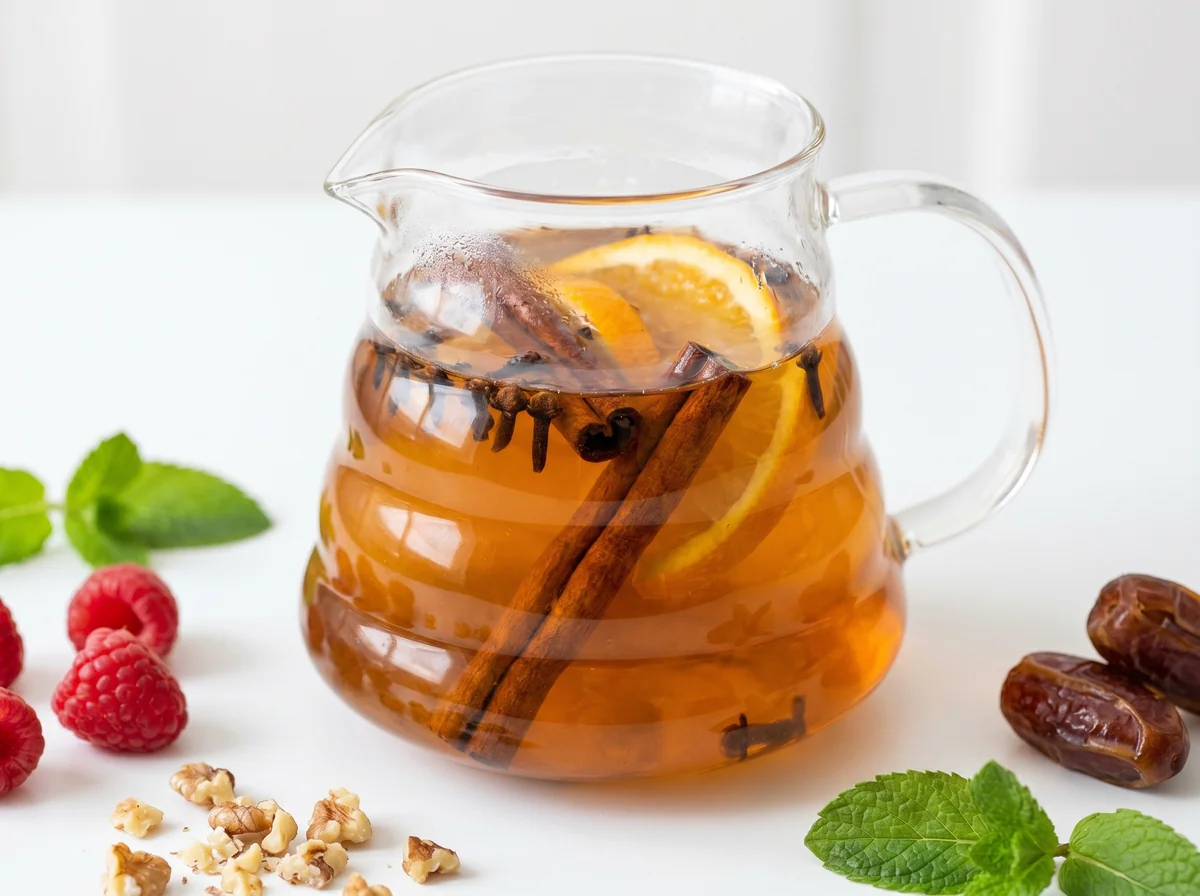
A warm, amber-coloured spiced infusion of whole cloves and cinnamon sticks with fresh ginger and honey — a conscious alternative to desserts and fizzy drinks after a heavy meal.
In Gulf homes, a heavy lunch is often closed with a warm, fragrant cup that settles the stomach and eases the spirit. This clove and cinnamon infusion is an extension of that habit: two cinnamon sticks and a handful of cloves steeped in hot water until it turns amber and aromatic.
No added sugar to weigh it down, no coffee to jangle the nerves — just quiet warmth to close the table. Serve it as a mindful alternative to desserts and fizzy drinks after a meal.
Preparation Steps
Lightly toast the spices
Over gentle heat, toast the cinnamon sticks and cloves in a dry pot for about one minute until fragrant. This toasting wakes up the volatile oils so the infusion comes out deeper in flavour without burning the spices and turning them bitter.
Add the water
Pour the water (500 ml) over the spices and add the ginger slices. Raise the heat until a gentle boil begins, with small bubbles appearing around the edges.
Steep over gentle heat
Lower the heat and let the mixture steep quietly for ten minutes uncovered. The colour gradually shifts to golden amber — a sign that the flavour has passed into the water. Avoid a hard rolling boil as it dissipates the aroma and leaves bitterness.
Strain
Strain the infusion into two cups through a fine-mesh strainer to catch the cloves, cinnamon, and ginger. A clear liquid is the sign of good straining.
Sweeten and serve
Add a lemon slice to each cup, then stir in the honey (1 teaspoon) once the steam has calmed slightly so high heat does not diminish its delicate flavour. Serve warm after a rich meal.
Blood Sugar Impact
The glycemic index (GI) measures how quickly a food raises blood sugar, while the glycemic load (GL) measures how much a full serving raises it. Together they give the complete picture.
Glycemic Index
GI
42Low
Low0–55Medium56–69High70+
A low value (≤55) means a gradual rise in blood sugar — the most suitable range for diabetes and insulin resistance.
Glycemic Load
GL
1Low
Low0–10Medium11–19High20+
Glycemic load reflects the impact of the full serving. To lower it: take half a serving, or pair the recipe with a source of protein and fiber.
Nutritional Information
Per ServingMakes 2 servings · one serving is about 265 g of raw ingredients
Calories12 kcal1%of Daily Value*
Protein0 g0%of Daily Value*
Carbohydrates3 g1%of Daily Value*
Fat0 g0%of Daily Value*
Fiber0 g0%of Daily Value*
Sodium1 mg0%of Daily Value*
* Percent Daily Values are based on a 2,000-calorie diet per FDA food-label reference values — your daily needs may be higher or lower. Values are derived from the recipe's ingredients via the USDA database.
Troubleshooting
The most common problems when preparing Clove and Cinnamon Infusion, and how to fix them:
Bitter, harsh taste
You boiled the infusion too long and too hard. Reduce the heat after the first bubble and keep to a gentle ten-minute steep; a rolling boil extracts the bitter compounds from the cinnamon.
Weak, flat flavour
The spices are old or were not toasted. Replace the cloves and cinnamon with fresh whole spices, and give them a one-minute dry toast before adding the water.
Drink is too spicy-hot from the ginger
Reduce the ginger to one slice, or add it only in the last two minutes of steeping rather than for the full duration.
Honey does not dissolve well
Stir it while the cup is still warm but not boiling. If it has cooled too much, gently rewarm the drink and avoid adding honey to a boiling liquid so its delicate flavour is preserved.
Sediment and cloudiness in the cup
Strain the infusion through a fine-mesh strainer or clean cheesecloth, and allow a moment for it to settle before pouring.
Storage and Make-Ahead
Serve immediately
Best drunk warm and freshly strained, when the flavour is at its peak.
Refrigerator
Store the strained infusion in a sealed glass container in the refrigerator for up to 24 hours. Reheat gently or serve iced with a lemon slice.
Dry spices
Store the cloves and cinnamon sticks in an airtight container away from light and heat; they will keep their fragrance for many months.
Avoid
Do not leave the honey-sweetened infusion at room temperature for hours — warm sweetened liquids are a favourable environment for microbial growth.
Tested Ingredient Substitutions
Original Ingredient
Tested Substitute
Ratio
Flavor Difference
Cassia cinnamon
Ceylon cinnamon
1:1
Ceylon cinnamon is lighter in colour, more delicate in flavour, and lower in coumarin — more suitable for regular use.
Honey
A pitted date or no sweetener
1 date per cup
Steep the date with the spices for a light natural sweetness, or leave it unsweetened for an almost calorie-free drink.
Fresh ginger
Dried ground ginger
1/4 teaspoon instead of 3 slices
Add it with the water; the drink may need finer straining to catch the powder.
Lemon slice
Orange peel or a bruised cardamom pod
to taste
Orange peel gives a fragrant citrus note; cardamom adds a familiar Gulf warmth.
Cloves
Star anise
half a star per 2 cups
A different aromatic character for those who dislike the sharpness of cloves, with a flavour closer to liquorice root.
How Much Does It Make? Scaling Guide
Quantity
Water
Cinnamon sticks
Whole cloves
Honey
2 cups
500 ml
2
6
1 tsp
4 cups
1 liter
4
12
2 tsp
6 cups
1.5 liters
6
18
3 tsp
Entertaining pitcher (8 cups)
2 liters
8
24
To taste
EEINA Nutrition Tip
Make it an occasional rather than a large daily habit, because common Cassia cinnamon contains coumarin which may stress the liver with prolonged excess. If Ceylon cinnamon is available it is lower in coumarin and more suitable for regular use. People with diabetes and those on blood thinners should consult their doctor before making this a habit.
Add This Recipe to Your Plan
The EEINA app saves your favorite recipes, calculates them from their real ingredients, and shows your daily numbers toward your goal. Try it free now.
Does this infusion lower blood sugar or treat diabetes?
No. Cinnamon has been studied for its possible role in supporting blood sugar control, but human study results are mixed and inconclusive, and cloves are not a treatment. Consider it a sugar-free supporting drink that helps reduce sweetened beverages after eating — not a substitute for medication or a prescribed diet. People with diabetes should consult their doctor.
How many cups can I drink daily?
One or two on occasion is plenty. Keep it as an occasional drink rather than a large daily routine, because common Cassia cinnamon contains coumarin which may stress the liver with prolonged excess.
Is it safe during pregnancy?
Pregnant women are advised to consult their doctor before making a habit of concentrated spice drinks such as clove, cinnamon, and ginger, as large quantities may not suit pregnancy. A moderate occasional amount is generally acceptable, but a medical opinion is safer.
What is the difference between Ceylon and Cassia cinnamon?
Ceylon cinnamon is lighter, more delicate in flavour, and lower in coumarin — more suitable for regular use. Cassia is more common, cheaper, darker, and stronger in flavour but higher in coumarin, so it is best not to overdo it.
Does it really help digestion after a heavy meal?
The sense of comfort from a warm aromatic cup is common and experiential, and usually comes from the warmth, the fluids, and the ritual of closing the table quietly. It is a gentle alternative to desserts and fizzy drinks, but it is not considered a treatment for indigestion.