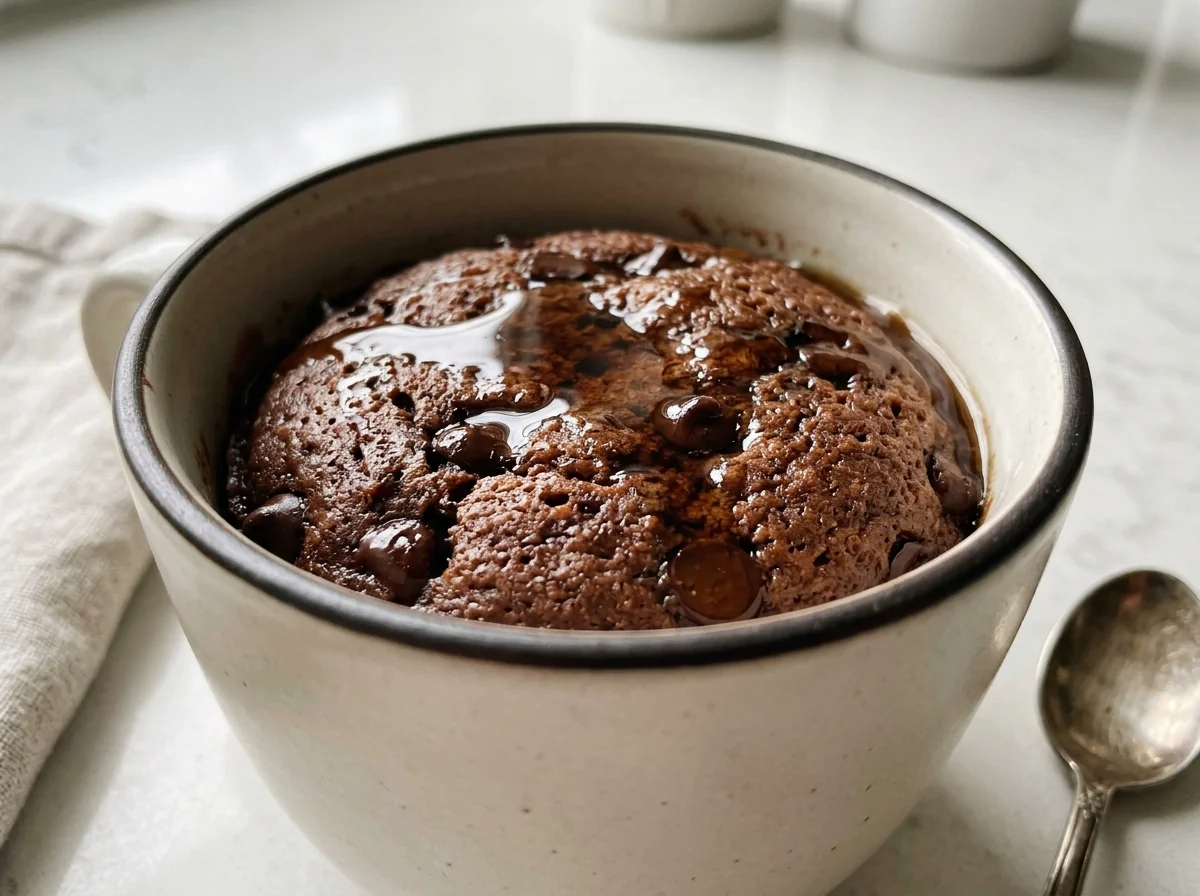
A mug cake with no flour and no oil: applesauce and an egg provide the moisture, chocolate protein powder with cocoa builds the body and flavor, and two minutes in the microwave are all it takes. The protein-snack variation on the classic mug cake, for anyone who wants their post-workout treat in a mug.
The classic mug cake in our library is built on flour and oil, and this is its variation for the protein-powder generation: the powder replaces the flour, and the applesauce and egg replace the oil — a post-workout treat that satisfies the chocolate craving without breaking the day's numbers.
The original is a Build Your Bite recipe, and we lowered its added sugar from the source: maple syrup from 30 ml to 20 ml and chocolate chips from 35 g to 20 g, since flavored protein powder carries its own sweetness — the taste stays fully chocolatey.
Preparation Steps
Gather the ingredients in the mug
In a wide mug holding 350 ml or more, combine the applesauce, maple syrup, protein powder, cocoa, egg, baking powder, vanilla, salt, and half the chocolate chips. The wide mug is a necessity, not a luxury — the batter rises above its level while cooking.
Whisk until the egg fully disappears
Whisk with a fork for about 30 seconds in a circular motion that reaches the bottom of the mug, until you have an even brown batter with no streaks of egg white and no pockets of powder on the walls. Any visible streak of egg cooks into an omelet inside the cake, so do not shortchange these seconds.
Cook in the microwave
Cook at 800 to 1000 watts for one and a half to two minutes: the cake rises, then settles, and the sign of doneness is a dry-to-the-touch surface and a tester coming out clean from the center. Start with a minute and a half and add 10 seconds as needed — protein powder dries out quickly when overcooked.
Add the remaining chips and serve
In the final thirty seconds, scatter the remaining chips over the top so they melt into liquid pockets in the surface heat, then let the mug stand a minute for the center to cool down, and eat with a long spoon. A single-serve treat with a portion bounded by the mug's wall.
Blood Sugar Impact
The glycemic index (GI) measures how quickly a food raises blood sugar, while the glycemic load (GL) measures how much a full serving raises it. Together they give the complete picture.
Glycemic Index
GI
38Low
Low0–55Medium56–69High70+
A low value (≤55) means a gradual rise in blood sugar — the most suitable range for diabetes and insulin resistance.
Glycemic Load
GL
11Medium
Low0–10Medium11–19High20+
Glycemic load reflects the impact of the full serving. To lower it: take half a serving, or pair the recipe with a source of protein and fiber.
Nutritional Information
Per ServingMakes 1 servings · one serving is about 160 g of raw ingredients
Calories339 kcal17%of Daily Value*
Protein21 g42%of Daily Value*
Carbohydrates34 g12%of Daily Value*
Fat15 g19%of Daily Value*
Fiber5 g18%of Daily Value*
Sodium516 mg22%of Daily Value*
* Percent Daily Values are based on a 2,000-calorie diet per FDA food-label reference values — your daily needs may be higher or lower. Values are derived from the recipe's ingredients via the USDA database.
Troubleshooting
The most common problems when preparing Chocolate Protein Mug Cake, and how to fix them:
It came out rubbery and dry
Overcooked — the most common protein mug cake mistake, since the powder dries faster than flour. Cut 10 seconds next time and pull it the moment the surface is dry.
It boiled over the rim of the mug
The mug was too small or the power too high. Use a mug of 350 ml or more at medium power; rising above the rim is normal as long as it settles back.
Cooked streaks of egg appeared inside
The whisking did not fully dissolve the egg. Whisk a full 30 seconds with a fork that reaches the bottom, until every trace of white disappears before cooking.
The texture came out thick like paste
A plant-based powder drank the liquids, or the powder was over-measured. Add a spoonful of milk to the batter before cooking, and measure the powder leveled, not heaped.
Storage and Make-Ahead
Straight from the mug
Eat it in its first minutes while warm — protein cake stiffens and dries the longer it stands.
Prepped dry mix
Multiply the dry ingredients into a sealed jar; when the craving strikes, take one portion, add the wet ingredients, and the cake is ready with no scales.
No refrigerator, no freezer
One serving with no leftovers — that is the whole point of the format.
Tested Ingredient Substitutions
Original Ingredient
Tested Substitute
Ratio
Flavor Difference
Whey protein powder
Plant-based protein powder (pea or plant blend), chocolate flavored
1:1 by weight
Plant powders absorb more liquid, so the batter comes out thicker — thin it with a tablespoon of milk (15 ml) until pourable again.
Chocolate-flavored powder
Vanilla or plain powder
1:1 by weight
The cocoa preserves the chocolate flavor; if the powder is unsweetened, raise the maple syrup to 30 ml — which, we note, returns to the source recipe's sweetness.
Applesauce
Mashed ripe banana
45 g, same weight
Equivalent moisture with a noticeable banana flavor and slightly more sweetness — you may drop part of the maple syrup with it.
Maple syrup
Honey or date molasses
20 ml, same amount
Functionally equivalent liquid sweeteners, and date molasses adds a local caramel depth.
How Much Does It Make? Scaling Guide
Number of cups
Applesauce
Protein powder
Cocoa
Eggs
1 cup (recipe)
45 g (3 tbsp)
15 g (2 tbsp)
6 g (1 tbsp)
1 egg
2 mugs (cook one after the other, not together)
90 g (6 tbsp)
30 g (4 tbsp)
12 g (2 tbsp)
2 eggs
EEINA Nutrition Tip
This cake follows its powder: sweetened, flavored whey powder is what these quantities are calibrated to. If your powder is plain and unsweetened, add a little more maple syrup and taste the batter before cooking — it would be safe to taste were it not for the egg, so taste before adding it.
Add This Recipe to Your Plan
The EEINA app saves your favorite recipes, calculates them from their real ingredients, and shows your daily numbers toward your goal. Try it free now.
How does it differ from the chocolate mug cake in our library?
The original is built on flour, oil, and milk with no egg; this one flips the equation: protein powder instead of flour, applesauce and an egg instead of oil — so it comes out higher in protein, lower in added sugar, and naturally gluten-free. The original is closer to classic cake in texture; this is a post-workout snack.
The classic version skips the egg on purpose — why an egg here?
Because the equation changed: a whole egg drowns a small flour batter and turns it rubbery, but protein powder has no gluten to bind it and applesauce has no fat to build it, so here the egg is both the binder and the structure — without it the cake crumbles.
Can it be made without a microwave?
The original recipe's author estimates 5 to 8 minutes in a 180°C oven in an ovenproof cup, but she has not tested it herself, and we do not endorse it until we try it.
When is the best time to eat it?
After a workout, when the craving for a treat meets the body's need for protein — or as a portioned evening dessert bounded by the mug's wall, instead of opening a bottomless box of sweets.