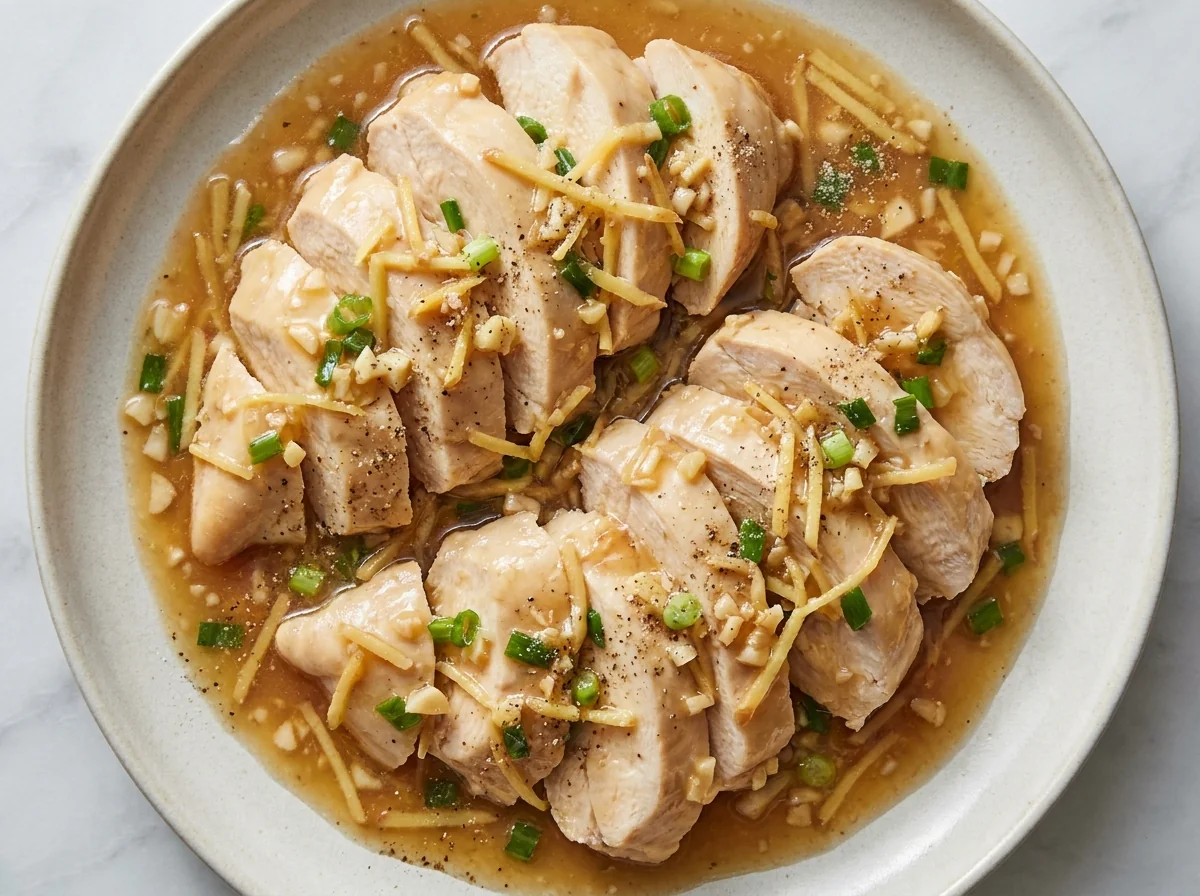
A quick dish from home-style Chinese cooking that relies on fresh ginger; we stir-fry it over high heat so its flavor stays sharp and refreshing.
Preparation Steps
Cut the chicken
Cut the chicken breasts into even bite-sized cubes so they cook evenly and stay tender.
Quick marinade
Mix the chicken with half the soy sauce, half the starch, and the white pepper, and leave it for ten minutes to absorb the flavor and stay juicy.
Prepare the sauce
Dissolve the rest of the starch in the water with the rest of the soy sauce and the sugar on the side, so it is ready for a quick addition.
Fry the chicken
Heat the oil in a wide pan over high heat and fry the chicken with constant stirring until it turns golden and turns white on the inside.
Add the aromatics
Push the chicken to the side and add the ginger, garlic, and the white part of the green onion, and stir for half a minute until fragrant without burning.
Combine the sauce
Pour in the sauce mixture and stir everything until the sauce thickens and coats the chicken, and make sure the chicken has reached 74 degrees Celsius in the thickest piece (FSIS).
Serve
Add the green part of the onion and lift the pan off the heat right away, and serve it hot over steamed rice.
Blood Sugar Impact
The glycemic index (GI) measures how quickly a food raises blood sugar, while the glycemic load (GL) measures how much a full serving raises it. Together they give the complete picture.
Glycemic Index
GI
43Low
Low0–55Medium56–69High70+
A low value (≤55) means a gradual rise in blood sugar — the most suitable range for diabetes and insulin resistance.
Glycemic Load
GL
3Low
Low0–10Medium11–19High20+
Glycemic load reflects the impact of the full serving. To lower it: take half a serving, or pair the recipe with a source of protein and fiber.
Nutritional Information
Per ServingMakes 4 servings · one serving is about 205 g of raw ingredients
Calories266 kcal13%of Daily Value*
Protein35 g70%of Daily Value*
Carbohydrates8 g3%of Daily Value*
Fat10 g13%of Daily Value*
Fiber1 g4%of Daily Value*
Sodium676 mg29%of Daily Value*
* Percent Daily Values are based on a 2,000-calorie diet per FDA food-label reference values — your daily needs may be higher or lower. Values are derived from the recipe's ingredients via the USDA database.
Troubleshooting
The most common problems when preparing Chinese Ginger Chicken, and how to fix them:
The chicken is dry
Do not prolong the frying after it is done; lift it off as soon as it reaches 74 degrees Celsius, as excess heat dries it out.
The sauce is runny
Stir it again over the heat until the starch thickens, or add a little of the starch and water mixture.
The ginger flavor is faint
Use fresh grated ginger and add it near the end so its flavor does not evaporate.
Storage and Make-Ahead
Refrigerator
Keep it in an airtight container in the refrigerator for up to three days.
Reheating
Reheat it in a pan over medium heat with a splash of water to restore the sauce's consistency.
Freezing
Freeze it for up to a month, and thaw it in the refrigerator before reheating.
Tested Ingredient Substitutions
Original Ingredient
Tested Substitute
Ratio
Flavor Difference
Chicken breasts
Boneless chicken thighs
1 to 1
Thighs are slightly more tender and hold up well to quick frying.
Low-sodium soy sauce
Regular soy sauce diluted with water
Reduce the amount
To lower the sodium, dilute the regular sauce and reduce the added salt.
Corn starch
Potato starch
1 to 1
Gives a similar thickening to the sauce.
How Much Does It Make? Scaling Guide
Ingredient
2 servings
4 servings (base)
8 servings
Chicken breasts
300 g
600 g
1200 g
Fresh ginger
12 g
25 g
50 g
Soy sauce
15 ml
30 ml
60 ml
Vegetable oil
12 ml
25 ml
50 ml
EEINA Nutrition Tip
Quick frying over high heat traps the chicken's juices and keeps it tender, and fresh ginger gives a clearer flavor than ground.
Add This Recipe to Your Plan
The EEINA app saves your favorite recipes, calculates them from their real ingredients, and shows your daily numbers toward your goal. Try it free now.