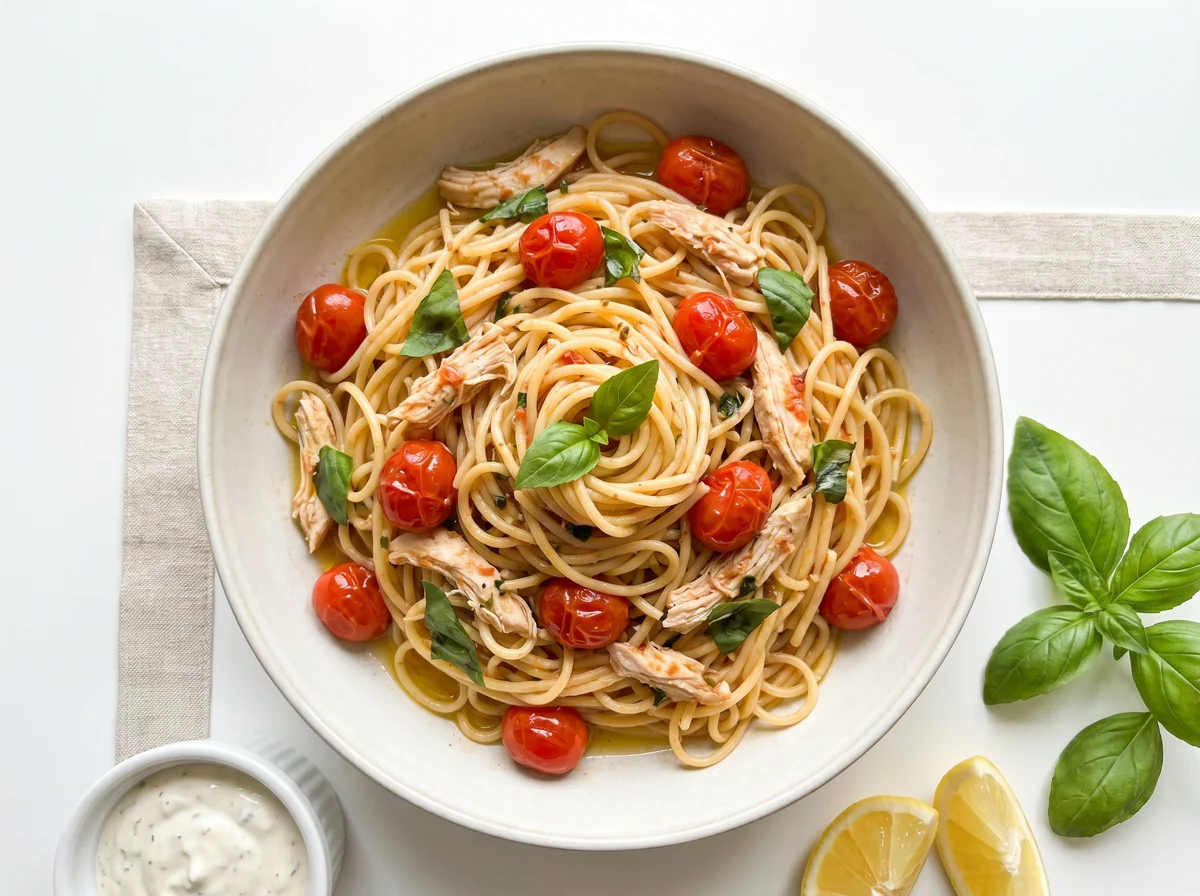
Whole-wheat pasta with chicken, fresh tomato sauce, and basil · high fiber and lower GI than white pasta. A famous Italian lunch in a balanced healthy version.
Tomato and basil pasta is one of Italy's simplest dishes and one of the most present on our tables.
EEINA's version replaces white pasta with whole-wheat pasta, higher in fiber and lower on the glycemic index, and adds plenty of chicken and fresh sauce, so it comes out a filling, balanced lunch that keeps the original dish's flavor.
Preparation Steps
Boil the pasta
Boil a pot of water with plenty of salt, and add the pasta. Cook it according to the package time minus one minute (al dente · tender with a slight bite) because slightly undercooked pasta is lower on the glycemic index. Reserve half a cup of the cooking water, then drain it.
Cook the chicken
Heat a tablespoon of oil in a wide skillet over medium-high heat, and brown the chicken cubes for 5 to 6 minutes until they take on color and cook through (reaching 74°C inside [1]). Set them aside.
Prepare the sauce
In the same skillet, add the rest of the oil and the onion and stir for 3 minutes until it wilts, then the garlic and pepper flakes for half a minute. Add the crushed tomatoes, salt, and pepper, and leave them over low heat for 8 to 10 minutes until they thicken and the color deepens (the sign the sauce is done).
Combine
Return the chicken to the sauce, then add the drained pasta and toss until it is coated with the sauce. If it dries out, add a little of the reserved cooking water until the consistency becomes glossy and cohesive.
Serve
Remove it from the heat and add the torn basil and parmesan (optional). Give it a final toss and serve it warm right away with a green side salad.
Blood Sugar Impact
The glycemic index (GI) measures how quickly a food raises blood sugar, while the glycemic load (GL) measures how much a full serving raises it. Together they give the complete picture.
Glycemic Index
GI
41Low
Low0–55Medium56–69High70+
A low value (≤55) means a gradual rise in blood sugar — the most suitable range for diabetes and insulin resistance.
Glycemic Load
GL
16Medium
Low0–10Medium11–19High20+
Glycemic load reflects the impact of the full serving. To lower it: take half a serving, or pair the recipe with a source of protein and fiber.
Nutritional Information
Per ServingMakes 4 servings · one serving is about 340 g of raw ingredients
Calories395 kcal20%of Daily Value*
Protein33 g66%of Daily Value*
Carbohydrates47 g17%of Daily Value*
Fat9 g12%of Daily Value*
Fiber7 g25%of Daily Value*
Sodium490 mg21%of Daily Value*
Potassium913 mg19%of Daily Value*
Phosphorus464 mg37%of Daily Value*
* Percent Daily Values are based on a 2,000-calorie diet per FDA food-label reference values — your daily needs may be higher or lower. Values are derived from the recipe's ingredients via the USDA database.
Troubleshooting
The most common problems when preparing Chicken Pasta with Tomato and Basil, and how to fix them:
The pasta is sticky and clumped
The water was too little or unsalted, or it was overcooked. Use plenty of salted water, stir in the first two minutes, and cook it al dente. Do not rinse it with water after draining so it does not lose the starch that helps the sauce cling.
The sauce is watery and does not cling to the pasta
It did not thicken enough. Let the tomatoes simmer gently for 8 to 10 minutes until they thicken and their water evaporates. A spoon of the starchy pasta cooking water helps the sauce hold together and cling.
The chicken is dry and tough
It was overcooked or over too high a heat. Breast cubes cook in 5 to 6 minutes. Remove them as soon as they take on color and cook through, then return them to the sauce only at the end so they warm.
The taste is flat with no depth
Not enough salt or the tomatoes are too acidic. Salt the sauce well, and if it is acidic add a small pinch of cooked tomato paste. The fresh basil at the end and the parmesan add clear depth.
The basil turned black and wilted
It was added too early and exposed to heat. The basil is added at the end after removing the skillet from the heat, and is torn by hand not with a knife, so it keeps its green color and aroma.
Storage and Make-Ahead
Fridge (4°)
Three days in an airtight container after cooling. Add a splash of water or olive oil when reheating to restore the consistency.
Freezer (-18°)
One month. The pasta may soften slightly after freezing. Freeze the sauce with the chicken separately from the pasta for a better result.
Make ahead
Prepare the tomato sauce with chicken in advance and keep it for two days in the fridge. Boil the pasta fresh at serving time as it takes only 10 minutes.
Reheating
In a skillet over low heat with a splash of water, or in the microwave for two minutes with a toss. Do not leave it out of the fridge for more than two hours [2].
Tested Ingredient Substitutions
Original Ingredient
Tested Substitute
Ratio
Flavor Difference
Whole-wheat pasta
Lentil or chickpea pasta
same amount
Higher protein and fiber and lower GI, an excellent choice for people with diabetes
Chicken breast
Shrimp or water-packed canned tuna
same weight
Shrimp cooks in 3 minutes, tuna is a quick option (adds fish for allergy)
Fresh tomatoes
A can of crushed peeled tomatoes
a 400 g can
Faster and more consistent in flavor outside tomato season
Parmesan
Grated low-fat cheese or omit it
same amount
For the dairy-free version or to reduce fat
Basil
Parsley or fresh thyme
same amount
A different but refreshing flavor, easier to find
How Much Does It Make? Scaling Guide
Servings
Pasta
Chicken
Tomatoes
Pot
2 (single × 2)
100 g
200 g
2 pieces
medium pan
4 (base)
200 g
400 g
4 pieces
large pan
6 (family)
300 g
600 g
6 pieces
large pan
8 (hosting)
400 g
800 g
8 pieces
wide pot
EEINA Nutrition Tip
Two secrets lower the pasta's effect on blood sugar: choose whole wheat, and cook it al dente (tender with a bite), not too soft, since overcooked pasta raises its glycemic index. Stick to a moderate serving (about 50 g dry per person) and add a green salad for more fiber.
Add This Recipe to Your Plan
The EEINA app saves your favorite recipes, calculates them from their real ingredients, and shows your daily numbers toward your goal. Try it free now.
Al dente whole-wheat pasta has a low glycemic index (about 48), but its glycemic load is moderate, so the serving matters greatly. We stick to about 50 g dry per person, and add protein and a salad. Lentil pasta is a better choice for them.
What is the difference between whole-wheat and white pasta?
Whole wheat keeps the bran and germ, so higher fiber, slower sugar absorption, and longer satiety. White is refined, higher on the glycemic index. The difference in flavor is slight with the sauce.
How do I make it gluten-free?
Use lentil, chickpea, or rice pasta, which are gluten-free and higher in protein. Omit the parmesan for the dairy-free version too.
Why do I cook it al dente?
Slightly undercooked pasta (tender with a slight bite) raises blood sugar more slowly than overcooked pasta, plus it holds together better with the sauce. Cook it one minute less than the package time.
Is it good for preparing weekly meals?
Yes, the sauce with chicken keeps for 3 days in the fridge and its flavor deepens. It is best to keep it separate from the pasta and boil the pasta fresh, or mix them and add a splash of water when reheating.
Sources: USDA · University of Sydney · Gulf GSO · Our methodology · Updated on