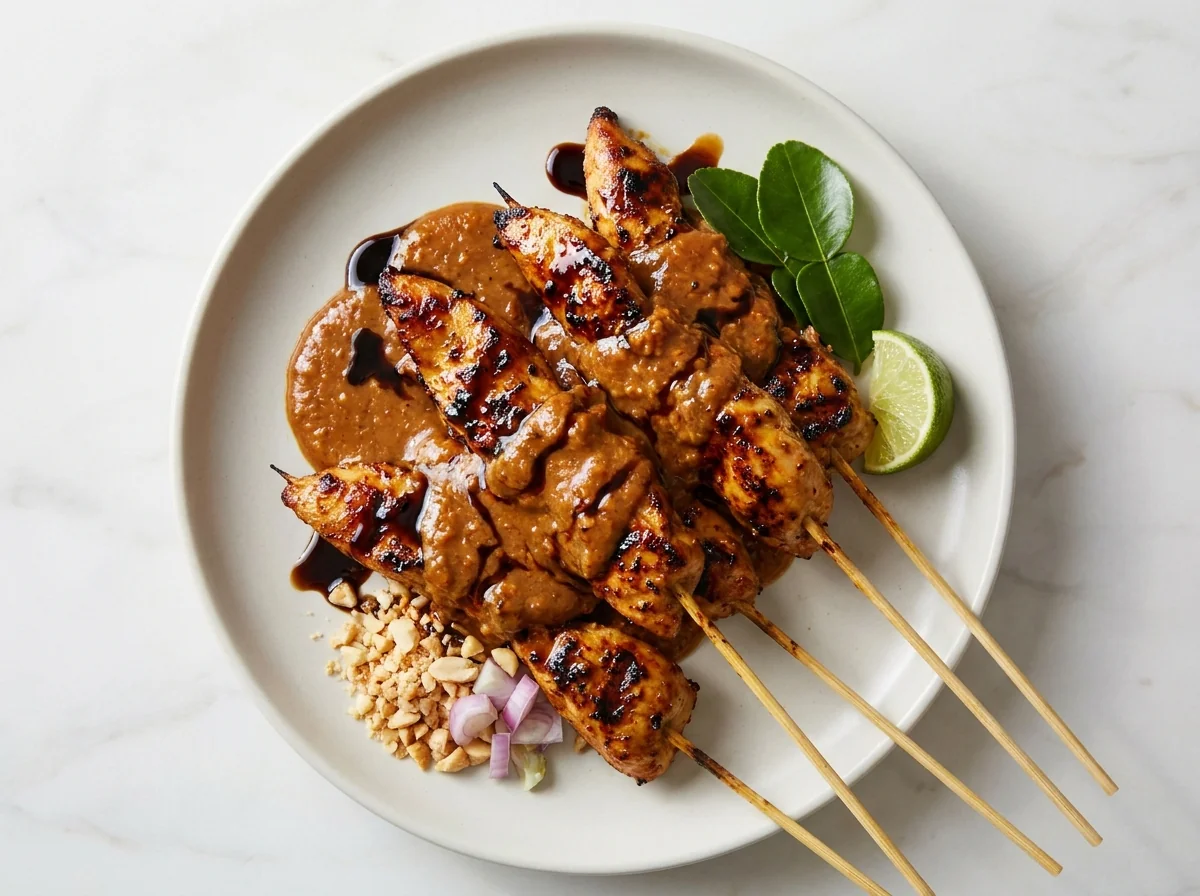
Satay is a beloved street food in Indonesia and Malaysia, small skewers grilled over charcoal and served with a warm peanut sauce.
Preparation Steps
Soak the skewers
Soak the wooden skewers in water for twenty minutes until saturated, so they do not burn on the grill.
Prepare the marinade
Mix the soy sauce, turmeric, coriander, cumin, garlic, oil, sugar, and salt until they form a uniform paste of a deep golden color. This balance of sweet and salty tenderizes the chicken and gives it a grilled crust.
Marinate the chicken
Toss the chicken strips in the marinade until fully coated, then leave them in the refrigerator for at least half an hour so the flavor penetrates.
Arrange the skewers
Thread the strips onto the skewers in a wavy, not tightly stretched, way, as the waviness leaves gaps that cook evenly and catch the grill's heat.
Grill the skewers
Grill the skewers over medium-high heat three to four minutes per side until grill marks appear and the center of the chicken reaches 74 degrees Celsius, which is the safe temperature for chicken.
Prepare the peanut sauce
Heat the coconut milk over low heat, then dissolve the peanut butter in it with the soy sauce, lemon, and hot chili, and thin it with the warm water until it becomes a smooth consistency that coats the spoon.
Serve
Arrange the skewers on a plate and pour the sauce on the side for dipping, and serve them warm so the sauce stays soft.
Blood Sugar Impact
The glycemic index (GI) measures how quickly a food raises blood sugar, while the glycemic load (GL) measures how much a full serving raises it. Together they give the complete picture.
Glycemic Index
GI
20Low
Low0–55Medium56–69High70+
A low value (≤55) means a gradual rise in blood sugar — the most suitable range for diabetes and insulin resistance.
Glycemic Load
GL
2Low
Low0–10Medium11–19High20+
Glycemic load reflects the impact of the full serving. To lower it: take half a serving, or pair the recipe with a source of protein and fiber.
Nutritional Information
Per ServingMakes 4 servings · one serving is about 265 g of raw ingredients
Calories505 kcal25%of Daily Value*
Protein44 g88%of Daily Value*
Carbohydrates14 g5%of Daily Value*
Fat31 g40%of Daily Value*
Fiber3 g11%of Daily Value*
Sodium1005 mg44%of Daily Value*
* Percent Daily Values are based on a 2,000-calorie diet per FDA food-label reference values — your daily needs may be higher or lower. Values are derived from the recipe's ingredients via the USDA database.
Troubleshooting
The most common problems when preparing Chicken Skewers with Peanut Sauce (Satay), and how to fix them:
The chicken dries out on the grill
Choose strips of even thickness and do not prolong the grilling after the center reaches 74 degrees.
The sauce is too thick
Add warm water a spoonful at a time while stirring until it softens.
The marinade does not stick to the chicken
Pat the strips dry with a towel before marinating so the paste grips them.
Storage and Make-Ahead
Refrigerator
Keep the cooked skewers in an airtight container for up to three days.
Sauce
Keep it separate in the refrigerator for up to five days and reheat it with a little water.
Freezing
Freeze the marinated raw chicken for up to a month, and thaw it in the refrigerator before grilling.
Tested Ingredient Substitutions
Original Ingredient
Tested Substitute
Ratio
Flavor Difference
Peanut butter
Sesame tahini
1 to 1
The flavor changes and the dish then contains sesame instead of peanuts
Chicken breast
Boneless chicken thigh
1 to 1
The thigh is more tender and juicier and needs a comparable grilling time
Coconut milk
Whole cow's milk
1 to 1
The dish then contains dairy and the coconut flavor fades
Brown sugar
Date molasses
1 to 1
Gives a deeper sweetness and a darker color
How Much Does It Make? Scaling Guide
Ingredient
2 servings
4 servings (base)
8 servings
Chicken breast
300 g
600 g
1200 g
Peanut butter
60 g
120 g
240 g
Coconut milk
80 ml
160 ml
320 ml
Soy sauce
15 ml
30 ml
60 ml
EEINA Nutrition Tip
Soaking the wooden skewers before grilling prevents them from burning and keeps the shape of the skewers intact.
Add This Recipe to Your Plan
The EEINA app saves your favorite recipes, calculates them from their real ingredients, and shows your daily numbers toward your goal. Try it free now.