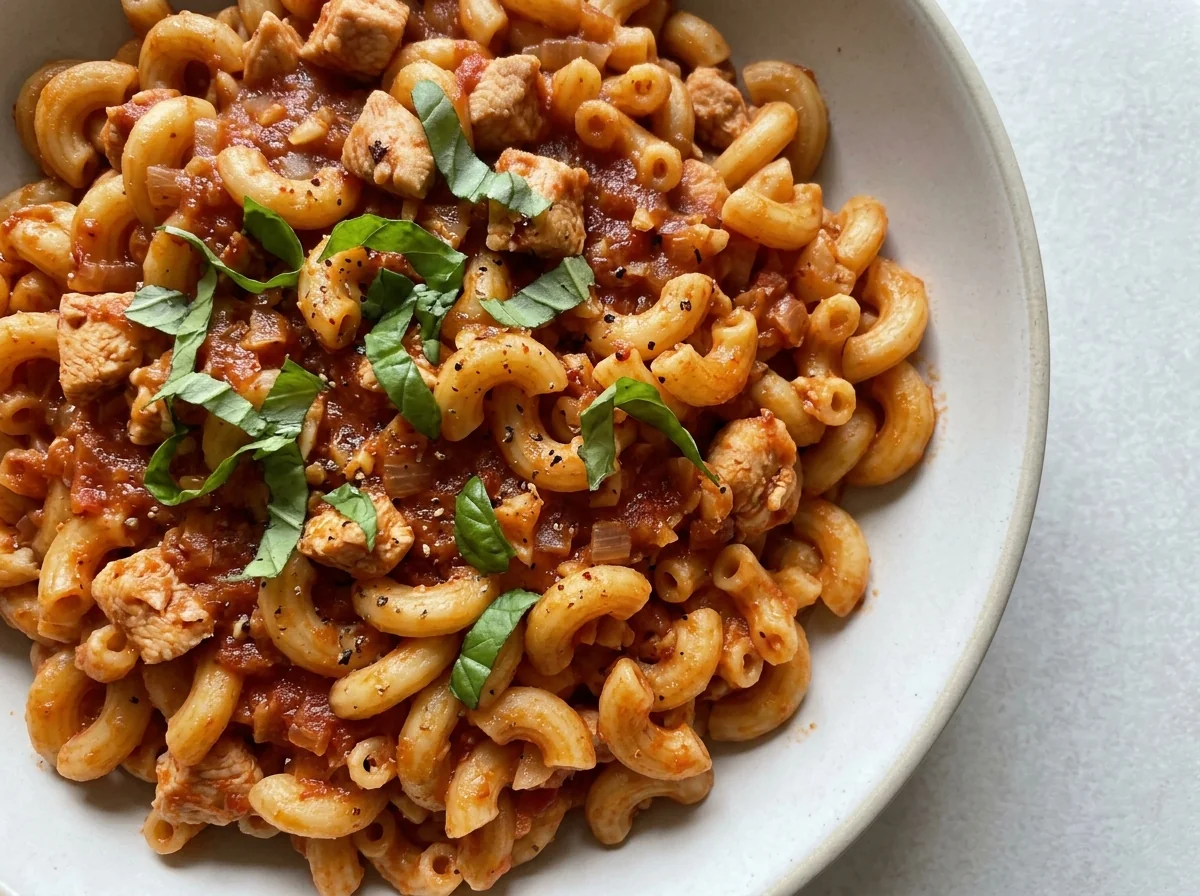
The dinner that never disappoints: chicken cubes browned then simmered in a garlicky tomato sauce with a touch of heat, then the boiled pasta is tossed into it on the stove for two minutes until it drinks in the sauce, and the dish is finished with fresh basil leaves. One sauce pot and one boiling pot, and a family dinner done in 45 minutes.
The original is a red chicken pasta recipe from Sayidaty Kitchen in its own sequence: chicken browned, then onion, garlic, and hot pepper, then tomato sauce at a gentle boil, and pasta boiled and tossed into the sauce for two minutes, garnished with basil.
We adjusted three documented things: we fixed the pasta package at 400 g by weight, we reduced the hot pepper from the source's three teaspoons to one so it suits a family table, we cut the oil from three tablespoons to two, and we added half a cup of hot water to stretch the sauce to coat 400 g of pasta.
Preparation Steps
Brown the chicken
Heat the oil in a wide pot over medium heat, and brown the chicken cubes for 5 to 6 minutes, stirring, until their surface colors brown and their liquid dries in the pot.
Add the onion and garlic
Add the chopped onion to the chicken and stir for 3 minutes until it wilts and turns translucent, then add the garlic and hot pepper and stir for a minute until fragrant without letting the garlic burn.
Pour and simmer the sauce
Pour in the tomato sauce and hot water and season with the salt and black pepper. When it boils, lower the heat and leave it uncovered for 10 minutes until it thickens slightly and the chicken cooks through, cutting with no pink trace.
Boil the pasta
While the sauce simmers, boil the pasta in plenty of salted boiling water for the package time minus one minute, until tender with a slight resistance at the core, and save a cup of its boiling water before draining.
Toss on the heat and serve
Add the drained pasta to the sauce and toss over low heat for 2 minutes until every piece drinks in the sauce and is coated by it, loosening with a little of the saved boiling water if it tightens. Serve hot, garnished with the basil leaves.
Blood Sugar Impact
The glycemic index (GI) measures how quickly a food raises blood sugar, while the glycemic load (GL) measures how much a full serving raises it. Together they give the complete picture.
Glycemic Index
GI
47Low
Low0–55Medium56–69High70+
A low value (≤55) means a gradual rise in blood sugar — the most suitable range for diabetes and insulin resistance.
Glycemic Load
GL
37High
Low0–10Medium11–19High20+
Glycemic load reflects the impact of the full serving. To lower it: take half a serving, or pair the recipe with a source of protein and fiber.
Nutritional Information
Per ServingMakes 4 servings · one serving is about 350 g of raw ingredients
Calories621 kcal31%of Daily Value*
Protein43 g86%of Daily Value*
Carbohydrates84 g31%of Daily Value*
Fat12 g15%of Daily Value*
Fiber5 g18%of Daily Value*
Sodium575 mg25%of Daily Value*
* Percent Daily Values are based on a 2,000-calorie diet per FDA food-label reference values — your daily needs may be higher or lower. Values are derived from the recipe's ingredients via the USDA database.
Troubleshooting
The most common problems when preparing Chicken Macaroni in Red Sauce, and how to fix them:
The chicken came out dry and tough
The cubes are small and the cooking ran long. Brown them only until their surface colors — the sauce's ten-minute simmer finishes their cooking. Brown them to full doneness and then simmer, and you have dried them twice.
The sauce was not enough for the pasta
The hot water was forgotten or the thickening ran long. Keep to the half cup and loosen with the saved boiling water at tossing time — the pasta drinks from the sauce as it turns.
The pasta turned mushy
It was boiled to full doneness and then cooked in the sauce. Cut it a minute short of the package time — the two tossing minutes on the heat complete its cooking in the sauce, not beyond it.
The sauce tastes sharply sour
The tomato sauce did not simmer enough. Extend the gentle uncovered simmer by 5 extra minutes — simmering takes the edge off concentrated tomato with no need for sugar.
Storage and Make-Ahead
Refrigerator (4°C)
Keep in an airtight container for up to 3 days; the pasta drinks in the sauce as it chills and comes out thicker in body.
Reheating
Reheat in a pot over low heat with a sprinkle of water to bring back the sauce's flow, or in the microwave, covered, in short bursts with stirring.
Freezer (-18°C)
Best to freeze the chicken in its sauce alone for up to 2 months and boil fresh pasta at serving time — frozen pasta softens in texture.
Make ahead
Prepare the chicken in its sauce a day ahead and chill it; dinner then is boiling the pasta and a two-minute toss.
Tested Ingredient Substitutions
Original Ingredient
Tested Substitute
Ratio
Flavor Difference
Chicken breast
Skinless chicken thighs, cubed
Same weight, 500 g
More tender and harder to dry out, with slightly more fat than breast.
White wheat pasta
Whole wheat pasta
Same weight, 400 g
Raises the fiber and calms the dish's effect on blood sugar; needs an extra minute of boiling.
Ground hot red pepper
Sweet paprika
Same weight, 2 g
Keeps the red color and depth and removes all the heat for children.
Fresh basil
Chopped parsley
Same weight, 10 g
An always-available green garnish; the flavor leans from Italian toward Arab.
How Much Does It Make? Scaling Guide
Servings
Pasta
Chicken
Tomato sauce with water
2 servings (half amount)
200 g
250 g
120 ml + 60 ml
4 servings (base)
400 g
500 g
240 ml + 120 ml
8 servings (double)
800 g
1000 g
480 ml + 240 ml
EEINA Nutrition Tip
The saved cup of boiling water is the most precious thing in the pot: its starch binds the sauce to the pasta so every piece gets coated instead of the sauce pooling at the bottom of the dish. And for a gentler effect on blood sugar, choose whole wheat pasta and keep its boil one minute short — less-cooked pasta digests more slowly.
Add This Recipe to Your Plan
The EEINA app saves your favorite recipes, calculates them from their real ingredients, and shows your daily numbers toward your goal. Try it free now.
Because it finishes cooking in the sauce on the heat for two minutes, drinking in flavor instead of water and staying firm-bodied. Pasta boiled to full doneness and then tossed on heat overshoots and turns mushy.
Does fresh tomato sauce work instead of canned?
It does, with four large tomatoes grated and simmered until their water evaporates and they thicken — about 15 extra minutes. Their flavor is milder than concentrate, so some of the sauce's water may not be needed.
How do we make it a true one-pot dish?
By boiling the pasta in the sauce pot itself: raise the hot water to two cups, add the raw pasta to the sauce, and cook covered, stirring, until it is tender and has drunk the liquid — about 12 minutes — watching that the base does not dry.
What completes the dish as a balanced dinner?
The dish carries protein and starches together, so a vegetable side completes it: a green salad with lemon or sautéed vegetables, and skip the bread — the pasta is the table's starches.