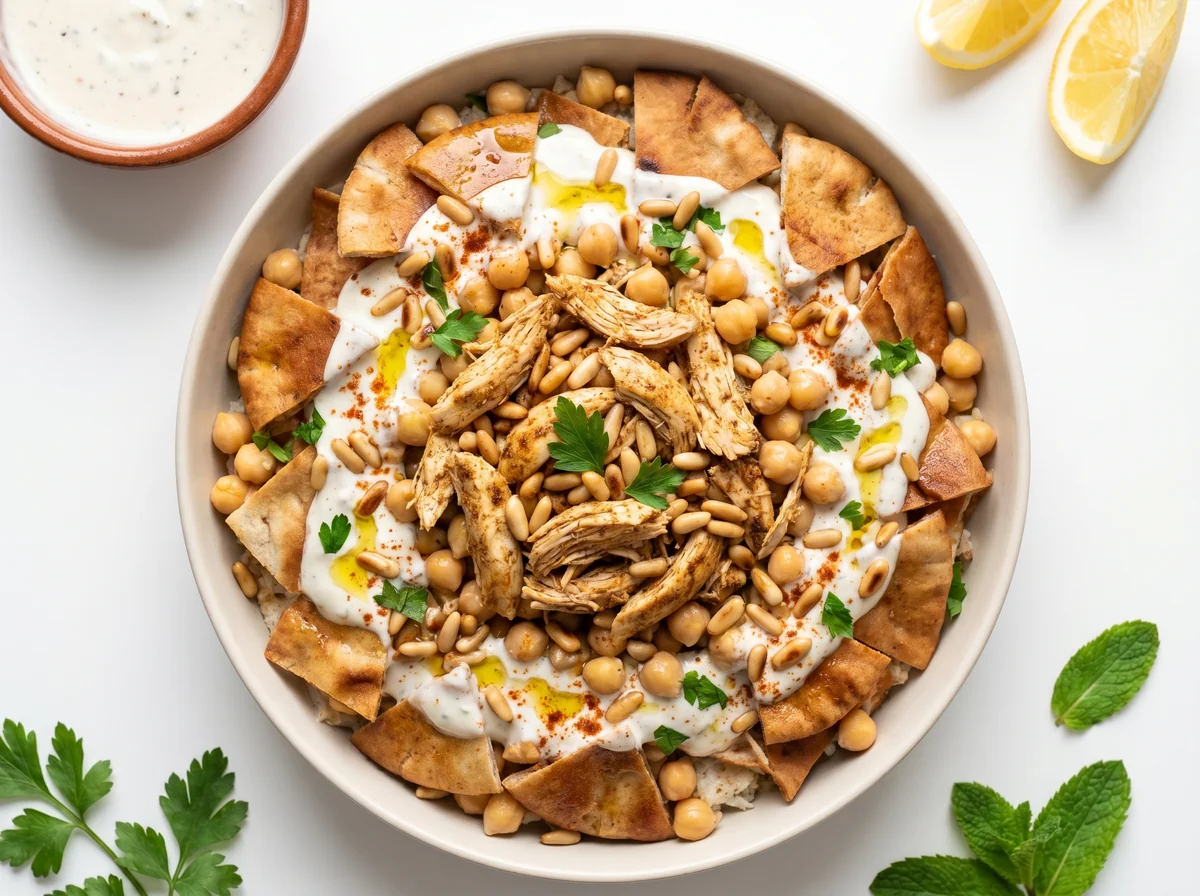
Chicken Fatteh (Levantine Layered Rice and Bread Bowl)
A satisfying Levantine Fatteh — crispy toasted bread layered with rice and shredded poached chicken, blanketed in a garlic-yogurt-tahini sauce and finished with pine nuts. A complete meal with a moderate glycaemic load. Contains gluten, dairy, sesame, and tree nuts.
Chicken Fatteh is the richest member of the Levantine Fatteh family, layering crispy bread, rice, and poached shredded chicken under a blanket of garlicky yogurt and tahini. It belongs to the Fatteh tradition (hummus fatteh, aubergine fatteh) built around reviving day-old bread with layers on top.
It is a complete, filling one-dish meal, served at lunch and at gatherings, topped with toasted pine nuts. The magic of Fatteh is the meeting of crispy, creamy, and tangy in every mouthful.
Preparation Steps
Poach the chicken
Poach the chicken in water with a halved onion, bay leaf, cardamom, and a pinch of salt until cooked and tender, about 25 minutes. Skim off any foam for a clear broth. Lift out the chicken, strain and reserve the broth, then shred the meat into thin strips.
Toast the bread
Cut the Arabic flatbread into squares and toast in the oven until golden and crisp (or fry lightly in a little oil). Crispy bread is the foundation of Fatteh — set it aside until the moment of assembly to keep it crunchy.
Prepare the yogurt mixture
Whisk the yogurt with tahini, crushed garlic, lemon juice, and a pinch of salt until smooth and pourable. If it is too thick, loosen with two spoonfuls of warm chicken broth. This tangy garlic-tahini mixture is the soul of Fatteh.
Warm the rice and chicken
Warm the cooked rice and shredded chicken in a little broth until heated through. Fatteh is served with warm components over crispy bread — the contrast between hot and crunchy is part of the pleasure.
Assemble
In a wide serving platter, spread the crispy bread first, then the warm rice, then the chicken strips, then pour the garlic yogurt mixture over everything to cover. Assemble immediately before serving so the bread does not go soft under the yogurt.
Garnish and serve
Brown the pine nuts in ghee until golden, then scatter over the Fatteh along with the parsley and a pinch of baharat (Gulf spice blend). Serve the Chicken Fatteh immediately while warm so every bite brings together the crispy, creamy, and tangy. It is a complete Levantine meal combining chicken, rice, bread, and yogurt in one dish.
Blood Sugar Impact
The glycemic index (GI) measures how quickly a food raises blood sugar, while the glycemic load (GL) measures how much a full serving raises it. Together they give the complete picture.
Glycemic Index
GI
55Low
Low0–55Medium56–69High70+
A low value (≤55) means a gradual rise in blood sugar — the most suitable range for diabetes and insulin resistance.
Glycemic Load
GL
23High
Low0–10Medium11–19High20+
Glycemic load reflects the impact of the full serving. To lower it: take half a serving, or pair the recipe with a source of protein and fiber.
Nutritional Information
Per ServingMakes 5 servings · one serving is about 375 g of raw ingredients
Calories632 kcal32%of Daily Value*
Protein38 g76%of Daily Value*
Carbohydrates44 g16%of Daily Value*
Fat34 g44%of Daily Value*
Fiber2 g7%of Daily Value*
Sodium275 mg12%of Daily Value*
* Percent Daily Values are based on a 2,000-calorie diet per FDA food-label reference values — your daily needs may be higher or lower. Values are derived from the recipe's ingredients via the USDA database.
Troubleshooting
The most common problems when preparing Chicken Fatteh (Levantine Layered Rice and Bread Bowl), and how to fix them:
Bread went soft and lost its crunch
The Fatteh was assembled too early. Toast the bread well and keep it separate until the very moment of serving — assemble the layers just before plating, not long before.
Yogurt mixture broke or became grainy
It was added to very hot components or heated. Fatteh is served with uncooked yogurt poured over warm (not boiling) components — boiling heat will split the yogurt.
Garlic tastes raw and sharp
Too much garlic or it was freshly crushed. Crush the garlic with a pinch of salt and lemon juice a few minutes before mixing to soften its sharpness, or reduce the number of cloves.
Fatteh is dry
Not enough yogurt mixture or broth. Be generous with the yogurt mixture so it covers everything, and warm the rice and chicken in broth to keep them moist. Fatteh needs the moisture of the yogurt to come together.
Pine nuts burned
Toasted over high heat. Toast them over low heat while stirring and remove as soon as they turn golden — they are rich in oil and burn quickly.
Storage and Make-Ahead
Refrigerator (4°C)
Components stored separately: chicken and rice for three days, yogurt mixture for two days, toasted bread in a dry container. Do not store assembled Fatteh as the bread will go soggy.
Freezer (-18°C)
Freeze the poached chicken, rice, and broth. Do not freeze the yogurt mixture or the toasted bread (yogurt separates and bread loses its texture). Assemble fresh.
Prep ahead
Poach the chicken, toast the bread, and prepare the yogurt mixture separately, then assemble minutes before serving. This is the best way to get a crunchy Fatteh rather than a soggy one.
Food safety
Cook the chicken until fully done (no pink), and do not leave assembled Fatteh with its yogurt sauce out of refrigeration for more than two hours.
Tested Ingredient Substitutions
Original Ingredient
Tested Substitute
Ratio
Flavor Difference
Chicken
Shredded braised lamb or a vegetarian version (chickpeas)
Same quantity
The chickpea version becomes Hummus Fatteh; lamb is a richer alternative. Chicken is the lightest.
Full-fat plain yogurt
Low-fat Greek yogurt
Same quantity
Higher protein, less fat, and a thicker consistency
Toasted white bread
Toasted wholemeal bread
Same quantity
Higher fibre and a slightly lower glycaemic load
How Much Does It Make? Scaling Guide
Servings
Chicken
Cooked rice
Yogurt
Bread
3 (half recipe)
300 g
1 cup
1½ cups
1 loaf
5 (base)
500 g
2 cups
3 cups
2 loaves
10 (large family)
1 kg
4 cups
6 cups
4 loaves
EEINA Nutrition Tip
Chicken Fatteh is a relatively balanced meal: protein from the chicken and yogurt, carbohydrates from the rice and bread, and calcium from the yogurt. Its glycaemic load is moderate. To lighten it: use skinless chicken and low-fat yogurt, toast rather than fry the bread, reduce the pine nuts, and increase the chicken at the expense of bread and rice. Serve with a green salad for a more balanced meal.
Add This Recipe to Your Plan
The EEINA app saves your favorite recipes, calculates them from their real ingredients, and shows your daily numbers toward your goal. Try it free now.
What is the difference between Chicken Fatteh, Hummus Fatteh, and Aubergine Fatteh?
All are Fatteh (crispy bread, layers, and garlicky yogurt), but the main ingredient differs: Chicken Fatteh uses chicken and rice, Hummus Fatteh uses chickpeas, and Aubergine Fatteh uses roasted aubergine. Chicken Fatteh is the most filling as a complete meal.
When should I assemble the Fatteh?
Right before serving. Assembling early makes the bread go soft under the yogurt and lose the crunchiness that is the heart of the dish. Keep the components separate and assemble at the very last moment.
Is Chicken Fatteh healthy?
It is a balanced meal: protein, calcium, and carbohydrates. Its glycaemic load is moderate. Lighten it with skinless chicken, low-fat yogurt, toasted (not fried) bread, more chicken, and serve it with a salad.
Should I add tahini to the yogurt mixture?
Tahini adds depth, richness, and flavour to the yogurt and is common in both Chicken and Hummus Fatteh. You can leave it out for a lighter plain garlicky yogurt, but it enriches the flavour (and adds a sesame allergen).