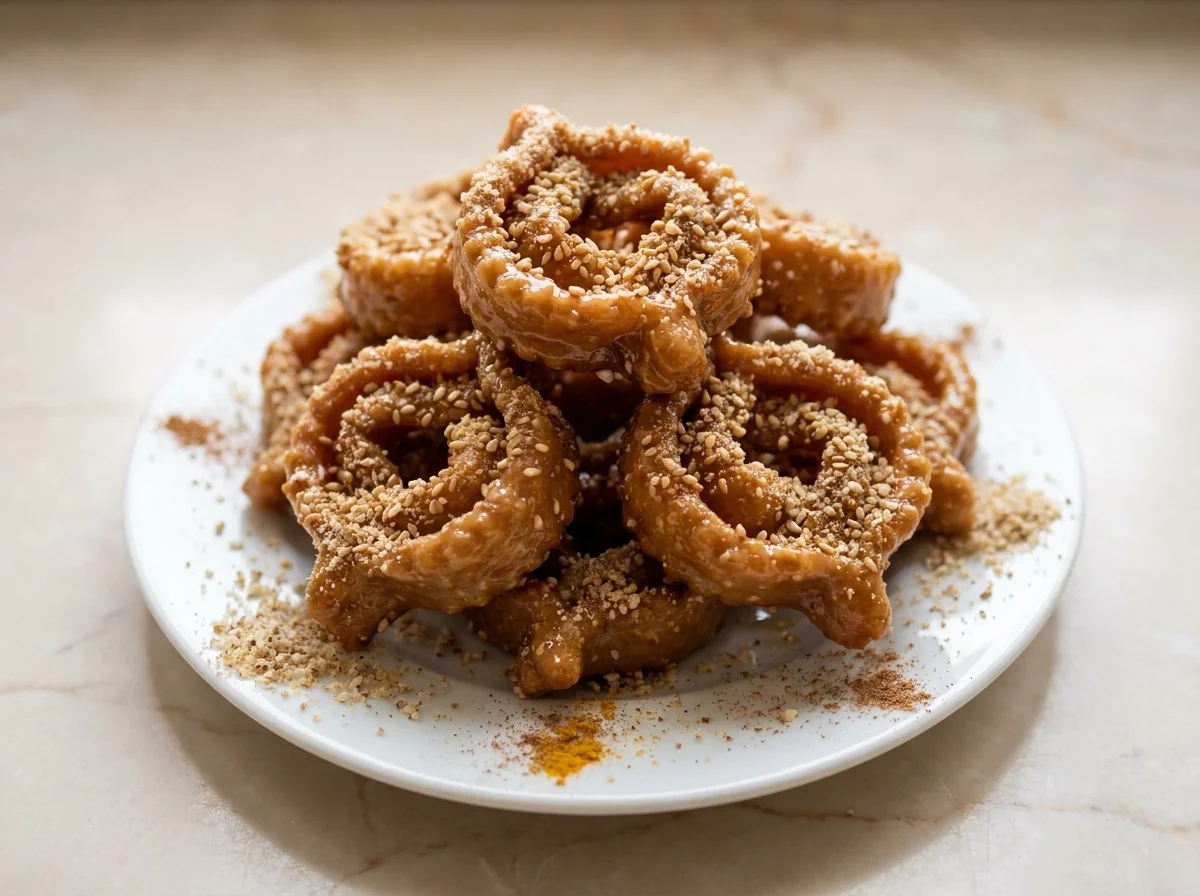
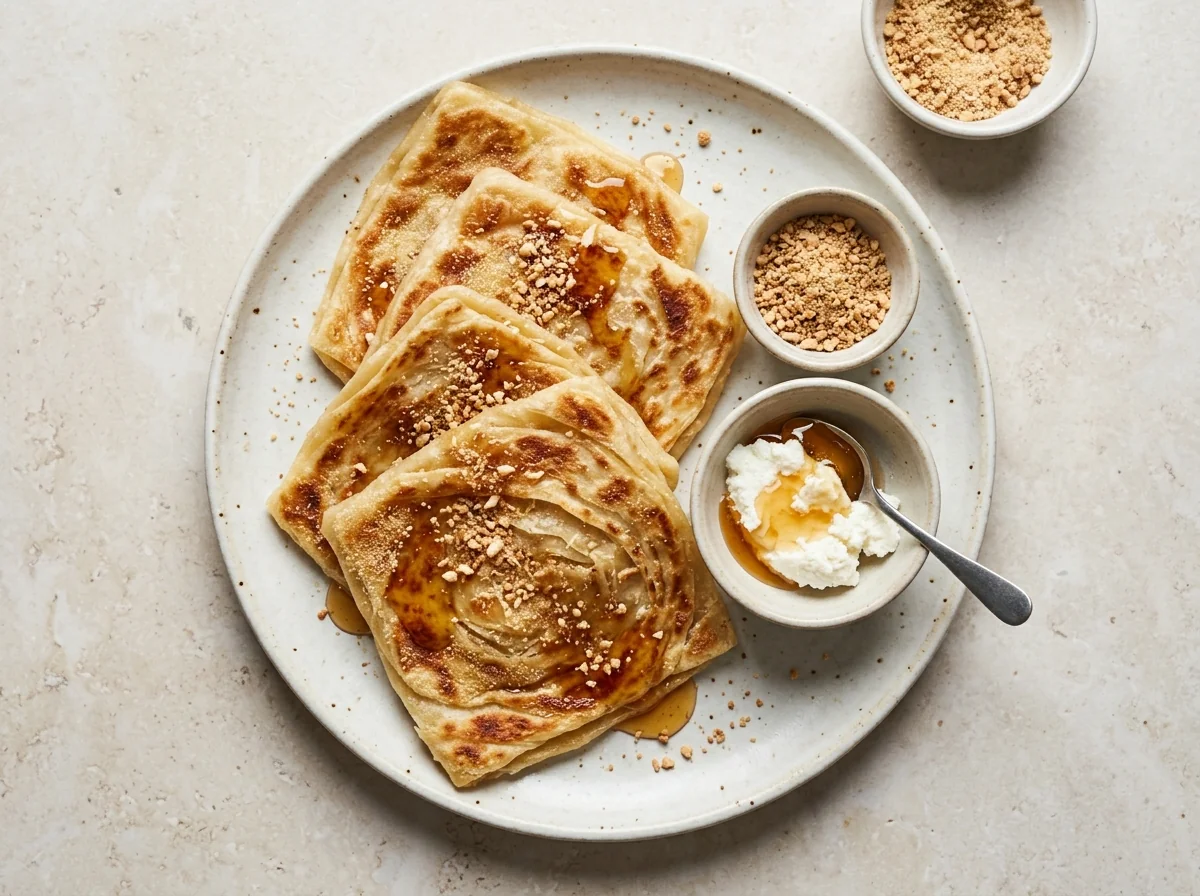
We make chebakia the way it is made in Moroccan homes in preparation for Ramadan, dough scented with ground sesame, anise, and saffron shaped into flowers that are fried and dipped in honey.
It is the companion of harira on the iftar table, prepared in large batches and stored throughout the month to be served every night.
Preparation Steps
Preparing the sesame and yeast
We toast the sesame until golden then grind it fine, and dissolve the yeast in a little warm water until it activates.
Kneading
We mix the flour with the ground sesame, almonds, anise, cinnamon, saffron, and turmeric, then add the egg, butter, oil, vinegar, orange blossom water, and yeast and knead until we get a cohesive, soft dough, and leave it to rest.
Shaping
We roll the dough thin and cut it into rectangles, slit each rectangle with parallel cuts and weave it into a flower shape as is the custom with chebakia.
Frying
We fry the flowers in medium-hot oil until they turn golden and crisp, about ten minutes.
Honeying
We heat the honey with a splash of orange blossom water, and move the chebakia straight from the oil into the hot honey and leave it to soak for five minutes.
Garnishing
We lift it out and drain the excess honey, sprinkle it with toasted sesame, then leave it to dry and set before serving.
Blood Sugar Impact
The glycemic index (GI) measures how quickly a food raises blood sugar, while the glycemic load (GL) measures how much a full serving raises it. Together they give the complete picture.
Glycemic Index
GI
62Medium
Low0–55Medium56–69High70+
A low value (≤55) means a gradual rise in blood sugar — the most suitable range for diabetes and insulin resistance.
Glycemic Load
GL
20High
Low0–10Medium11–19High20+
Glycemic load reflects the impact of the full serving. To lower it: take half a serving, or pair the recipe with a source of protein and fiber.
Nutritional Information
Per ServingMakes 20 servings · one serving is about 65 g of raw ingredients
Calories260 kcal13%of Daily Value*
Protein4 g8%of Daily Value*
Carbohydrates34 g12%of Daily Value*
Fat13 g17%of Daily Value*
Fiber2 g7%of Daily Value*
Sodium6 mg0%of Daily Value*
* Percent Daily Values are based on a 2,000-calorie diet per FDA food-label reference values — your daily needs may be higher or lower. Values are derived from the recipe's ingredients via the USDA database.
Troubleshooting
The most common problems when preparing Moroccan Sesame Cookies with Honey (Chebakia), and how to fix them:
The chebakia is not crisp
We roll the dough thin and make sure the oil is hot enough, for thick dough or cold oil makes it soft.
The honey does not soak in
We heat the honey well and move the chebakia into it hot straight from the oil and leave it to soak for a few minutes.
The flower loses its shape in the frying
We weave the dough well before frying and fry it gently without extra movement in the first seconds.
Storage and Make-Ahead
Room temperature
It keeps in an airtight container for up to a month, and the honey preserves it so it does not spoil quickly.
Freezing
It can be frozen after frying and before honeying for up to four months, then honeyed at serving.
Tested Ingredient Substitutions
Original Ingredient
Tested Substitute
Ratio
Flavor Difference
honey
concentrated sugar syrup
same amount
Syrup is cheaper, but honey is the original in chebakia
saffron
a little turmeric only
a pinch
Turmeric gives a similar color without the saffron flavor
ground almonds
more ground sesame
same weight, 40 g
For those who do not want almonds, while sesame remains the main flavor
butter
vegetable oil
same weight
Oil makes it lighter in flavor
How Much Does It Make? Scaling Guide
Ingredient
Half quantity
Quantity (base)
Double
White flour
150 g
300 g
600 g
Toasted ground sesame
50 g
100 g
200 g
Honey for dipping
250 g
500 g
1000 g
Melted butter
20 g
40 g
80 g
Orange blossom water
20 ml
40 ml
80 ml
Instant yeast
1.5 g
3 g
6 g
EEINA Nutrition Tip
We move the chebakia straight from the hot oil into the hot honey, for this pairing lets it soak up the honey and stay crisp, whereas cold honey just slides off it.
Add This Recipe to Your Plan
The EEINA app saves your favorite recipes, calculates them from their real ingredients, and shows your daily numbers toward your goal. Try it free now.