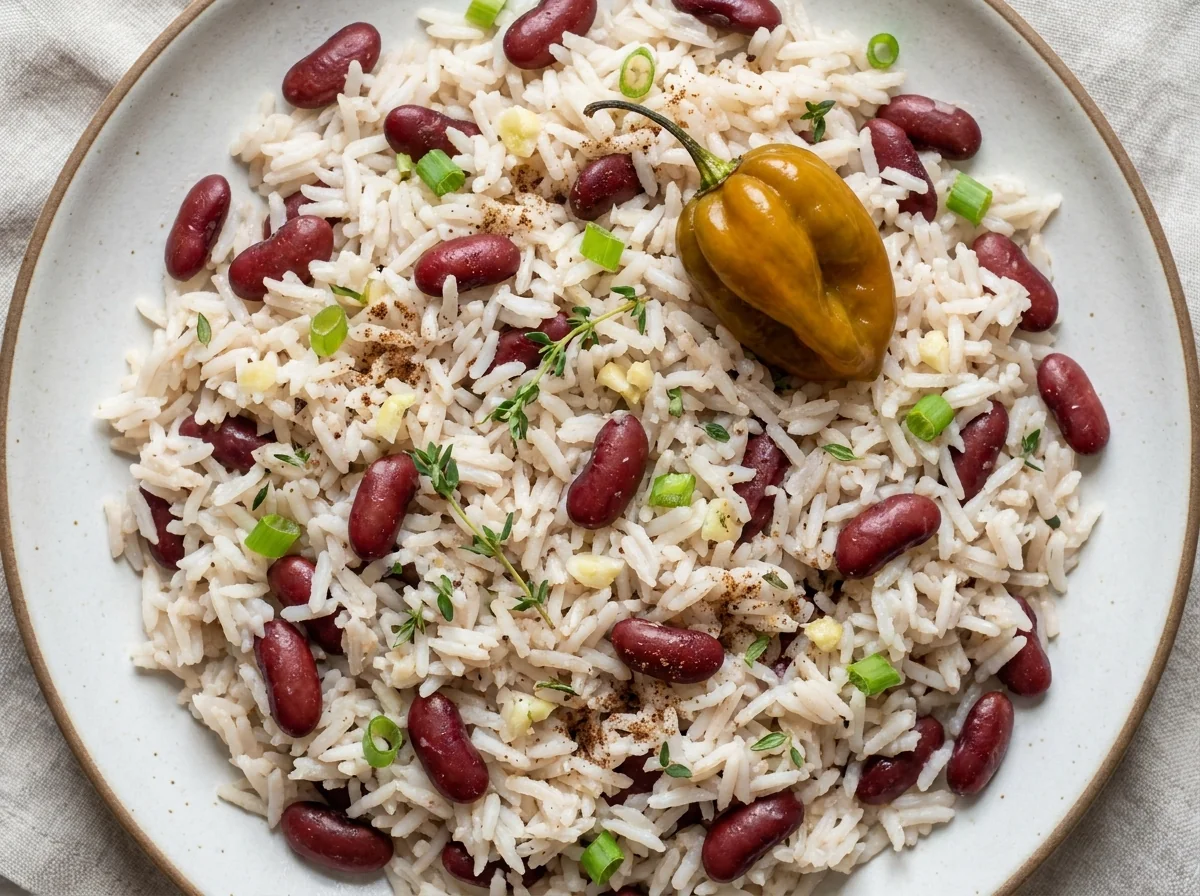
Rice and peas is a staple dish in the Caribbean islands, and its most famous version is the Jamaican one, in which the beans and rice are cooked in coconut milk with thyme, green onion, a whole Scotch bonnet pepper, and allspice.
It is usually served alongside main dishes on Sundays and on special occasions, and the legume varies between red kidney beans and pigeon peas depending on the household.
Preparation Steps
Prepare the aromatic base
In a wide pot put the washed rice with the boiled red kidney beans, the coconut milk, and the water, and stir until combined. This is the base of the Caribbean dish: the rice is cooked in the coconut milk itself so it absorbs its flavor.
Add the spices and herbs
Add the garlic, allspice, salt, and black pepper and stir, then place the green onion, fresh thyme, and the whole Scotch bonnet pepper on top of the surface without cutting it. The whole pepper gives flavor without high heat as long as it stays intact and unsplit.
Cook on low heat
Raise the pot to a boil, then lower the heat to its lowest and cover it, and leave it for eighteen minutes without stirring until the rice absorbs the liquid and is cooked.
Remove from the heat and let it rest
Turn off the heat and leave the pot covered for five more minutes so the rice finishes cooking in its steam. Then remove the pepper, thyme, and green onion.
Serving
Fluff the rice gently with a fork until the grains separate, and serve it hot alongside a main dish or on its own.
Blood Sugar Impact
The glycemic index (GI) measures how quickly a food raises blood sugar, while the glycemic load (GL) measures how much a full serving raises it. Together they give the complete picture.
Glycemic Index
GI
64Medium
Low0–55Medium56–69High70+
A low value (≤55) means a gradual rise in blood sugar — the most suitable range for diabetes and insulin resistance.
Glycemic Load
GL
60High
Low0–10Medium11–19High20+
Glycemic load reflects the impact of the full serving. To lower it: take half a serving, or pair the recipe with a source of protein and fiber.
Nutritional Information
Per ServingMakes 3 servings · one serving is about 405 g of raw ingredients
Calories678 kcal34%of Daily Value*
Protein14 g28%of Daily Value*
Carbohydrates97 g35%of Daily Value*
Fat25 g32%of Daily Value*
Fiber4 g14%of Daily Value*
Sodium724 mg31%of Daily Value*
* Percent Daily Values are based on a 2,000-calorie diet per FDA food-label reference values — your daily needs may be higher or lower. Values are derived from the recipe's ingredients via the USDA database.
Troubleshooting
The most common problems when preparing Caribbean Rice and Peas with Coconut Milk, and how to fix them:
The rice came out sticky or pasty
There was too much liquid or it was stirred during cooking. Adjust the liquid ratio and leave the pot covered without stirring until cooked.
The rice stayed raw at the bottom
The heat was too high so the liquid evaporated before cooking. Lower it to its lowest after boiling, and add a little hot water if it dries out early.
The dish is hotter than it should be
The pepper split, so its heat came out into the rice. Place it whole and uncut and remove it intact when cooked.
The coconut flavor is faint
Replace part of the water with full-fat coconut milk, and be sure to shake the can before using it.
Storage and Make-Ahead
Immediately
Serve hot right after fluffing the rice.
In the fridge
Keeps three days in an airtight container, and is reheated with a splash of water to restore its tenderness.
Freezing
Can be frozen for a month, and is thawed in the fridge before reheating.
Tested Ingredient Substitutions
Original Ingredient
Tested Substitute
Ratio
Flavor Difference
Red kidney beans
Pigeon peas
1:1
A common traditional Caribbean substitute in the same amount
Scotch bonnet pepper
Habanero pepper or hot red chili
~
Close flavor when the original variety is unavailable
White rice
Brown rice
1:1
Increases fiber and lowers the glycemic index, and needs a longer cooking time
Full-fat coconut milk
Light coconut milk
1:1
Cuts the fat and calories with a lighter flavor
How Much Does It Make? Scaling Guide
Ingredient
4 servings
2 servings
8 servings
Rice
300 g
150 g
600 g
Kidney beans
250 g
125 g
500 g
Coconut milk
400 ml
200 ml
800 ml
EEINA Nutrition Tip
Red kidney beans are a good source of dietary fiber and plant protein, and combining legumes with rice completes the protein and slows the rise in blood sugar compared to rice alone.
Add This Recipe to Your Plan
The EEINA app saves your favorite recipes, calculates them from their real ingredients, and shows your daily numbers toward your goal. Try it free now.
What does the word peas or beans mean in the dish's name?
In Caribbean cuisine the word peas is used for legumes in general, and the one used here is red kidney beans, which may be replaced with pigeon peas in some households.
Why is the hot pepper put in whole?
To give its distinctive aromatic flavor without releasing all of its heat into the rice. It stays intact during cooking and is removed when done.
Does it work as a main dish?
Yes, on its own as a balanced vegetarian meal, and it is usually served alongside meat, chicken, or fish.
How do I make it more suitable for blood sugar control?
Replace the white rice with brown rice and add a vegetable portion; the extra fiber slows carbohydrate absorption.