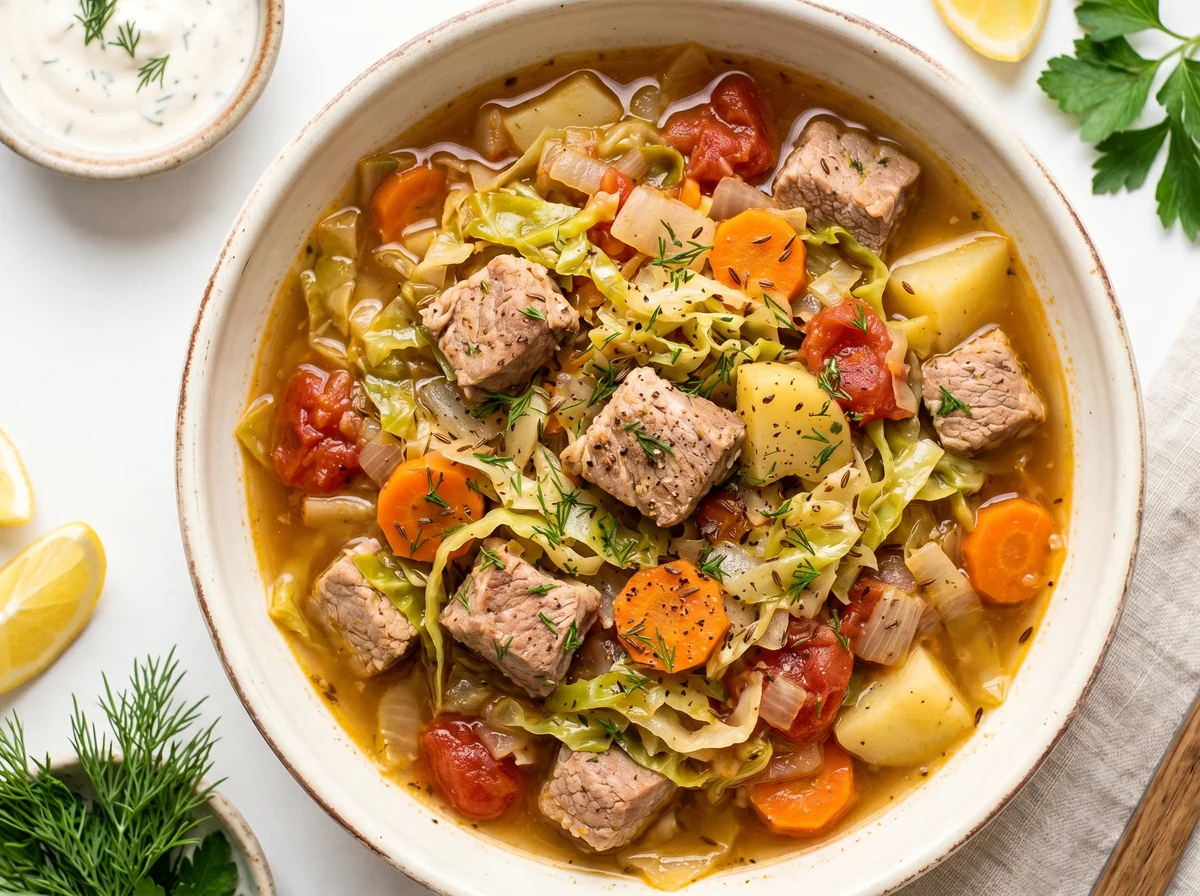
A warm Levantine stew — cabbage cooked with meat, tomatoes, garlic, and coriander until tender and infused with flavor. Served over rice. Satisfying and high in fiber, with a low glycemic load and free from common allergens.
Cabbage and meat stew is a homey Levantine winter dish belonging to the wide family of Levantine stews — okra, green beans, peas — that combine vegetables and meat in a tomato sauce.
What sets it apart is the celebrated Levantine taqliya of crushed garlic and fresh coriander that perfumes the pot and defines the kitchen's character. Cabbage is cheap and abundant in winter; it softens and melts into the sauce, making for a warm, nutritious, economical dish served over rice at the family lunch table.
Preparation Steps
Cook the meat
In a pot, brown the meat cubes in a little oil until they change color. Cover with water, add an onion, bay leaves, and cardamom, bring to a boil, then reduce to a gentle simmer until completely tender — about one hour (less in a pressure cooker). Reserve the broth. Tender meat is the foundation of the stew.
Prepare the cabbage
Shred the cabbage into medium strips after removing the tough core. Cabbage shrinks considerably during cooking, so a generous amount is needed. Wash and drain.
Sauté the garlic and coriander
In the stew pot, brown the onion until wilted, then add the crushed garlic and chopped fresh coriander — the classic Levantine taqliya — and stir until fragrant. This taqliya is the soul of the Levantine stew and its defining flavor.
Add the cabbage
Add the shredded cabbage and stir with the taqliya until it wilts and shrinks slightly. The cabbage releases its water and softens, absorbing the garlic and coriander flavor.
Braise in the sauce
Add the cooked meat, tomato sauce, tomato paste, spices, salt, pepper, and a little of the meat broth. Stir, cover, and cook over low heat until the cabbage is completely tender and the sauce has thickened — about 30 minutes.
Serve
Add a squeeze of lemon juice at the end for freshness. Taste and adjust the seasoning. Serve the cabbage stew hot over white rice or with bread. A warm, hearty, nourishing Levantine winter stew — the cabbage goes tender and melts into the rich tomato sauce with garlic, coriander, and meat.
Blood Sugar Impact
The glycemic index (GI) measures how quickly a food raises blood sugar, while the glycemic load (GL) measures how much a full serving raises it. Together they give the complete picture.
Glycemic Index
GI
25Low
Low0–55Medium56–69High70+
A low value (≤55) means a gradual rise in blood sugar — the most suitable range for diabetes and insulin resistance.
Glycemic Load
GL
2Low
Low0–10Medium11–19High20+
Glycemic load reflects the impact of the full serving. To lower it: take half a serving, or pair the recipe with a source of protein and fiber.
Nutritional Information
Per ServingMakes 5 servings · one serving is about 245 g of raw ingredients
Calories315 kcal16%of Daily Value*
Protein19 g38%of Daily Value*
Carbohydrates11 g4%of Daily Value*
Fat22 g28%of Daily Value*
Fiber3 g11%of Daily Value*
Sodium411 mg18%of Daily Value*
* Percent Daily Values are based on a 2,000-calorie diet per FDA food-label reference values — your daily needs may be higher or lower. Values are derived from the recipe's ingredients via the USDA database.
Troubleshooting
The most common problems when preparing Cabbage and Meat Stew (Levantine Style), and how to fix them:
Cabbage is still firm
Not cooked long enough or the heat was too high. Braise the stew covered over low heat until the cabbage is completely tender and melts into the sauce — it needs time to soften. Remove the tough core before cooking.
Meat is tough
Not cooked long enough beforehand. Cook the meat on its own until completely tender — about one hour or in a pressure cooker — before adding it to the cabbage, as the cabbage cooks faster.
Strong cabbage smell
Do not overcook it — the taqliya (garlic and coriander) and lemon juice at the end both mask any strong aroma.
Bland sauce
Not enough taqliya or tomato paste. The taqliya (garlic and coriander) and tomato paste are the flavor base — be generous with both, and add a squeeze of lemon at the end for freshness.
Watery stew
The cabbage released its water and it did not reduce. Leave the pot uncovered for a few minutes at the end to let the excess water evaporate and the sauce thicken. Tomato paste also helps build body.
Storage and Make-Ahead
Refrigerator (4°C)
Keeps in an airtight container for three days. The flavor improves the next day, as with stews in general. Reheat over low heat.
Freezer
Freeze in an airtight container for two to three months. The cabbage becomes a little softer after freezing but is perfectly acceptable in a stew. Thaw in the refrigerator then reheat.
Meal prep
Cook the meat ahead and keep it with its broth. Then prepare the stew at serving time in about 30 minutes. Pre-cooked meat saves the most time.
Food safety
Cook the meat until fully tender and cooked through. Do not leave the stew unrefrigerated for more than two hours. Cool quickly and reheat thoroughly before serving.
Tested Ingredient Substitutions
Original Ingredient
Tested Substitute
Ratio
Flavor Difference
Red meat
Chicken or plant-based version (chickpeas or potato)
same amount
Chicken is leaner; chickpeas make it a plant-based stew rich in fiber and plant protein
White cabbage
Red cabbage or Swiss chard
same amount
Red cabbage adds color and antioxidants; Swiss chard leaves are more delicate and soften faster
Fatty meat
Lean meat with the floating fat skimmed off
same amount
Reduces saturated fat — skim the fat layer from the broth surface after chilling
How Much Does It Make? Scaling Guide
Servings
Cabbage
Meat
Sauce
3 (half recipe)
¼ head
250 g
1 cup
5 (base)
½ head
500 g
2 cups
10 (feast)
1 whole head
1 kg
4 cups
EEINA Nutrition Tip
Cabbage stew is an excellent balanced choice: cabbage is a low-calorie vegetable rich in fiber, vitamin C, and antioxidant compounds; the meat provides protein; the tomatoes offer lycopene; and the glycemic load is low. To lighten it further, use lean meat and skim the fat floating on the broth. The generous amount of cabbage makes it filling at reasonable calories. Balance the portion of accompanying rice, and it is ideal for those watching their weight.
Add This Recipe to Your Plan
The EEINA app saves your favorite recipes, calculates them from their real ingredients, and shows your daily numbers toward your goal. Try it free now.
A mixture of crushed garlic and chopped fresh coriander sautéed in oil until fragrant — a foundational flavor in many Levantine stews (cabbage, okra, green beans). It can be added at the start or end and defines the character of the dish.
Is cabbage stew healthy?
Yes — an excellent balanced choice: cabbage is low in calories and rich in fiber and vitamin C; the meat provides protein; the tomatoes offer lycopene; and the glycemic load is low. Use lean meat and it is filling at reasonable calories, ideal for managing weight.
How do I get rid of the cabbage smell?
Do not overcook it — the taqliya (garlic and coriander) overpowers any aroma, and the lemon at the end refreshes the dish. Fresh cabbage has a milder smell than older cabbage.
What is served alongside cabbage stew?
White rice to absorb the sauce, or Arabic bread, and sometimes plain yogurt on the side. Rice is the traditional accompaniment to Levantine stews — balance the portion to manage the glycemic load of the meal.