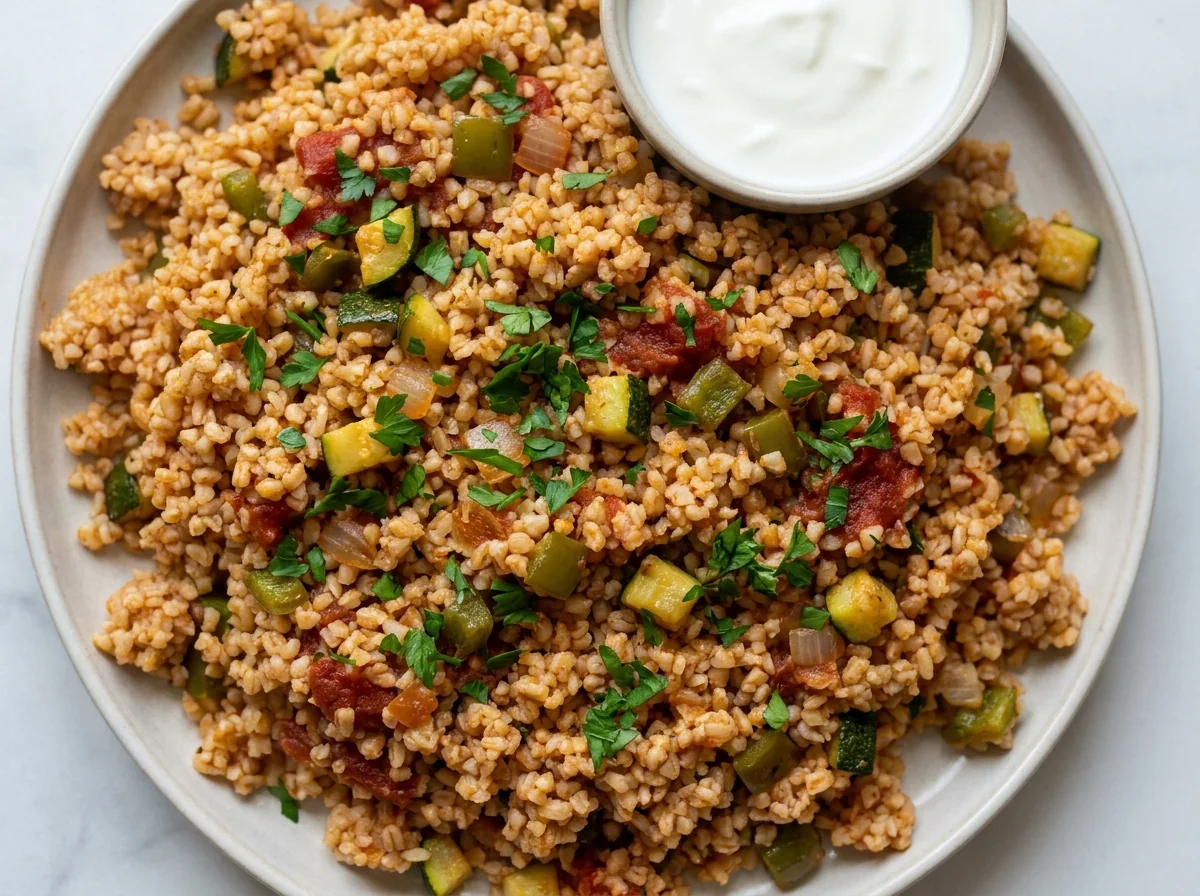
Fluffy bulgur with vegetables is one of the staple everyday dishes of the Levant and Turkey: boiled cracked wheat was the foundation of the table before rice spread.
Returning to it today has practical reasons: a whole grain with its fiber cooks faster than rice, keeps you full longer, and costs less.
Preparation Steps
Wash and chop the vegetables and cook the red base
Wash the pepper and zucchini and cut them into small dice, and chop the onion. Soften the onion in the olive oil, then add the pepper and zucchini for three minutes, then the tomato paste, stirring for one minute until it browns slightly, then the grated tomato for five minutes until it thickens.
Add the bulgur dry, without rinsing
Stir in the coarse bulgur dry and toss it for two minutes in the sauce. Bulgur is already parboiled and dried, so do not rinse it like rice, because rinsing saturates it with water too soon and turns it doughy.
Add the liquid in a measured amount
Add the hot salted stock at one and two-thirds times the volume of the bulgur, deliberately less than the water used for rice, because bulgur absorbs faster than rice and excess water ruins the fluffiness.
Cook on low heat, then rest under a towel
Let it come to a boil, then lower the heat, cover tightly for twelve minutes until the grains absorb the liquid, then turn off the heat and place a clean towel under the lid for ten minutes. The towel absorbs the excess steam so the grains come out fluffy and separate.
Fluff with a fork and serve with laban
Wash and chop the parsley, fluff the bulgur with a fork and scatter the parsley over it, and serve with a glass of cold laban. A homestyle Levantine and Turkish dinner at a third the cost of basmati rice and with higher fiber.
Blood Sugar Impact
The glycemic index (GI) measures how quickly a food raises blood sugar, while the glycemic load (GL) measures how much a full serving raises it. Together they give the complete picture.
Glycemic Index
GI
42Low
Low0–55Medium56–69High70+
A low value (≤55) means a gradual rise in blood sugar — the most suitable range for diabetes and insulin resistance.
Glycemic Load
GL
22High
Low0–10Medium11–19High20+
Glycemic load reflects the impact of the full serving. To lower it: take half a serving, or pair the recipe with a source of protein and fiber.
Nutritional Information
Per ServingMakes 4 servings · one serving is about 375 g of raw ingredients
Calories393 kcal20%of Daily Value*
Protein11 g22%of Daily Value*
Carbohydrates68 g25%of Daily Value*
Fat10 g13%of Daily Value*
Fiber16 g57%of Daily Value*
Sodium698 mg30%of Daily Value*
Potassium731 mg16%of Daily Value*
Phosphorus285 mg23%of Daily Value*
* Percent Daily Values are based on a 2,000-calorie diet per FDA food-label reference values — your daily needs may be higher or lower. Values are derived from the recipe's ingredients via the USDA database.
Troubleshooting
The most common problems when preparing Fluffy Bulgur Pilaf with Vegetables and Tomato, and how to fix them:
It came out doughy and clumped
It was rinsed before cooking or had too much liquid. Add it dry, stick to the one-and-two-thirds measure, and use coarse bulgur only, since the fine kind is for kibbeh and tabbouleh, not pilaf.
The center stayed hard
The liquid was too little or the lid let steam escape. Stick to the measure and seal the lid tightly; two spoonfuls of boiling water plus a few extra minutes will rescue it.
It tastes bland despite the sauce
The tomato paste was not browned or the salt was too little. Stir the paste for one minute over the heat and salt the stock well, and the cumin strengthens the flavor.
The zucchini melted away
It was cut too small and cooked too long. The zucchini dice go in with the pepper and need only the same cooking time as the bulgur itself.
Storage and Make-Ahead
Immediately
Served fluffed with cold laban.
In the refrigerator
Three days in containers, a work lunch eaten warm or at room temperature.
In the freezer
One month, and it is one of the most freezer-friendly grains.
Tested Ingredient Substitutions
Original Ingredient
Tested Substitute
Ratio
Flavor Difference
The recipe's vegetables
Fried eggplant or green beans
same amount
Works with every season's vegetables
Adding protein
A handful of chickpeas from our batch added with the liquid
150 g
Plant protein that complements the wheat protein
The glass of laban
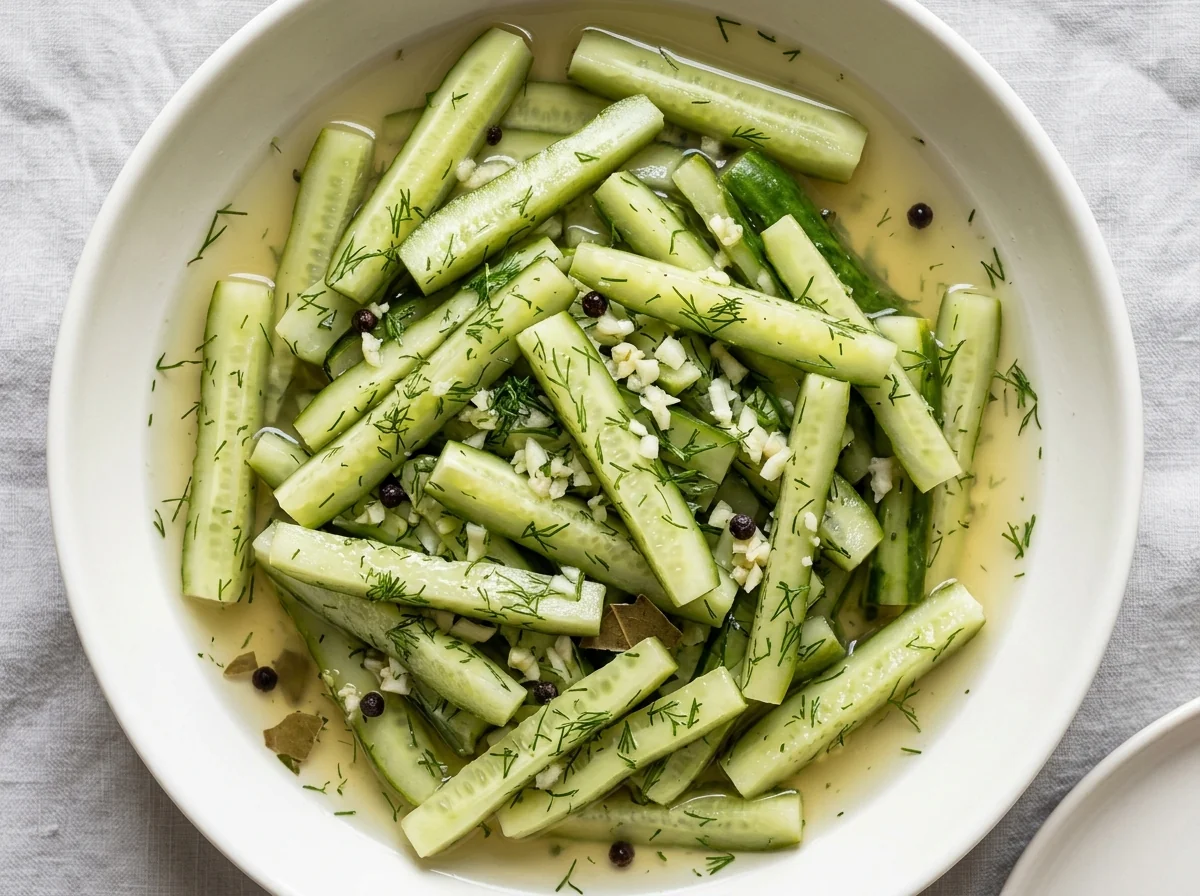
Cucumber yogurt salad
same amount
The same accompaniment in another form
A Turkish touch
Sweet pepper paste with the tomato
20 g
In the style of southern Turkey
How Much Does It Make? Scaling Guide
Ingredient
4 servings
2 servings
8 servings
Coarse bulgur
300 g
150 g
600 g
Vegetables
620 g
310 g
1.2 kg
Stock
500 ml
250 ml
1 L
EEINA Nutrition Tip
Do not rinse the bulgur, and use less liquid than for rice. Bulgur is parboiled, dried, cracked wheat, meaning half its cooking was done at the factory, so rinsing saturates it with water before the heat, and too much liquid turns it to porridge. One and two-thirds times the liquid for each measure of bulgur, then ten minutes of rest under a towel beneath the lid, and that is the whole secret to fluffiness.
Add This Recipe to Your Plan
The EEINA app saves your favorite recipes, calculates them from their real ingredients, and shows your daily numbers toward your goal. Try it free now.
Why is bulgur said to raise blood sugar more slowly than rice?
Because it is a whole grain with its bran and fiber, which slow absorption, and its glycemic index is clearly lower than white rice, making it a good starch alternative for anyone watching their blood sugar.
How much does it cost compared to rice?
A kilo of bulgur is about a third the price of a kilo of good basmati, and the serving is about 375 calories at very low cost.
How does it differ from Turkish eetch (kisir)?
Eetch is fine bulgur in a thick sauce served cold and seasoned, while this is coarse, fluffy hot bulgur, a main dish.
Can it always replace white rice?
In red-sauce dishes, stuffed vegetables, and stews, yes, with merit; but for Kabsa (Saudi spiced rice dish) and Bukhari, rice remains the core of their identity. Swap where it suits.