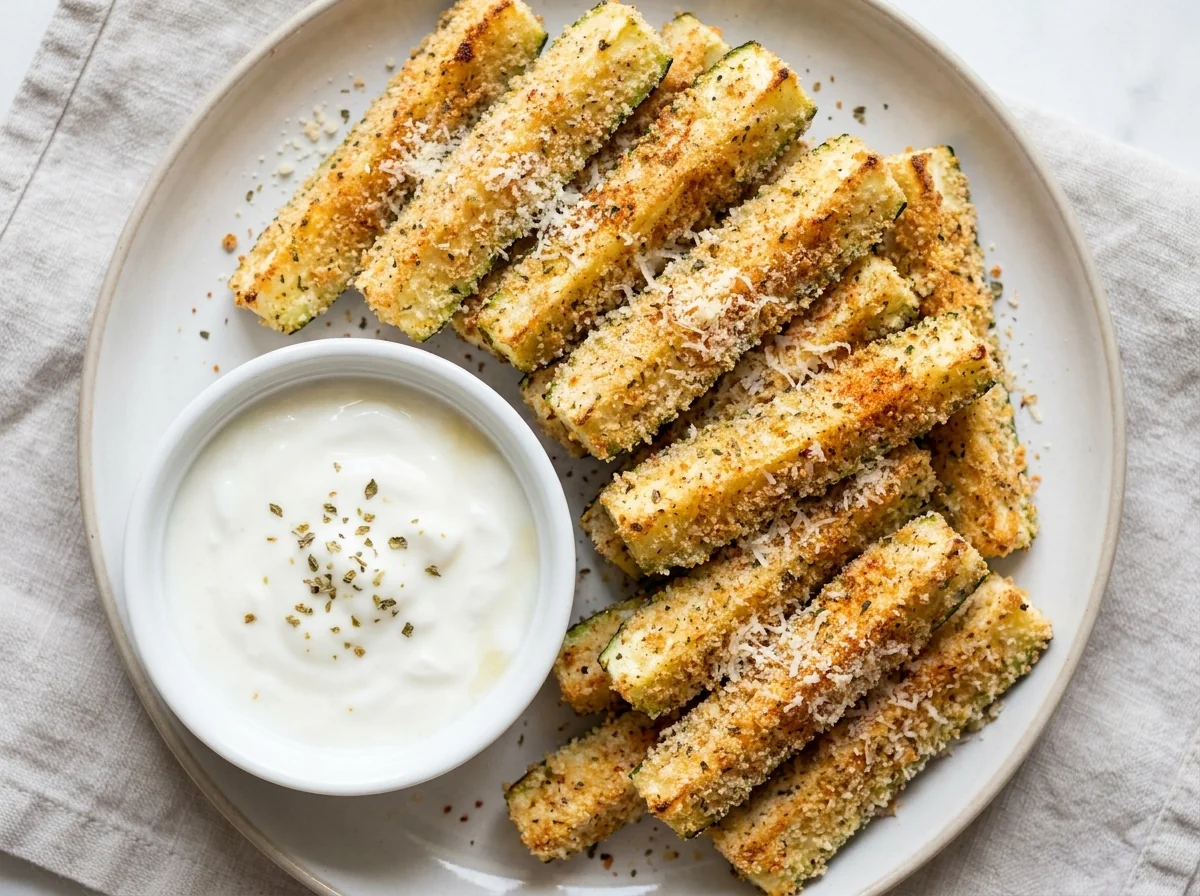
Crispy zucchini fries are a beloved vegetable appetizer on the Ramadan table: a crispness resembling the famous fried foods but with a baked coating and whole vegetables inside.
Preparation Steps
Wash the zucchini and cut it into even fingers
Wash the zucchini and cut each one lengthwise into roughly finger-thick fingers. Evenness ensures uniform cooking, and the right thickness gives a tender core under a crisp crust.
Set up the three coating dishes and coat
Set up three dishes in order: flour seasoned with salt, then beaten egg, then breadcrumbs mixed with the parmesan, garlic powder, paprika, and oregano. Dip each finger in order: flour with the excess shaken off, then egg, then breadcrumbs with a light press so it sticks.
Arrange the fingers spaced apart and spray the oil
Arrange the fingers spaced apart on a parchment-lined tray, since crowding makes them steam in each other's vapor, and spray them with a light oil spray that helps the breadcrumbs brown.
Bake at high heat
Bake them in an oven preheated to 220 degrees for twenty minutes with one flip halfway, until the coating browns and crisps and the core turns completely tender.
Serve with the yogurt dip
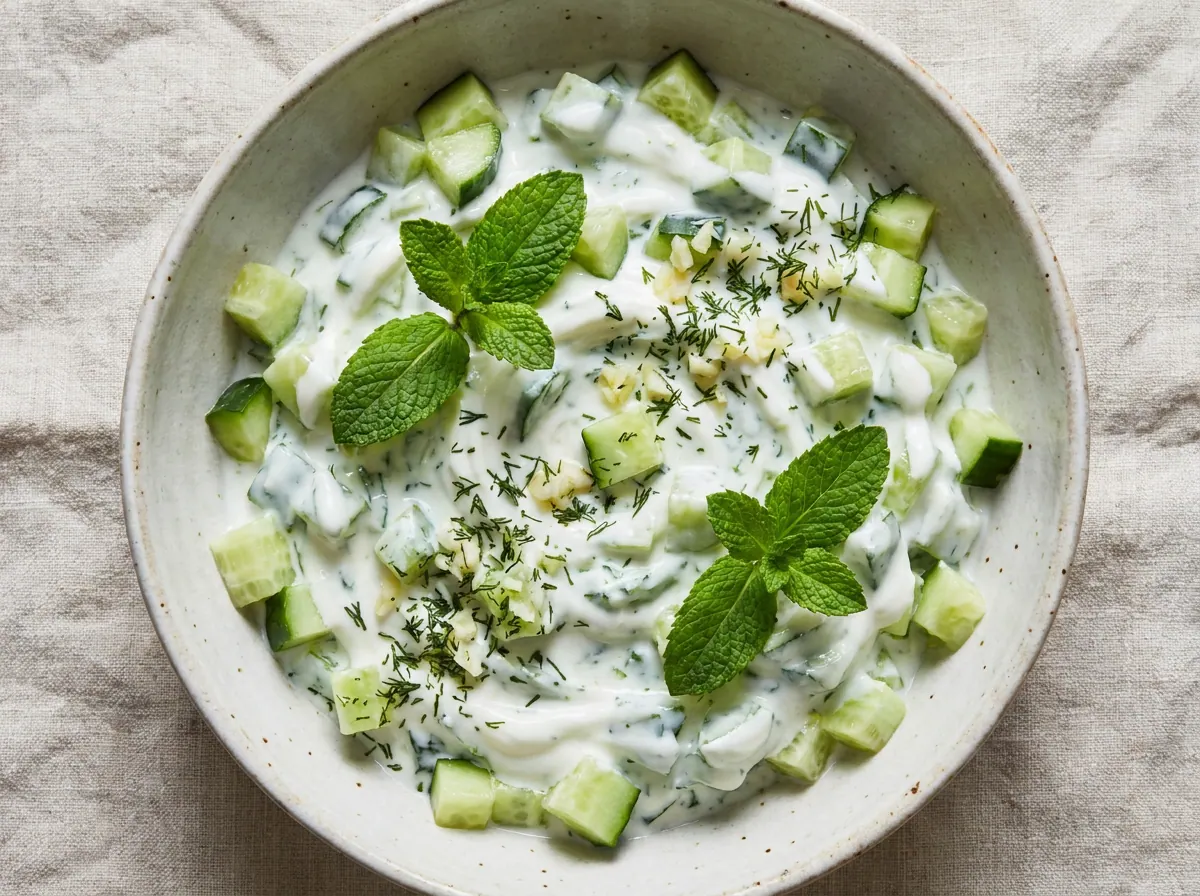
Serve hot immediately with yogurt whisked with lemon and garlic, a refreshing alternative to mayonnaise with far fewer calories.
Blood Sugar Impact
The glycemic index (GI) measures how quickly a food raises blood sugar, while the glycemic load (GL) measures how much a full serving raises it. Together they give the complete picture.
Glycemic Index
GI
61Medium
Low0–55Medium56–69High70+
A low value (≤55) means a gradual rise in blood sugar — the most suitable range for diabetes and insulin resistance.
Glycemic Load
GL
18Medium
Low0–10Medium11–19High20+
Glycemic load reflects the impact of the full serving. To lower it: take half a serving, or pair the recipe with a source of protein and fiber.
Nutritional Information
Per ServingMakes 4 servings · one serving is about 235 g of raw ingredients
Calories263 kcal13%of Daily Value*
Protein12 g24%of Daily Value*
Carbohydrates33 g12%of Daily Value*
Fat9 g12%of Daily Value*
Fiber3 g11%of Daily Value*
Sodium486 mg21%of Daily Value*
* Percent Daily Values are based on a 2,000-calorie diet per FDA food-label reference values — your daily needs may be higher or lower. Values are derived from the recipe's ingredients via the USDA database.
Troubleshooting
The most common problems when preparing Crispy Baked Zucchini Fries, and how to fix them:
The fingers are soft and wet
The zucchini released its water under the coating. Sprinkle the cut fingers with salt and leave them for ten minutes, then dry them before coating, so the water comes out before the oven, not inside it.
The coating separated from the zucchini
The flour layer was skipped or the breadcrumbs were not pressed. Stick to the full three-step order and the light press at the end.
The crispness is weak
The oil spray was missing or the tray was crowded. Leave a finger's space between every two fingers and spray the oil over the whole surface.
The core stayed firm
The fingers are thicker than needed. Finger thickness is the standard, and thicker ones need a time that burns the coating before the core cooks.
Storage and Make-Ahead
Immediately
Eaten right out of the oven, since the crispness weakens quickly.
In the fridge
Kept for one day, and reheated in a hot oven for five minutes. The microwave makes them soft.
Not suitable for freezing
High-water zucchini comes out of thawing soft and falling apart.
Tested Ingredient Substitutions
Original Ingredient
Tested Substitute
Ratio
Flavor Difference
Zucchini
Eggplant cut into thin fingers
1:1
A deeper-flavored version with the same method
Breadcrumbs
Toasted ground oats
1:1
Higher fiber and good crispness
Parmesan
Grated Roumy cheese
1:1
More available, and saltier so reduce the salt
Egg
Milk with a spoon of flour
~
An alternative for egg allergy that fixes the coating well
How Much Does It Make? Scaling Guide
Ingredient
4 servings
2 servings
8 servings
Zucchini
500 g
250 g
1 kg
Breadcrumbs
100 g
50 g
200 g
Eggs
2
1
4
EEINA Nutrition Tip
Press the breadcrumbs lightly onto each finger after coating. This press fixes the coating onto the zucchini so it does not separate into an empty shell at the first bite.
Add This Recipe to Your Plan
The EEINA app saves your favorite recipes, calculates them from their real ingredients, and shows your daily numbers toward your goal. Try it free now.
My children refuse zucchini, will it work with them?
Usually yes: its shape and crispness resemble French fries, with the vegetable inside.
Why is it considered a good choice for iftar?
A real low-calorie vegetable appetizer that replaces fried foods on the table with a crispness close to theirs and without deep-frying.
Can I prepare it an hour before the call to prayer?
Yes: coat them and arrange them on the tray in the fridge, and put them in the oven a third of an hour before the call to prayer so they come out at their peak.
What is the advantage of the yogurt dip over mayonnaise?
A refreshing acidity that cuts the richness of the crisp coating with about a quarter of the calories of mayonnaise, and with it garlic and lemon that improve the whole dish.