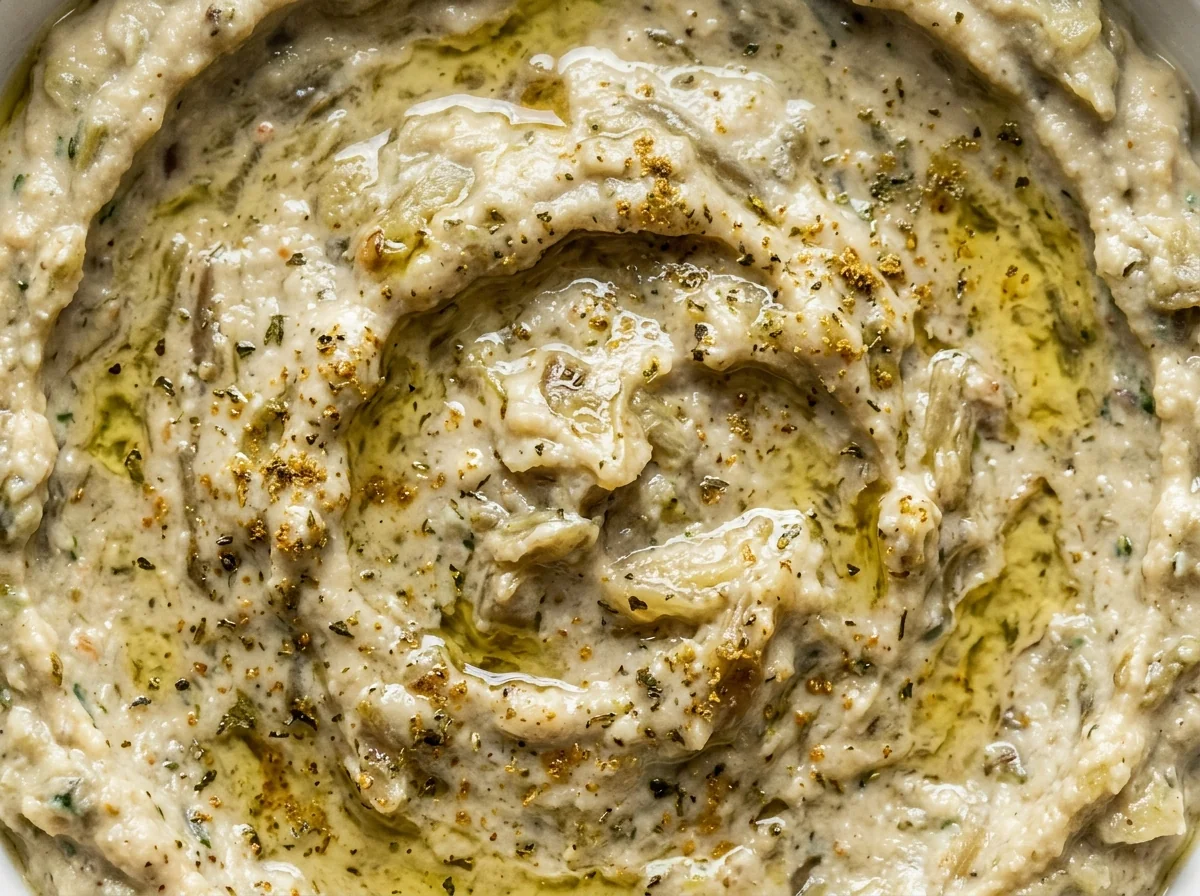
Yogurt meets roasted eggplant in several Levantine recipes, among them this lighter version of baba ganoush.
The texture stays creamy, and the tang of the yogurt suits a summer suhoor. The yogurt adds extra protein and probiotics that help digestion after hours of fasting.
Preparation Steps
Roast the eggplant
Heat the oven to 220 degrees. Prick the eggplant with a fork and roast it for 25 minutes until it is completely soft and the skin blisters. Cover it and leave it to cool.
Prepare the eggplant
Peel the eggplant and mash the flesh with the tip of a fork. Drain it in a fine sieve for five minutes to get rid of the excess liquid. Add the crushed garlic, the cumin, and the salt, and stir.
Add the yogurt
Add the Greek yogurt to the eggplant and fold it in gently until it is fully combined. If the texture looks too thick, add a spoonful of cold water. Add the mint and carry on stirring.
Chill
Cover the bowl and put it in the refrigerator for 15 minutes so the flavors soak through. The texture firms up a little in the cold.
Serve
Transfer the baba ganoush to a plate and make a small well in it. Pour the olive oil into the well and scatter over extra mint. Serve it with Arabic flatbread and lemon slices.
Blood Sugar Impact
The glycemic index (GI) measures how quickly a food raises blood sugar, while the glycemic load (GL) measures how much a full serving raises it. Together they give the complete picture.
Glycemic Index
GI
36Low
Low0–55Medium56–69High70+
A low value (≤55) means a gradual rise in blood sugar — the most suitable range for diabetes and insulin resistance.
Glycemic Load
GL
5Low
Low0–10Medium11–19High20+
Glycemic load reflects the impact of the full serving. To lower it: take half a serving, or pair the recipe with a source of protein and fiber.
Nutritional Information
Per ServingMakes 4 servings · one serving is about 200 g of raw ingredients
Calories205 kcal10%of Daily Value*
Protein7 g14%of Daily Value*
Carbohydrates20 g7%of Daily Value*
Fat12 g15%of Daily Value*
Fiber5 g18%of Daily Value*
Sodium492 mg21%of Daily Value*
Potassium402 mg9%of Daily Value*
Phosphorus140 mg11%of Daily Value*
* Percent Daily Values are based on a 2,000-calorie diet per FDA food-label reference values — your daily needs may be higher or lower. Values are derived from the recipe's ingredients via the USDA database.
Troubleshooting
The most common problems when preparing Baba Ganoush with Yogurt (smoky eggplant dip), and how to fix them:
The texture is runny
Drain the yogurt in a fine sieve for half an hour before using it. Ordinary yogurt needs draining.
The taste is too sour
Cut back the lemon juice and double the salt. Older Greek yogurt is more sour.
The color is pale
Add a spoonful of tahini and dust it with paprika. Cover it with olive oil right at serving time.
The garlic is too strong
Halve the garlic and add an extra spoonful of yogurt.
Storage and Make-Ahead
In the refrigerator
Two days in an airtight container. Cover it with a layer of oil and stir it before serving.
Not suitable for freezing
The yogurt separates into water and curds after thawing.
Tested Ingredient Substitutions
Original Ingredient
Tested Substitute
Ratio
Flavor Difference
Greek yogurt
whipped strained yogurt
1:1
A deeper flavor and more richness.
mint
chopped parsley
1:1
A different flavor, but it works.
olive oil
vegetable oil
1:1
An easily available substitute.
How Much Does It Make? Scaling Guide
Ingredient
4 people
8 people
12 people
Eggplant
500 g
1000 g
1500 g
Yogurt
150 g
300 g
450 g
Lemon juice
25 ml
50 ml
75 ml
Olive oil
30 ml
60 ml
90 ml
EEINA Nutrition Tip
Choose thick Greek yogurt, the kind with little water, because ordinary yogurt turns baba ganoush into soup. Fat-free yogurt still stays creamy, but its flavor is milder.
Add This Recipe to Your Plan
The EEINA app saves your favorite recipes, calculates them from their real ingredients, and shows your daily numbers toward your goal. Try it free now.