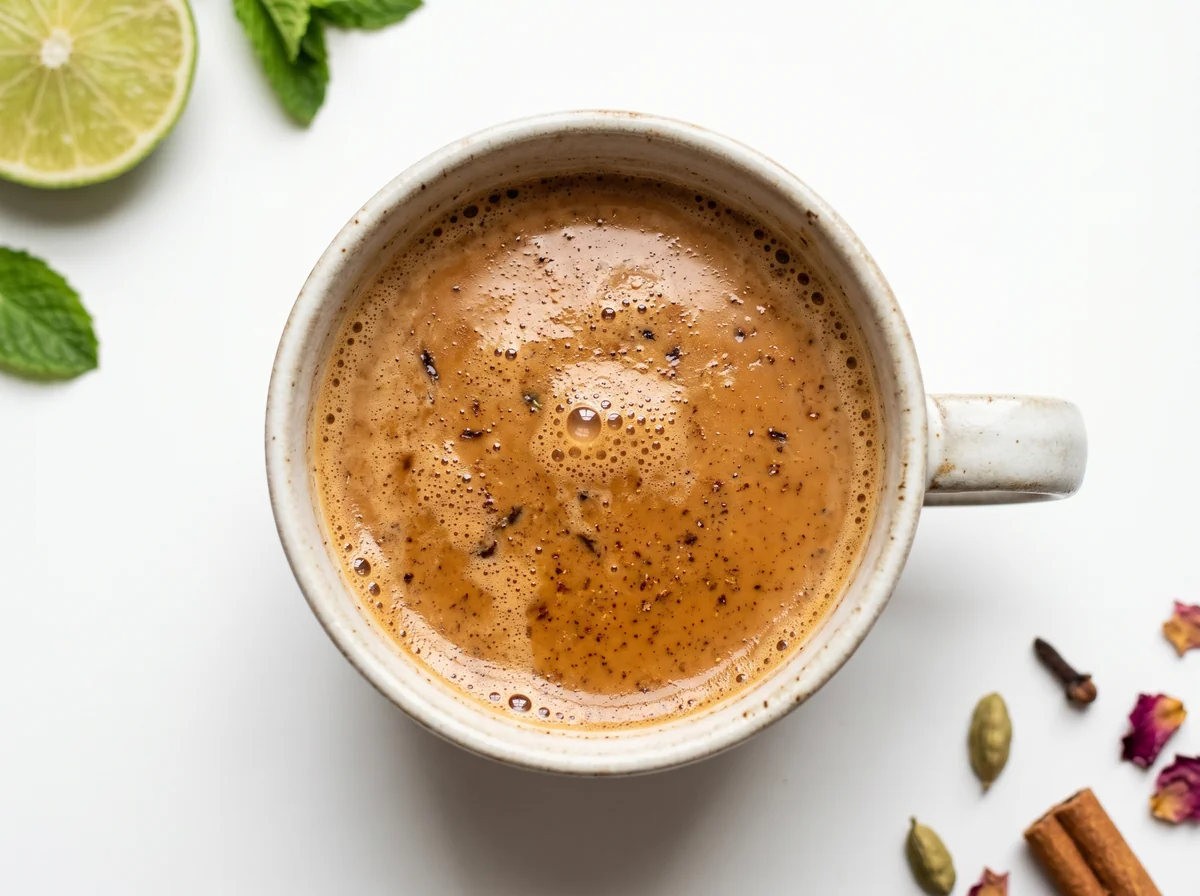
A spiced black tea simmered with whole milk and aromatic cardamom — creamy, warming, and deeply fragrant. A beloved Yemeni classic born in the port city of Aden, where Indian chai culture blended with Gulf hospitality.
Aden, the ancient coastal port, was shaped by centuries of trade between Arabia, India, and East Africa.
Indian chai culture took root there and blended with Gulf hospitality to create Adeni tea — a richer, spiced milk tea that became Yemen's signature drink. Every cup carries that port-city warmth.
Preparation Steps
Boil the water
Bring the water to a full boil in a saucepan. Starting with boiling water extracts the full depth of flavor from the tea leaves.
Brew the tea
Add the tea leaves and crushed cardamom to the boiling water. Lower the heat and simmer for 3–4 minutes until the brew is deep and fragrant. Cardamom is the signature spice of Adeni tea.
Add the milk
Pour in the milk and stir well. Bring back to a gentle simmer over medium heat — do not boil hard or the milk will overflow.
Sweeten
Add the sugar and stir until fully dissolved. Taste and adjust sweetness to your preference.
Strain and serve
Strain the tea through a fine sieve into cups and serve immediately while hot. Adeni tea is best enjoyed fresh and steaming.
Serve
Serve in small glass cups as is traditional, alongside Yemeni bread or dates. A warm, fragrant cup that brings the spirit of Aden to your table.
Blood Sugar Impact
The glycemic index (GI) measures how quickly a food raises blood sugar, while the glycemic load (GL) measures how much a full serving raises it. Together they give the complete picture.
Glycemic Index
GI
39Low
Low0–55Medium56–69High70+
A low value (≤55) means a gradual rise in blood sugar — the most suitable range for diabetes and insulin resistance.
Glycemic Load
GL
2Low
Low0–10Medium11–19High20+
Glycemic load reflects the impact of the full serving. To lower it: take half a serving, or pair the recipe with a source of protein and fiber.
Nutritional Information
Per ServingMakes 4 servings · one serving is about 125 g of raw ingredients
Calories74 kcal4%of Daily Value*
Protein4 g8%of Daily Value*
Carbohydrates6 g2%of Daily Value*
Fat4 g5%of Daily Value*
Fiber0 g0%of Daily Value*
Sodium52 mg2%of Daily Value*
Potassium161 mg3%of Daily Value*
Phosphorus102 mg8%of Daily Value*
* Percent Daily Values are based on a 2,000-calorie diet per FDA food-label reference values — your daily needs may be higher or lower. Values are derived from the recipe's ingredients via the USDA database.
Troubleshooting
The most common problems when preparing Adeni Tea (Yemeni Milk Tea), and how to fix them:
Milk boiled over
Heat was too high. Keep the flame at medium and stay nearby — milk rises quickly. Use a wide, high-sided pot.
Tea is too bitter
Steeped too long. Keep the simmering time to 3–4 minutes maximum and strain promptly.
Cardamom flavor is too faint
Crush the pods more firmly before adding so the seeds are exposed. Whole uncrushed pods release very little aroma.
Storage and Make-Ahead
Refrigerator (4°C)
Up to 2 days in a sealed bottle. Shake before reheating as the milk may settle.
Freezer (-18°C)
Not recommended — milk-based tea separates when frozen and thawed.
Advance prep
Brew the spiced tea base without milk and refrigerate; add fresh milk when reheating to serve.
Reheating
Warm gently on the stovetop over low heat, stirring often. Do not microwave at high power or the milk may scorch.
Tested Ingredient Substitutions
Original Ingredient
Tested Substitute
Ratio
Flavor Difference
whole milk
oat milk or low-fat milk
same amount
For a dairy-free or lighter version; oat milk gives a naturally sweet flavor
black tea leaves
loose-leaf Ceylon or Assam tea
same amount
Strong single-estate teas give the best body for milk tea
sugar
honey or a natural sweetener
to taste
Reduces refined sugar; add honey off the heat so it does not lose its flavor
How Much Does It Make? Scaling Guide
Number of cups
Water
Milk
Tea
2 (small)
1 cup
1 cup
2 tsp
4 (base)
2 cups
2 cups
3 tsp
8 (entertaining)
4 cups
4 cups
6 tsp
EEINA Nutrition Tip
Reduce the sugar or swap it for a natural sweetener to lower the glycemic impact. Full-fat milk adds creaminess, but low-fat milk works well for a lighter version. Cardamom has antioxidant properties — a small aromatic bonus in every cup.
Add This Recipe to Your Plan
The EEINA app saves your favorite recipes, calculates them from their real ingredients, and shows your daily numbers toward your goal. Try it free now.
Yes, with adjustments — reduce the sugar or use a low-GI sweetener and choose low-fat milk. The spices add flavor without carbohydrates.
Can I make it without sugar?
Absolutely. The cardamom and milk provide natural warmth and sweetness. Start unsweetened and add a small amount to taste.
What makes Adeni tea different from regular milk tea?
The cardamom and the technique of simmering the tea directly in the milk-water blend rather than adding milk to brewed tea — this gives it a richer, more integrated flavor.
Sources: USDA · University of Sydney · Gulf GSO · Our methodology · Updated on