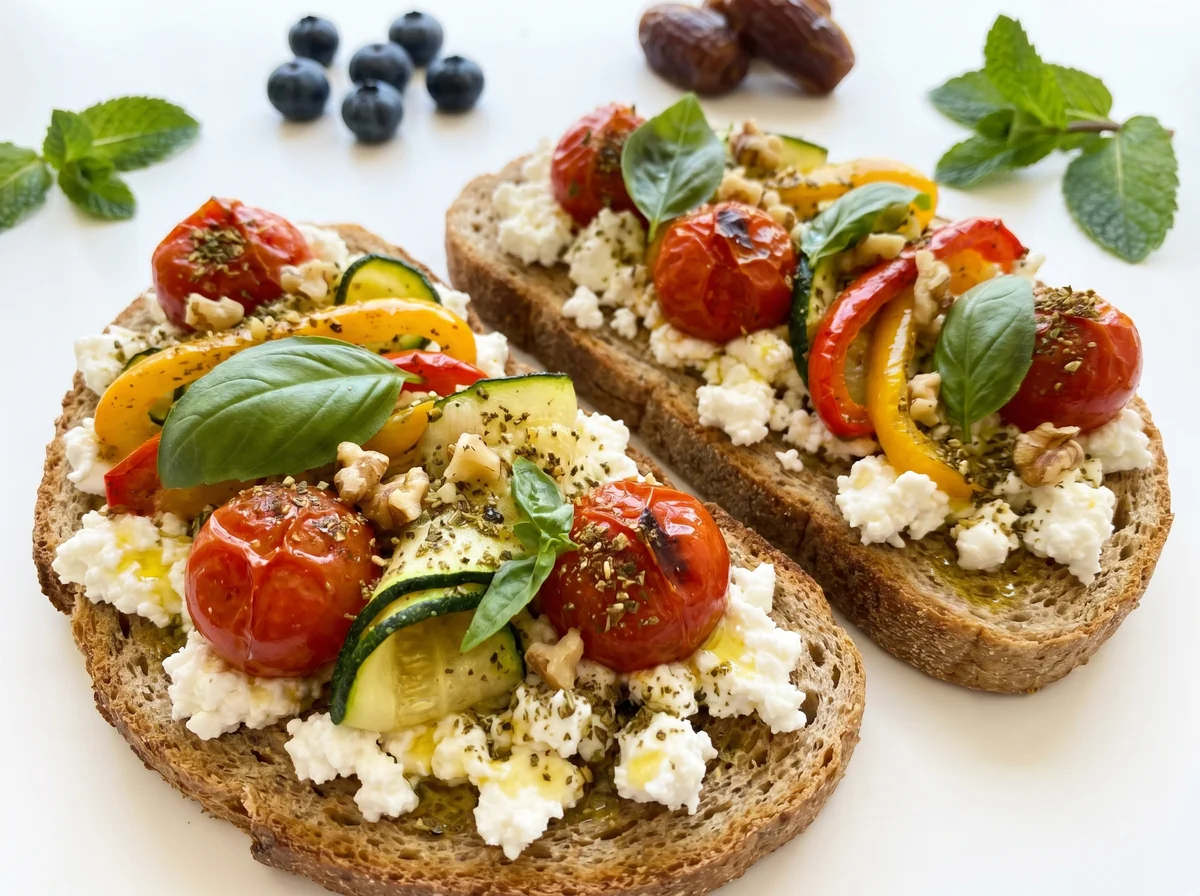
Whole Wheat Toast with Areesh Cheese and Vegetables
Crispy whole wheat toast spread with seasoned areesh cheese (fresh white cheese) and topped with tomato, cucumber, and rocket — a quick, high-protein Saudi-style breakfast ready in 15 minutes. Contains gluten and dairy.
Toasted whole-wheat bread with areesh cheese and vegetables is a breakfast that recalls the simplicity of morning tables in Gulf homes, where fresh areesh (qarish) cheese has always been a constant companion to bread and tomatoes. Here it is reimagined as a built toast you can eat with your hands in the rush of the morning, rather than the traditional plate of cheese on the side.
The whole wheat gives it a crisp texture and fibre that prolongs fullness, while the rocket and fresh lemon juice add a bright, refreshing note that cuts through the richness of the cheese. It is a breakfast ready in 15 minutes, ideal for anyone looking for a balanced start to the day without complexity.
Preparation Steps
Toast the bread
Toast the whole-wheat slices in a toaster or on a dry griddle over medium heat for 2 to 3 minutes until the edges are golden and the texture is crisp. Thorough toasting prevents the bread from absorbing moisture and turning soggy once the vegetables are added.
Season the cheese
Place the areesh cheese in a bowl, add half the olive oil, a pinch of black pepper, and a little salt, then mash with a fork until smooth and spreadable. Mashing the cheese into a cohesive layer prevents the vegetables from sliding off.
Slice the vegetables
Slice the tomato and cucumber into thin rounds about 3 mm thick, then wash the rocket and dry it thoroughly with paper towels or a salad spinner. Drying the rocket removes excess water that would otherwise soak into the toast and make it soft.
Spread the cheese
Spread the seasoned areesh cheese evenly over the toasted slices while they are still warm so the cheese adheres well to the warm surface.
Arrange the vegetables
Layer the tomato slices first, then the cucumber, and finally the rocket leaves on top of the cheese layer, overlapping them slightly to cover the surface so every bite contains a balance of cheese and vegetables.
Finish and serve
Drizzle the remaining olive oil and the lemon juice over the toast, scatter the dried za'atar, and add a very light pinch of salt. Serve immediately while the toast is still crisp; leaving it to sit causes the bread to soften gradually as the vegetables release moisture.
Blood Sugar Impact
The glycemic index (GI) measures how quickly a food raises blood sugar, while the glycemic load (GL) measures how much a full serving raises it. Together they give the complete picture.
Glycemic Index
GI
42Low
Low0–55Medium56–69High70+
A low value (≤55) means a gradual rise in blood sugar — the most suitable range for diabetes and insulin resistance.
Glycemic Load
GL
15Medium
Low0–10Medium11–19High20+
Glycemic load reflects the impact of the full serving. To lower it: take half a serving, or pair the recipe with a source of protein and fiber.
Nutritional Information
Per ServingMakes 2 servings · one serving is about 300 g of raw ingredients
Calories321 kcal16%of Daily Value*
Protein22 g44%of Daily Value*
Carbohydrates43 g16%of Daily Value*
Fat7 g9%of Daily Value*
Fiber7 g25%of Daily Value*
Sodium636 mg28%of Daily Value*
* Percent Daily Values are based on a 2,000-calorie diet per FDA food-label reference values — your daily needs may be higher or lower. Values are derived from the recipe's ingredients via the USDA database.
Troubleshooting
The most common problems when preparing Whole Wheat Toast with Areesh Cheese and Vegetables, and how to fix them:
The bread softens and loses its crunch within minutes
Toast the bread until properly golden and assemble the toast immediately before serving; do not build it in advance and leave it to sit. Pat the cucumber and tomato slices dry with a paper towel before placing them.
The vegetables slide off the surface
Mash the areesh cheese well into a cohesive, slightly sticky layer. Place the tomato slices first as they are the heaviest and most stable, then the cucumber, then the rocket on top.
The areesh cheese is crumbly and dry and hard to spread
Add a teaspoon of olive oil or a splash of water and mash with a fork until it becomes smooth and creamy enough to spread.
The flavour is flat or seems to be missing something
Increase the lemon juice, za'atar, and black pepper before reaching for more salt. Acidity and aromatic herbs lift the flavour without raising the sodium.
The tomato releases water over the bread
Remove the core and seeds from the tomato before slicing; these are the main source of excess water. A light squeeze over the sink after seeding also helps.
Storage and Make-Ahead
Advance preparation
Store the components separately: the seasoned areesh cheese in a sealed container and the sliced, dried vegetables in another. Assemble the toast at the moment of serving to preserve the crunch.
Refrigerating the cheese
Seasoned areesh cheese keeps in the refrigerator at 4 degrees C or below for 2 to 3 days in a sealed container.
Avoid freezing
Do not freeze the assembled toast or the fresh vegetables; freezing ruins the texture of the cucumber, tomato, and rocket, which become watery when thawed.
Bread storage
Keep whole-wheat bread in a sealed bag away from moisture; toast it fresh at the time of preparation.
Tested Ingredient Substitutions
Original Ingredient
Tested Substitute
Ratio
Flavor Difference
Areesh cheese (qarish, fresh white cheese)
Low-fat labneh or cottage cheese
1:1
Labneh is richer and creamier; cottage cheese is very close to areesh in protein content and texture. Check the sodium on the label for both.
Whole-wheat bread
Whole barley bread or oat toast
1:1
Both preserve the fibre content; barley bread adds a slightly deeper, earthier flavour.
Rocket (arugula)
Baby spinach leaves or shredded romaine lettuce
1:1
Baby spinach has a milder flavour; romaine adds a watery crunch. Both work well with the areesh cheese.
Olive oil
Avocado oil
1:1
A neutral-flavoured alternative for those who do not enjoy the taste of olive oil.
Dried za'atar
Za'atar and sesame blend or dried mint
1:1
A za'atar-sesame blend adds a deeper, nuttier note but introduces a sesame allergen; check with sesame-sensitive guests before using.
How Much Does It Make? Scaling Guide
Ingredient
2 servings
4 servings
6 servings
Whole-wheat bread
4 slices
8 slices
12 slices
Cottage cheese
200 g
400 g
600 g
Tomatoes
Piece
2
3
Cucumber x 0.5 (about 80 g)
0.5
Piece
1.5
Rocket (arugula)
30 g
60 g
90 g
Olive oil
1 tsp
2 tsp
1 tbsp
EEINA Nutrition Tip
Choose low-fat areesh cheese and check the sodium content on the label, as some salted varieties can be very high in sodium. To reduce the salt further, skip the final pinch of salt and increase the lemon juice and za'atar instead; the acidity and fragrance of both compensate for the sensation of saltiness without adding sodium.
Add This Recipe to Your Plan
The EEINA app saves your favorite recipes, calculates them from their real ingredients, and shows your daily numbers toward your goal. Try it free now.
Generally yes. Whole-wheat bread raises blood sugar more slowly than white bread, and the areesh cheese adds protein that further slows absorption. Keep to one or two slices as a serving and monitor your individual blood glucose response; consult your doctor or dietitian to determine the right portion for your plan.
Can I prepare it in advance to take to work?
Store the components separately and assemble the toast at your workplace. Toasting the bread and building it immediately before eating is the key to keeping it crisp.
What is the difference between this and a traditional plate of areesh cheese with tomato?
This is a built, crispy hand-held toast eaten as a portable meal, whereas the traditional serving presents the cheese and vegetables on a separate plate alongside bread on the side. The toasted whole-wheat bread here is the structural base of the dish, not just an accompaniment.
Is it enough as a complete breakfast?
Yes, for one person, as it combines complex carbohydrates, protein, and vegetables. For those who need more energy, add a piece of fruit or a glass of milk on the side.
Is it suitable for a vegetarian diet?
It suits a lacto-vegetarian diet that allows dairy, as areesh cheese is a dairy product. For vegans, substitute with a low-sodium plant-based fresh cheese.