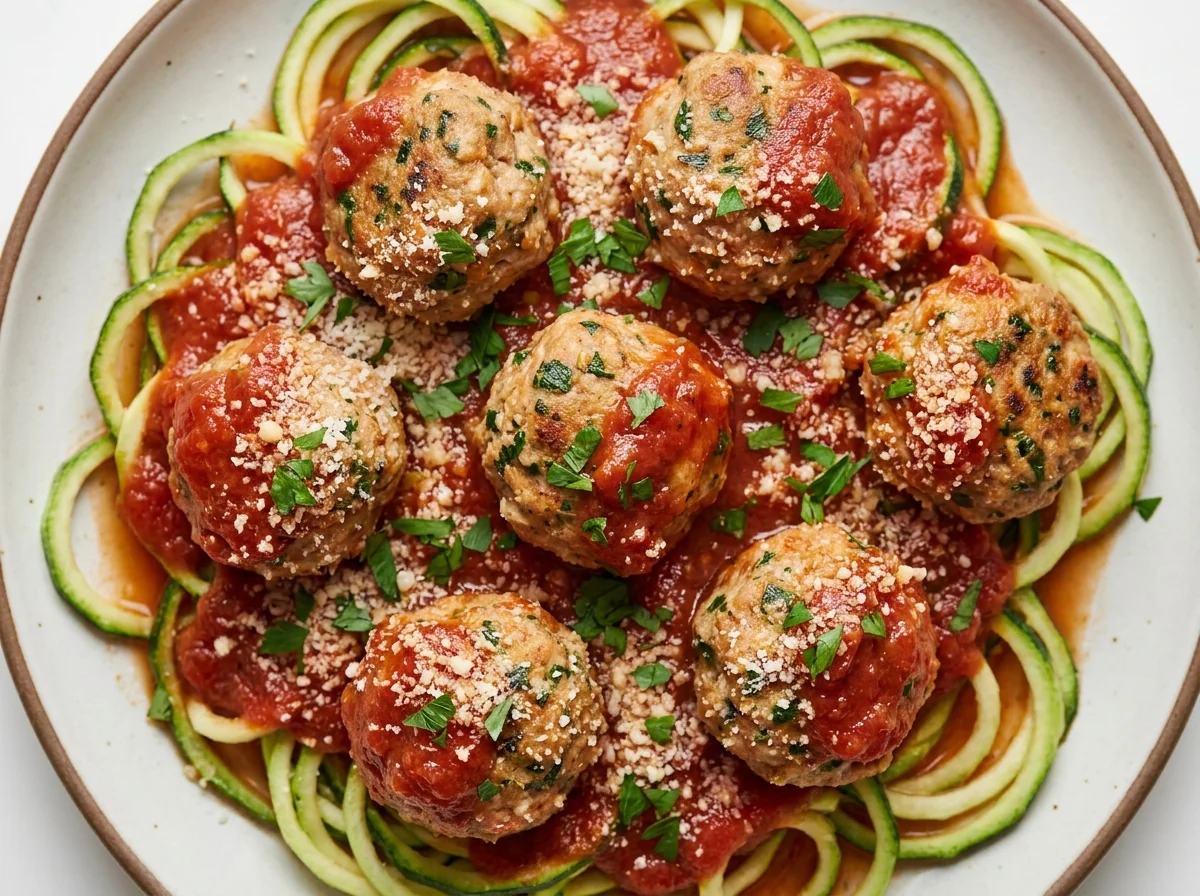
Meatballs over pasta is a beloved dish, but a heavy one.
We swap the pasta for light zucchini noodles and use lean ground turkey. The result is a protein-rich, low-carb dish that keeps the warmth of the marinara and basil without the weight of the starch.
Preparation Steps
Form the meatballs
Gently mix the ground turkey with the egg, breadcrumbs, Parmesan, garlic, parsley, oregano, salt, and pepper without overworking, then shape into 30 g meatballs, since overmixing makes the meatballs tough.
Brown the meatballs
Heat half the olive oil in a pan over medium-high heat and brown the meatballs on all sides until a crust forms, since a browned crust seals in the juices and adds flavor.
Cook the meatballs in the sauce
Pour the marinara sauce over the meatballs and cover the pan over low heat for ten minutes until the meatballs are cooked through and reach an internal temperature of 74 degrees C (FSIS), since ground turkey needs to be fully cooked.
Prepare the zucchini noodles
Spiralize the zucchini into noodles, heat the remaining oil in a separate pan, and saute the zucchini for just two to three minutes until slightly softened but still firm.
Drain the zucchini
Transfer the zucchini to a colander or paper towel and gently press to drain its water, since zucchini releases a lot of water that thins the sauce if not drained.
Assemble
Divide the zucchini noodles among the plates, top with the meatballs and marinara sauce, garnish with Parmesan and basil, and serve immediately before the zucchini releases its water.
Blood Sugar Impact
The glycemic index (GI) measures how quickly a food raises blood sugar, while the glycemic load (GL) measures how much a full serving raises it. Together they give the complete picture.
Glycemic Index
GI
43Low
Low0–55Medium56–69High70+
A low value (≤55) means a gradual rise in blood sugar — the most suitable range for diabetes and insulin resistance.
Glycemic Load
GL
8Low
Low0–10Medium11–19High20+
Glycemic load reflects the impact of the full serving. To lower it: take half a serving, or pair the recipe with a source of protein and fiber.
Nutritional Information
Per ServingMakes 4 servings · one serving is about 445 g of raw ingredients
Calories435 kcal22%of Daily Value*
Protein46 g92%of Daily Value*
Carbohydrates24 g9%of Daily Value*
Fat18 g23%of Daily Value*
Fiber5 g18%of Daily Value*
Sodium1102 mg48%of Daily Value*
* Percent Daily Values are based on a 2,000-calorie diet per FDA food-label reference values — your daily needs may be higher or lower. Values are derived from the recipe's ingredients via the USDA database.
Troubleshooting
The most common problems when preparing Turkey Meatballs in Marinara over Zucchini Noodles, and how to fix them:
The meatballs fall apart
Stir them less during the first two minutes so the crust sets, and make sure the egg and breadcrumbs are there as a binder.
The zucchini is watery
Do not cook it longer than three minutes and drain its water before assembling, since overcooking releases its water.
The meatballs are tough
Overmixing is the cause; mix just until the ingredients come together, then shape gently.
The sauce is bland
Heat the marinara well and add a pinch of salt and oregano, and the Parmesan at the end deepens the flavor.
Storage and Make-Ahead
Meatballs and sauce
Keep them together in an airtight container in the fridge for up to four days and reheat over low heat.
Freezing
Freeze the meatballs in their sauce for up to two months, then thaw in the fridge and reheat.
Zucchini
It is best to spiralize and cook it fresh at serving time, since it becomes watery if stored cooked.
Tested Ingredient Substitutions
Original Ingredient
Tested Substitute
Ratio
Flavor Difference
Ground turkey
Ground chicken
500 g
Lighter flavor and the same 74 degree temperature
Breadcrumbs
Ground oats
40 g
A gluten-free option
Zucchini noodles
Squash or carrot noodles
600 g
Slightly sweeter flavor and firmer texture
Parmesan cheese
Romano cheese
30 g
Saltier, sharper flavor
How Much Does It Make? Scaling Guide
Ingredient
2 servings
4 servings (base)
8 servings
Ground turkey
250 g
500 g
1000 g
Marinara sauce
240 ml
480 ml
960 ml
Zucchini
300 g
600 g
1200 g
Breadcrumbs
20 g
40 g
80 g
EEINA Nutrition Tip
Drain the zucchini water after sauteing; this single step is the difference between a cohesive sauce and a watery, cold one.
Add This Recipe to Your Plan
The EEINA app saves your favorite recipes, calculates them from their real ingredients, and shows your daily numbers toward your goal. Try it free now.