Tunisian Yoyo (Orange-Scented Fried Rings with Honey)
Tunisian orange-scented pastry rings — dough flavored with orange juice is fried until puffed and golden, then dipped in honey syrup and sprinkled with sesame. A famous Tunisian treat, best enjoyed in moderation, containing gluten, eggs, and sesame.
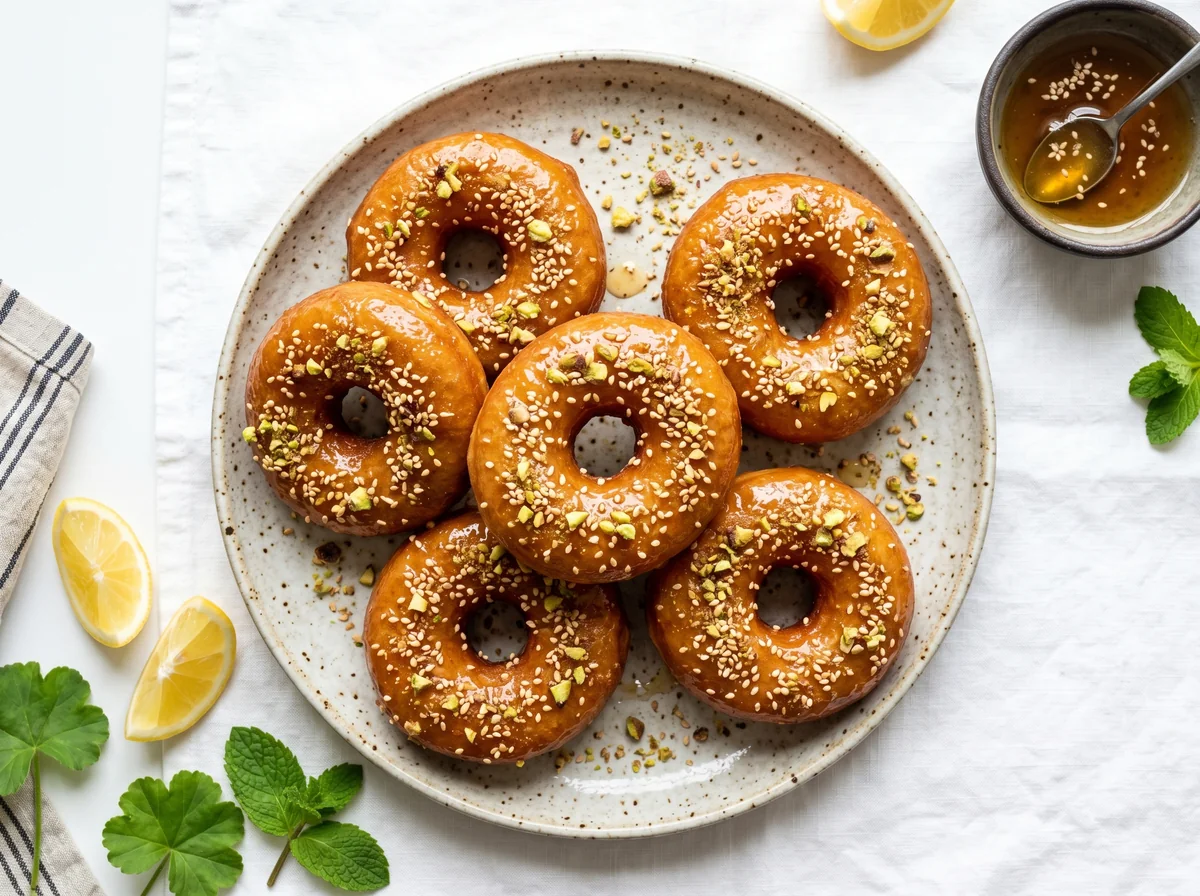
Yoyo is a famous and beloved Tunisian treat, enjoyed at festivals, celebrations, and for hospitality (and a popular Tunisian pastry). The name (Yoyo) comes from its ring shape with a hole in the center (like a yo-yo toy or a doughnut). Made from a dough fragrant with orange juice and zest, shaped into rings and fried until puffed and golden, then dipped in honey syrup and sprinkled with toasted sesame.
Orange flavor is a distinctive Tunisian note (Tunisia is a land of citrus), and Yoyo is a fragrant treat with this flavor. Served at festivals, celebrations, and for hospitality with tea and coffee. The golden puffed rings, fragrant with orange, dipped in honey and sparkling with sesame, are a light, aromatic delight — a symbol of Tunisian homemade sweets, the generosity of its tables, and the authentic scent of its oranges.
Preparation Steps
Prepare the honey syrup
Bring the honey to a gentle boil with a little water and orange blossom water into a light warm syrup, and set aside. Yoyo is dipped in honey syrup (not necessarily plain sugar syrup — honey is the Tunisian flavor), coating them in a sweet glossy layer. Prepare the syrup first.
Prepare the dough
Beat the eggs and sugar together, add the orange juice and zest and a little oil, then the flour and baking powder, and knead into a soft, firm dough. Orange juice and zest are the signature flavor of Yoyo (a fragrant orange pastry) — be generous with them. The dough is soft enough to shape into rings.
Shape the rings
Shape the dough into rings (like small doughnuts): roll into a ball and poke a hole in the center, widening it, or roll out and cut into rings. The ring shape is a hallmark of Yoyo (a hole-centered pastry) — make the hole prominent (it stays open after frying and puffing).
Fry
Fry the rings in medium-heat oil until puffed, golden on both sides. Medium oil temperature (hot enough to puff and color without absorbing too much oil or leaving the inside raw) — turn them to color evenly. Drain from the oil.
Dip in syrup
Dip the hot Yoyo rings into the warm honey syrup for a few moments (they absorb it and turn glossy), then lift out. Dipping while hot in warm syrup allows them to absorb the sweetness and achieve a glossy finish (a honey-glazed layer). Do not soak them too long (they become overly saturated).
Garnish and serve
Sprinkle the Yoyo with toasted sesame seeds (they stick to the glossy syrup) and serve. A famous, beloved Tunisian treat (for festivals, celebrations, and hospitality) — the golden puffed rings, fragrant with orange, dipped in honey and sparkling with sesame, are a light, aromatic delight, a symbol of Tunisian homemade sweets and the generosity of its tables and the scent of its oranges.
Blood Sugar Impact
The glycemic index (GI) measures how quickly a food raises blood sugar, while the glycemic load (GL) measures how much a full serving raises it. Together they give the complete picture.
Glycemic Index
GI
68Medium
Low0–55Medium56–69High70+
A low value (≤55) means a gradual rise in blood sugar — the most suitable range for diabetes and insulin resistance.
Glycemic Load
GL
22High
Low0–10Medium11–19High20+
Glycemic load reflects the impact of the full serving. To lower it: take half a serving, or pair the recipe with a source of protein and fiber.
Nutritional Information
Per ServingMakes 16 servings · one serving is about 60 g of raw ingredients
Calories151 kcal8%of Daily Value*
Protein3 g6%of Daily Value*
Carbohydrates33 g12%of Daily Value*
Fat1 g1%of Daily Value*
Fiber1 g4%of Daily Value*
Sodium10 mg0%of Daily Value*
Potassium53 mg1%of Daily Value*
Phosphorus38 mg3%of Daily Value*
* Percent Daily Values are based on a 2,000-calorie diet per FDA food-label reference values — your daily needs may be higher or lower. Values are derived from the recipe's ingredients via the USDA database.
Troubleshooting
The most common problems when preparing Tunisian Yoyo (Orange-Scented Fried Rings with Honey), and how to fix them:
Yoyo absorbs too much oil
Oil not hot enough. Heat the oil well (medium temperature, properly hot) before frying — cold oil causes the dough to absorb oil and become heavy and greasy. Hot oil fries quickly, reducing oil absorption. Drain on paper.
Outside golden, inside raw
Oil too hot or rings too thick. Fry at medium heat (not too high) so the inside cooks through, and shape rings of moderate thickness (the hole aids cooking). Medium temperature cooks the inside without burning the outside.
Did not puff
Insufficient baking powder or cold oil. Use enough baking powder (it lifts them) and fry in hot oil (it puffs them immediately). Baking powder and hot oil together make them puff up light.
Hard
Overworked dough or too much flour. Knead only until the dough comes together (do not overwork), keeping it soft (not dry or stiff). Over-kneading develops gluten and makes them hard. A soft, moderate dough gives tender Yoyo.
Not glossy or not sweet
Not dipped properly. Dip the hot Yoyo in warm honey syrup (they absorb it and turn glossy) — the dipping gives the sweet, glossy coating. Hot into warm absorbs best. Sprinkle sesame while they are still sticky so it adheres.
Storage and Make-Ahead
Room temperature
Yoyo keeps in an airtight container at room temperature for 3 to 4 days (the honey syrup acts as a preservative). They remain delicious and soften slightly. Best fresh on the day they are made (crispiest). Suitable for making ahead for festivals and hospitality.
Freezer (before dipping)
Fry the Yoyo without dipping and freeze for one month, then reheat and dip in syrup fresh. This keeps them crispier than freezing after dipping. Practical for preparing large festival batches ahead.
Make ahead
Prepare the dough and shape the rings ahead (keep refrigerated or freeze raw), then fry and dip fresh before serving. Or fry ahead and store, dipping on the day of serving. Practical for festivals.
Food safety
Fry Yoyo until fully cooked (contains eggs), drain from the oil, and store in an airtight container. A fried honey-dipped treat that keeps for days at room temperature in a sealed container, away from moisture.
Tested Ingredient Substitutions
Original Ingredient
Tested Substitute
Ratio
Flavor Difference
Honey syrup
Sugar syrup (attar)
same quantity
Honey is the authentic Tunisian flavor for Yoyo; sugar syrup is a cheaper alternative — both work for dipping and give the sweet, glossy coating
Frying
Oven baking
—
Baking (brushing the rings with a little oil) is lighter in fat than frying (baked Yoyo), with a less rich flavor; frying is the traditional, crispier method
Orange juice
Lemon juice or orange blossom water
to taste
Orange is Yoyo's signature flavor (Tunisia is a land of citrus); orange blossom water or lemon can be added for a different fragrance; orange is the authentic original
How Much Does It Make? Scaling Guide
Number of pieces
Flour
Eggs
Orange juice
8 (small)
1 1/2 cups
1
1/4 cup
16 (base)
3 cups
2
1/2 cup
32 (holiday)
6 cups
4
1 cup
EEINA Nutrition Tip
Yoyo is a festival and celebration fried treat that combines dough, frying, and honey syrup — making it high in sugar, calories, and fat (especially from frying). The orange juice adds flavor and a little vitamin C, and sesame seeds are nutritious, but it remains a fried, sweetened treat. Best enjoyed as one or two pieces in moderation at celebrations. To lighten: fry in well-heated oil (absorbs less), drain on paper, reduce honey syrup dipping time (a quick dip), and increase sesame. Those with diabetes should be cautious. A charming festive treat — enjoyed in moderation.
Add This Recipe to Your Plan
The EEINA app saves your favorite recipes, calculates them from their real ingredients, and shows your daily numbers toward your goal. Try it free now.
A famous Tunisian treat: dough rings (like doughnuts) fragrant with orange juice and zest, fried until puffed and golden, then dipped in honey syrup and sprinkled with toasted sesame. The name comes from the ring shape with a hole (like a yo-yo toy). A fragrant festival and celebration treat with an orange flavor, served with tea and coffee.
Why the orange flavor?
Tunisia is a land of citrus (oranges, lemons, and orange blossom), and orange flavor and orange blossom water are distinctive in Tunisian sweets. Orange juice and zest in the Yoyo dough give a fragrant, refreshing, distinctive flavor (setting it apart from ordinary doughnuts), and the honey syrup with orange blossom water completes the fragrance. Orange is an authentic and beloved Tunisian flavor in their sweets.
What is the difference between Yoyo and doughnuts?
Both are fried dough rings, but Tunisian Yoyo is fragrant with orange and orange blossom water, dipped in honey syrup, and sprinkled with sesame (a fragrant Tunisian flavor), while Western doughnuts are coated with sugar, glaze, or chocolate. Yoyo is more fragrant with orange, honey, and sesame; doughnuts have more elaborate coatings. The shape (ring) is the same; the flavor is different.
Is Yoyo healthy?
It is a fried festival treat, high in sugar (honey syrup), calories, and fat (from frying). Orange juice adds flavor and a little vitamin C, and sesame seeds are nutritious, but it remains a fried treat. Enjoy one or two pieces in moderation at celebrations. Fry in hot oil (absorbs less), reduce the syrup, or bake instead. Those with diabetes should be cautious. A charming festival treat enjoyed in moderation.
Sources: University of Sydney · Gulf GSO · Our methodology · Updated on