A beloved folk soup rich in collagen — lamb trotters slow-cooked for hours with spices until the broth turns thick and gelatinous. High in protein and collagen, very low in carbs, and free from common allergens.
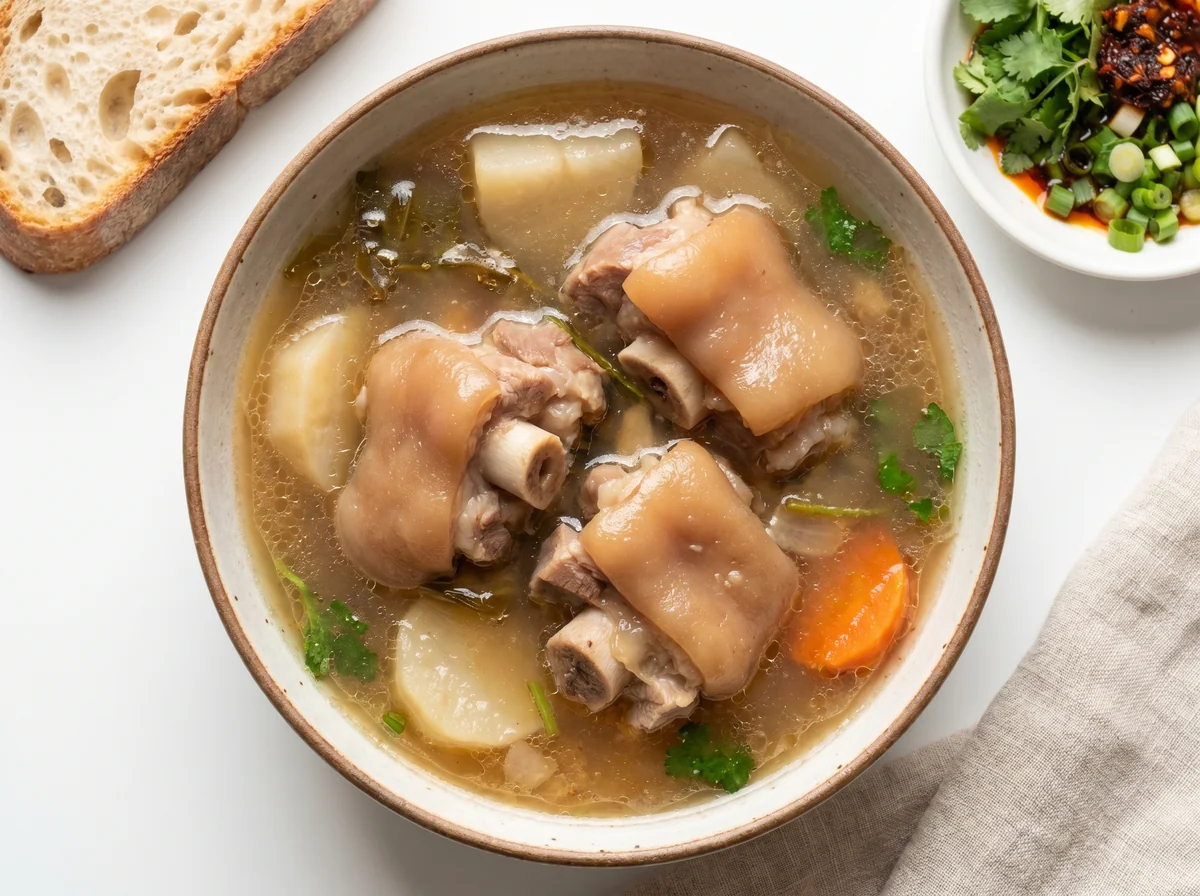
Trotters soup is a beloved Egyptian and Arab folk dish. Trotters — the feet of sheep or cattle — are slow-cooked for many hours until their collagen and cartilage dissolve into a rich broth.
The dish holds a special place in popular cuisine: eaten in winter, served at gatherings, and considered a folk remedy for colds and a joint tonic for its collagen content. Sold in specialist restaurants, it is a symbol of warming, nourishing street food that wastes nothing of the animal.
Preparation Steps
Clean the trotters
Clean the trotters thoroughly — ask your butcher to clean and cut them. Scrub with salt, vinegar, lemon juice, and flour, then rinse well. Thorough cleaning is essential to remove any hair or odour; this is the secret to a clean, delicious trotters soup.
First blanch
Boil the trotters in plenty of water until it comes to a full boil, then discard all of this first cooking water along with any foam that has risen to the surface. This first blanch removes impurities and odour, producing a clean, clear broth.
Long slow cook
Return the trotters to the pot with fresh water and add the onion, garlic, bay leaves, cardamom, cinnamon, cloves, and spices. Bring to a boil, then reduce heat to very low, cover, and simmer for 3 to 4 hours (or use a pressure cooker for less time) until the meat and cartilage are completely tender and the broth is rich.
Collagen release
Cook until the meat falls off the bone and the collagen and cartilage dissolve into the broth, making it rich and slightly sticky — it will set like jelly when chilled, a sign of abundant collagen. Top up with hot water if the level drops.
Season
Strain the broth if desired (or leave as is), season with salt, pepper, and cumin, and add lemon juice for brightness (it cuts the richness). Taste and adjust. Sauté some garlic with fresh coriander and stir it into the broth for a deeper flavour.
Serve
Serve the trotters soup very hot, with pieces of meat and cartilage, garnished with fresh coriander. Offer lemon wedges, bread, garlic, and vinegar on the side. This is a time-honoured Egyptian (and wider Arab) folk dish, eaten especially in winter and used as a folk remedy for colds. Said to strengthen joints thanks to its collagen richness — a warming, nourishing, deeply loved bowl.
Blood Sugar Impact
The glycemic index (GI) measures how quickly a food raises blood sugar, while the glycemic load (GL) measures how much a full serving raises it. Together they give the complete picture.
Glycemic Index
GI
10Low
Low0–55Medium56–69High70+
A low value (≤55) means a gradual rise in blood sugar — the most suitable range for diabetes and insulin resistance.
Glycemic Load
GL
0Low
Low0–10Medium11–19High20+
Glycemic load reflects the impact of the full serving. To lower it: take half a serving, or pair the recipe with a source of protein and fiber.
Nutritional Information
Per ServingMakes 5 servings · one serving is about 195 g of raw ingredients
Calories334 kcal17%of Daily Value*
Protein32 g64%of Daily Value*
Carbohydrates3 g1%of Daily Value*
Fat22 g28%of Daily Value*
Fiber0 g0%of Daily Value*
Sodium129 mg6%of Daily Value*
* Percent Daily Values are based on a 2,000-calorie diet per FDA food-label reference values — your daily needs may be higher or lower. Values are derived from the recipe's ingredients via the USDA database.
Troubleshooting
The most common problems when preparing Trotters Soup, and how to fix them:
Strong smell from the trotters
Insufficient cleaning or the first blanching water was not discarded. Scrub the trotters with salt, vinegar, lemon, and flour, rinse thoroughly, and discard all the first cooking water along with the foam. Proper cleaning and the first blanch remove the odour.
Meat is still tough
Not cooked long enough. Trotters need a very long cooking time (3 to 4 hours, or use a pressure cooker) until the meat falls off the bone and the cartilage dissolves. Patient slow cooking is essential.
Broth is not rich
Not cooked long enough, or too much water was used. Extend the cooking until the collagen dissolves and the broth concentrates. Do not add too much water — a rich broth sets like jelly when chilled, which is the sign of good collagen.
Broth is too greasy
Fat from the trotters. Skim the floating fat during cooking, or chill the broth so the fat solidifies on the surface and can easily be lifted off before reheating. This significantly reduces saturated fat.
Bland taste
Not enough spices or lemon. Season the broth well (cumin, coriander, salt, pepper), add sautéed garlic, lemon juice, and fresh coriander. Lemon in particular brightens the dish and cuts the richness.
Storage and Make-Ahead
Refrigerator (4°C)
Store the soup in an airtight container in the fridge for three days. It will set like jelly when cold (natural from the collagen) and return to liquid when reheated. Remove the solidified fat from the surface before reheating.
Freezer
Freeze the soup with the meat for two to three months in an airtight container. It freezes beautifully (the rich broth holds up well). Thaw in the fridge and reheat thoroughly.
Batch cooking
Since cooking takes several hours, prepare a large batch and store it in portions in the freezer. Reheat individual servings as needed — this makes the dish practical despite the long cook time.
Food safety
Cook the trotters until fully done and the meat is tender. Clean them well and discard the first cooking water. Cool the soup quickly, do not leave it unrefrigerated for more than two hours, and reheat to a full boil before serving.
Tested Ingredient Substitutions
Original Ingredient
Tested Substitute
Ratio
Flavor Difference
Lamb trotters
Beef trotters or marrow bones
Same quantity
Beef trotters are larger and richer; marrow bones also yield a collagen-rich broth. All require long slow cooking.
Stovetop cooking
Pressure cooker
About 1.5 hours
A pressure cooker cuts the hours-long cook down to about 1.5 hours, delivering the same rich broth and tender meat.
Serving as a plain soup
Adding cooked chickpeas or rice to the broth
To taste
Some versions add cooked chickpeas or rice to make it more filling (this raises the carbs and glycemic load slightly).
How Much Does It Make? Scaling Guide
Servings
Trotters
Water
Spices
3 (half recipe)
2 pieces
2 liters
half amount
5 (base)
4 trotters
4 liters
full amount
10 (feast)
8 trotters
8 liters
double
EEINA Nutrition Tip
Trotters soup is rich in protein and collagen (which is traditionally believed to support joints and skin) and very low in carbs. Its broth is hydrating and warming. The challenges are saturated fat (skim the fat that rises after chilling) and sodium. Balance the salt, remove the solidified fat from the surface, and add lemon and vegetables. It is a warming, nourishing winter meal best enjoyed in moderate portions, especially from the clear broth.
Add This Recipe to Your Plan
The EEINA app saves your favorite recipes, calculates them from their real ingredients, and shows your daily numbers toward your goal. Try it free now.
Trotters (kaware') are the feet of sheep or cattle, slow-cooked for many hours until their collagen and cartilage dissolve into a rich broth. They are a time-honoured Egyptian and Arab folk dish, eaten in winter and considered a joint tonic.
How do I remove the smell from the trotters?
Scrub them with salt, vinegar, lemon, and flour and rinse thoroughly, then blanch them and discard all the first cooking water along with the foam. Proper cleaning and the first blanch eliminate any hair and odour — the secret to a clean soup.
Are trotters good for the joints?
They are rich in collagen, which folk tradition holds supports joints and skin, and they are a good source of protein with a warm, hydrating broth. The traditional benefits are noted here as folk heritage; they are in any case a nutritious, very low-carb meal.
Why does the soup set like jelly in the fridge?
This is natural and a sign of quality — the collagen dissolved from the trotters sets like gelatin when chilled and returns to liquid when reheated. The more it sets, the richer the broth is in collagen.