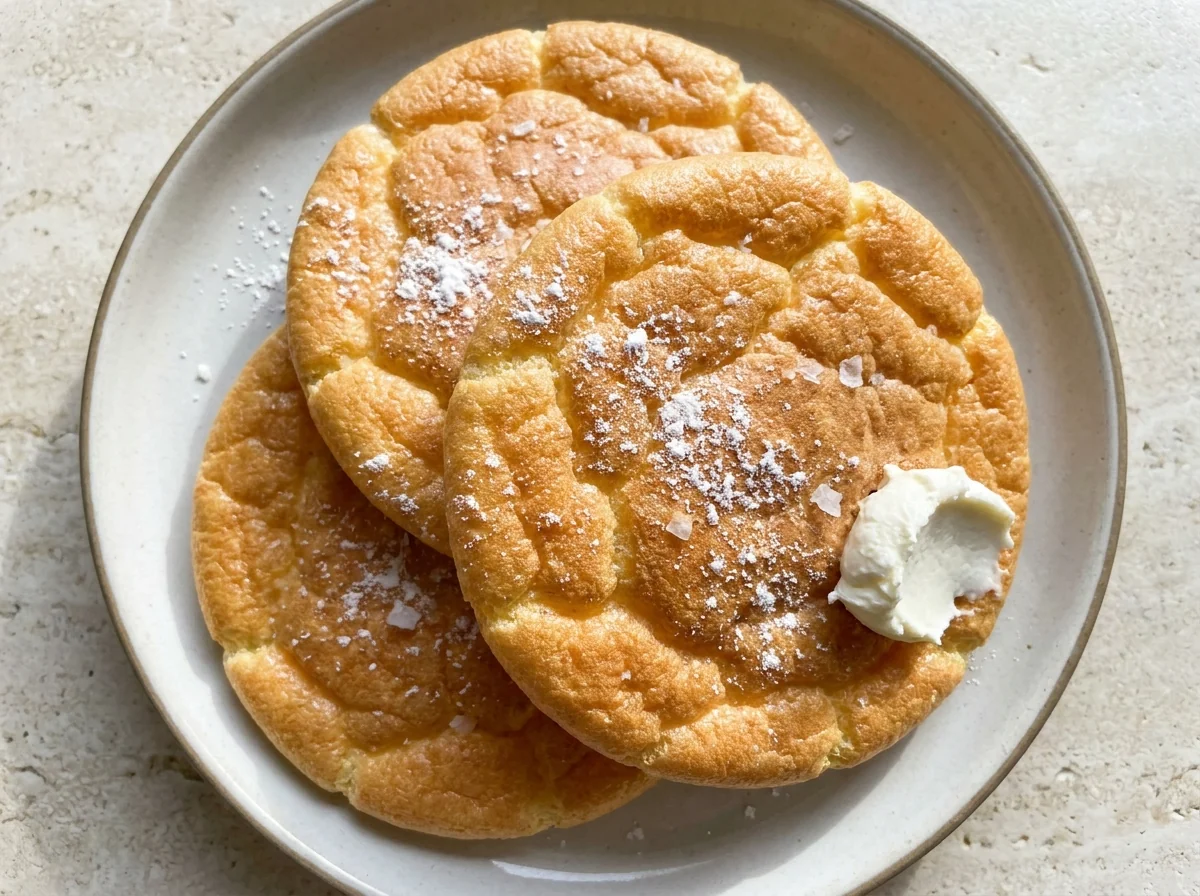
Cloud bread is a name that describes its light, starch-free texture; at its core it is whipped egg whites carrying a base of cheese and yolk.
We offer it for those who want a high-protein, low-carbohydrate breakfast to replace regular bread at suhoor.
Preparation Steps
The oven
Preheat the oven to 165°C and line the tray with parchment paper so the bread doesn't stick.
The eggs
Separate the yolks from the whites into two bowls, because the whipped whites alone are what give the spongy lightness.
The whites
Whip the whites with the cream of tartar until they form stiff peaks, as these peaks are the entire structure of the bread.
The yolks
Blend the yolks with the cream cheese and salt until smooth, to make the protein-rich base.
Folding
Gently fold the whipped whites into the cheese mixture so you don't lose the air trapped within them.
Shaping
Scoop the batter into six mounds about ten centimeters wide on the tray so they spread into discs.
Baking
Bake for twenty-five to thirty minutes until the bread turns golden and the center sets.
Cooling
Let the discs cool completely before lifting, because they are fragile while hot and firm up as they cool.
Blood Sugar Impact
The glycemic index (GI) measures how quickly a food raises blood sugar, while the glycemic load (GL) measures how much a full serving raises it. Together they give the complete picture.
Glycemic Index
GI
0Low
Low0–55Medium56–69High70+
A low value (≤55) means a gradual rise in blood sugar — the most suitable range for diabetes and insulin resistance.
Glycemic Load
GL
0Low
Low0–10Medium11–19High20+
Glycemic load reflects the impact of the full serving. To lower it: take half a serving, or pair the recipe with a source of protein and fiber.
Nutritional Information
Per ServingMakes 6 servings · one serving is about 35 g of raw ingredients
Calories66 kcal3%of Daily Value*
Protein5 g10%of Daily Value*
Carbohydrates1 g0%of Daily Value*
Fat5 g6%of Daily Value*
Fiber0 g0%of Daily Value*
Sodium193 mg8%of Daily Value*
* Percent Daily Values are based on a 2,000-calorie diet per FDA food-label reference values — your daily needs may be higher or lower. Values are derived from the recipe's ingredients via the USDA database.
Troubleshooting
The most common problems when preparing Three-Ingredient Cloud Bread, and how to fix them:
The bread collapses after coming out
The whites didn't reach stiff peaks or lost their air during folding; whip them longer and fold more gently.
The texture is rubbery rather than spongy
The oven is too hot so the surface dried before cooking through; lower the heat and extend the time a little.
A strong eggy taste
Reduce the yolk a little and add more cheese, as the cheese cuts the sharpness of the egg flavor.
The discs stuck to the tray
There wasn't enough parchment paper or the bread was lifted while hot; wait for it to cool completely before lifting.
Storage and Make-Ahead
Refrigerator
In an airtight container for up to five days, and warm briefly on a dry skillet before serving.
Freezing
Freeze in layers separated by paper for up to a month, thaw in the refrigerator, then warm.
Tested Ingredient Substitutions
Original Ingredient
Tested Substitute
Ratio
Flavor Difference
Cream cheese
Drained cottage cheese
Same weight
Raises protein and lowers fat with a slightly denser texture
Cream of tartar
Lemon juice
2 ml per egg
Stabilizes the whites the same way when tartar is unavailable
Salt
No salt
-
For the low-sodium version, the salt is omitted with no effect on texture
How Much Does It Make? Scaling Guide
Ingredient
2 servings
4 servings (base)
8 servings
Eggs
100 g
150 g
300 g
Cream cheese
40 g
60 g
120 g
Cream of tartar
0.5 g
1 g
2 g
Salt
1 g
1.5 g
3 g
EEINA Nutrition Tip
Whip the whites in a perfectly clean, dry bowl, as any trace of fat or yolk prevents them from reaching stiff peaks.
Add This Recipe to Your Plan
The EEINA app saves your favorite recipes, calculates them from their real ingredients, and shows your daily numbers toward your goal. Try it free now.