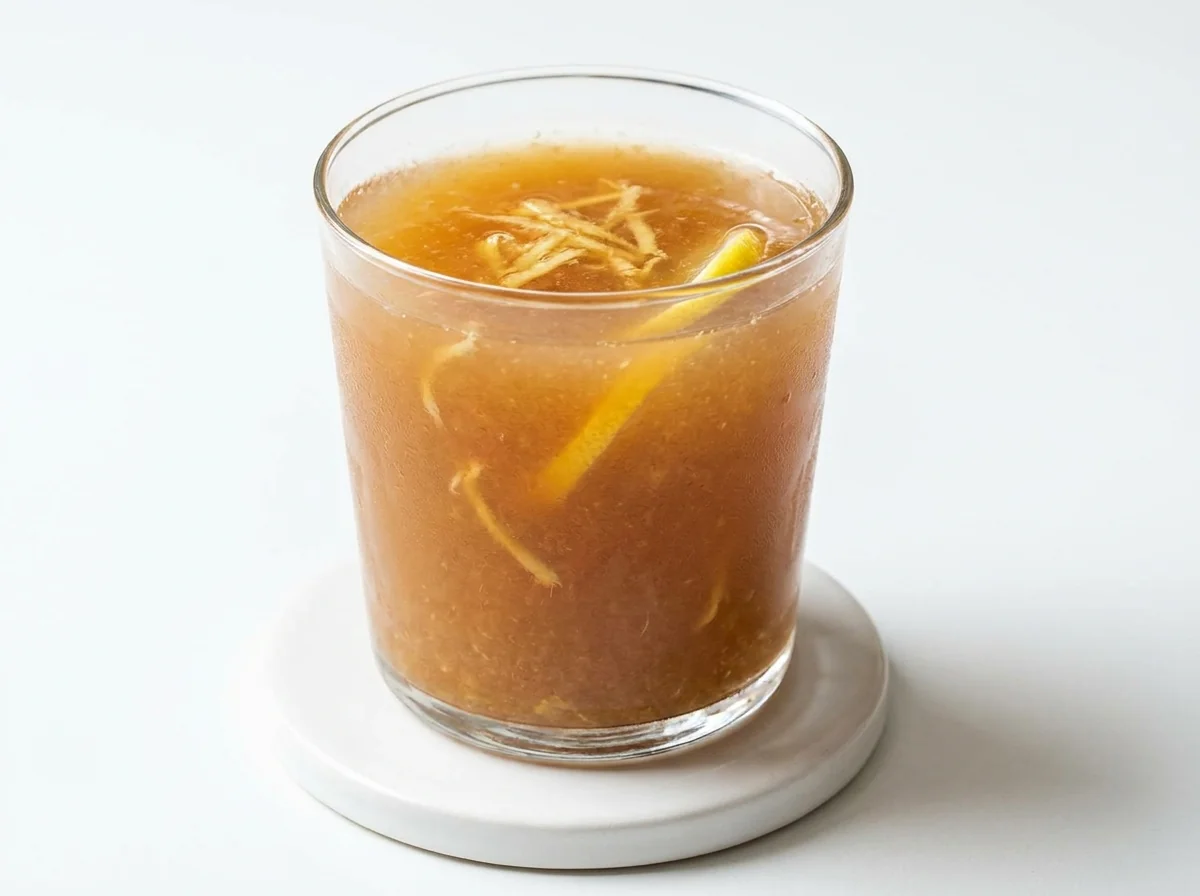
Tamarind is a familiar ingredient in Gulf kitchens that we use in cooking and drinks, and here we take inspiration from the Mexican drink agua de tamarindo and add a touch of ginger.
The result is a tangy, refreshing, lightly sweet drink that suits long summer days.
Preparation Steps
Soaking the pulp
Soak the tamarind pulp in the warm water for about five minutes until it softens, because the heat breaks down the pulp and makes it easier to extract its juice.
Extracting the juice
Mash the softened pulp with our fingers and squeeze it well, then strain it and separate the liquid from the fibers and seeds.
The second extraction
Return the additional water to the remaining pulp and mash and squeeze again, so we extract what is left of the flavor before we discard the fibers.
Sweetening and flavoring
Mix the two extractions together and dissolve the sugar or jaggery in them, then add the lemon juice and grated ginger because it gives a warm kick that cuts the tang of the tamarind.
Chilling and serving
Chill the drink in the refrigerator for about half an hour and serve it cold with or without ice, and it is at its best when the heat intensifies.
Blood Sugar Impact
The glycemic index (GI) measures how quickly a food raises blood sugar, while the glycemic load (GL) measures how much a full serving raises it. Together they give the complete picture.
Glycemic Index
GI
49Low
Low0–55Medium56–69High70+
A low value (≤55) means a gradual rise in blood sugar — the most suitable range for diabetes and insulin resistance.
Glycemic Load
GL
7Low
Low0–10Medium11–19High20+
Glycemic load reflects the impact of the full serving. To lower it: take half a serving, or pair the recipe with a source of protein and fiber.
Nutritional Information
Per ServingMakes 2 servings · one serving is about 265 g of raw ingredients
Calories61 kcal3%of Daily Value*
Protein0 g0%of Daily Value*
Carbohydrates16 g6%of Daily Value*
Fat0 g0%of Daily Value*
Fiber1 g4%of Daily Value*
Sodium4 mg0%of Daily Value*
* Percent Daily Values are based on a 2,000-calorie diet per FDA food-label reference values — your daily needs may be higher or lower. Values are derived from the recipe's ingredients via the USDA database.
Troubleshooting
The most common problems when preparing Tamarind Ginger Cooler, and how to fix them:
The drink is too sour
Tamarind is naturally tangy, so balance it with a little more sweetening or more water until it evens out.
Thick texture or stuck with fibers
We did not strain it well, so pass it through a fine sieve a second time to get rid of the fibers and seeds.
The ginger flavor is faint
Grate the ginger fresh, not dried, and add it right after the extraction so its kick stays alive.
Storage and Make-Ahead
The refrigerator
It keeps in a sealed container for up to two days, and we stir it before pouring because the tamarind sediment may settle at the bottom.
Freezing
We freeze the concentrated extract in ice molds, and dissolve it with water when needed for a quick drink.
Tested Ingredient Substitutions
Original Ingredient
Tested Substitute
Ratio
Flavor Difference
tamarind pulp
ready tamarind paste
20 g
Saves the soaking step and gives a more concentrated direct juice
sugar or jaggery
date syrup (molasses)
18 g
A local sweetener that suits the Gulf palate and adds depth to the flavor
fresh ginger
cinnamon stick
1 small stick
A warm touch alternative for those who do not prefer the kick of ginger
lemon juice
steeped black lime juice
5 ml
Adds a distinctive Gulf note with a light hint of bitterness
How Much Does It Make? Scaling Guide
Ingredient
For 1 glass
For 2 glasses (base)
For 4 glasses
Tamarind pulp
15 g
30 g
60 g
Warm water for soaking
120 ml
240 ml
480 ml
Additional water for extraction
120 ml
240 ml
480 ml
Sugar or jaggery
6 g
12 g
24 g
Lemon juice
2 ml
5 ml
10 ml
Grated ginger
2 g
3 g
6 g
EEINA Nutrition Tip
Start with light sweetening and taste, as the acidity of tamarind differs from one brand to another and we may need less sugar than we think.
Add This Recipe to Your Plan
The EEINA app saves your favorite recipes, calculates them from their real ingredients, and shows your daily numbers toward your goal. Try it free now.