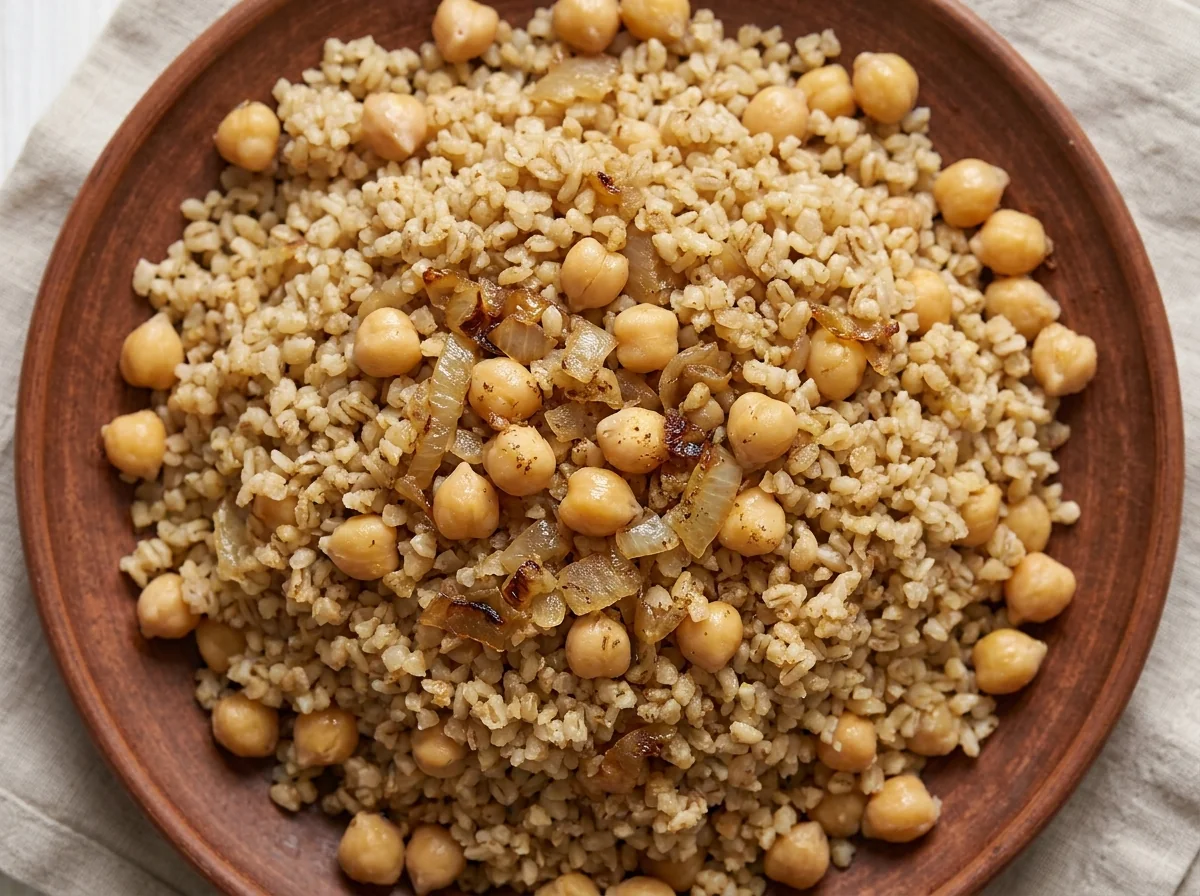
Syrian Bulgur with Chickpeas · coarse bulgur cooked with boiled chickpeas and onion in a little oil until it absorbs the liquid and fluffs. An economical, filling Syrian home dish, with nutrition values from a published lab analysis.
Bulgur with chickpeas is an old Syrian home dish that brings together whole bulgur and chickpeas in an economical, filling vegetarian meal that was a staple of simple Levantine tables.
Its secret is sauteing the bulgur in oil before the water so it stays fluffy, and getting the water ratio right. EEINA's version keeps the method, and its values are from a published Syrian lab analysis; it is low in fat and rich in whole-grain carbohydrates.
Preparation Steps
Saute the onion
Heat the oil and stir the chopped onion until it softens and loses its raw color.
Add the bulgur and chickpeas
Add the washed bulgur and the boiled chickpeas and stir for two minutes until the bulgur is coated with oil; this keeps the grains separate.
Cook with water
Pour in the hot water, salt, and cumin at roughly one cup of water to half a cup of bulgur, cover over low heat until the water is absorbed and the bulgur is done, about fifteen minutes.
Rest and serve
Turn off the heat, leave the pot covered for five minutes, then fluff gently. Serve with laban or salad.
Blood Sugar Impact
The glycemic index (GI) measures how quickly a food raises blood sugar, while the glycemic load (GL) measures how much a full serving raises it. Together they give the complete picture.
Glycemic Index
GI
45Low
Low0–55Medium56–69High70+
A low value (≤55) means a gradual rise in blood sugar — the most suitable range for diabetes and insulin resistance.
Glycemic Load
GL
22High
Low0–10Medium11–19High20+
Glycemic load reflects the impact of the full serving. To lower it: take half a serving, or pair the recipe with a source of protein and fiber.
Nutritional Information
Per ServingMakes 4 servings · one serving is about 120 g of raw ingredients
Calories216 kcal11%of Daily Value*
Protein4 g8%of Daily Value*
Carbohydrates50 g18%of Daily Value*
Fat0 g0%of Daily Value*
Fiber1 g4%of Daily Value*
* Percent Daily Values are based on a 2,000-calorie diet per FDA food-label reference values — your daily needs may be higher or lower. Values are derived from the recipe's ingredients via the USDA database.
Troubleshooting
The most common problems when preparing Syrian Bulgur with Chickpeas, and how to fix them:
The bulgur is clumpy
It was not sauteed, or there was too much water. Saute it in oil before the water and keep to the water ratio.
The bulgur is hard
Too little water, or it was lifted early. Add a little hot water and cover until it finishes cooking.
The dish is dry
The water evaporated too fast. Lower the heat and cover the pot well while cooking.
Bland taste
Too little salt, cumin, or onion. Saute the onion well and adjust the spices.
Storage and Make-Ahead
Refrigerator (4°)
Three days in an airtight container; sprinkle water when reheating.
Freezer (-18°)
One month in an airtight container. Thaw in the refrigerator before reheating.
Reheating
Sprinkle water, cover, and reheat over low heat until hot without drying out.
Tested Ingredient Substitutions
Original Ingredient
Tested Substitute
Ratio
Flavor Difference
Coarse bulgur
Fine bulgur
same weight
Shorter cooking time and a softer texture
Boiled chickpeas
Brown lentils
same weight
A legume alternative with a different flavor
Oil
Halve it
half
Lowers fat and calories (the recipe is already low-fat)
Cumin
Mixed spices
same amount
A richer flavor
How Much Does It Make? Scaling Guide
Number of servings
Bulgur
Chickpeas
Water
2 (half recipe)
100 g
75 g
1 cup
4 (base)
200 g
150 g
2 cups
8 (family)
400 g
300 g
4 cups
EEINA Nutrition Tip
Bulgur is a whole grain with a relatively low glycemic index, and chickpeas add plant protein and fiber. The dish is vegetarian and low in fat, and its protein is completed when served with laban or yogurt.
Add This Recipe to Your Plan
The EEINA app saves your favorite recipes, calculates them from their real ingredients, and shows your daily numbers toward your goal. Try it free now.