Couscous with milk is the sweet face of couscous that the homes of the Maghreb know as a light supper and a warm breakfast.
Grains fluffed with raisins and cinnamon over which warm milk is poured, and it is the cousin of the festive Moroccan seffa.
Preparation Steps
Steam the couscous with water first
In a bowl, pour the lightly salted hot water over the couscous and cover it for five minutes until it absorbs the water and fluffs up, then fluff it with a fork and the butter while warm. Good fluffing, grain by grain, is half of this dish.
Add the raisins and the aroma
Stir the plumped soaked raisins, the cinnamon, and half the sugar into the fluffed couscous, so the sweetness and warmth distribute through every grain.
Serve with warm milk. The Moroccan way
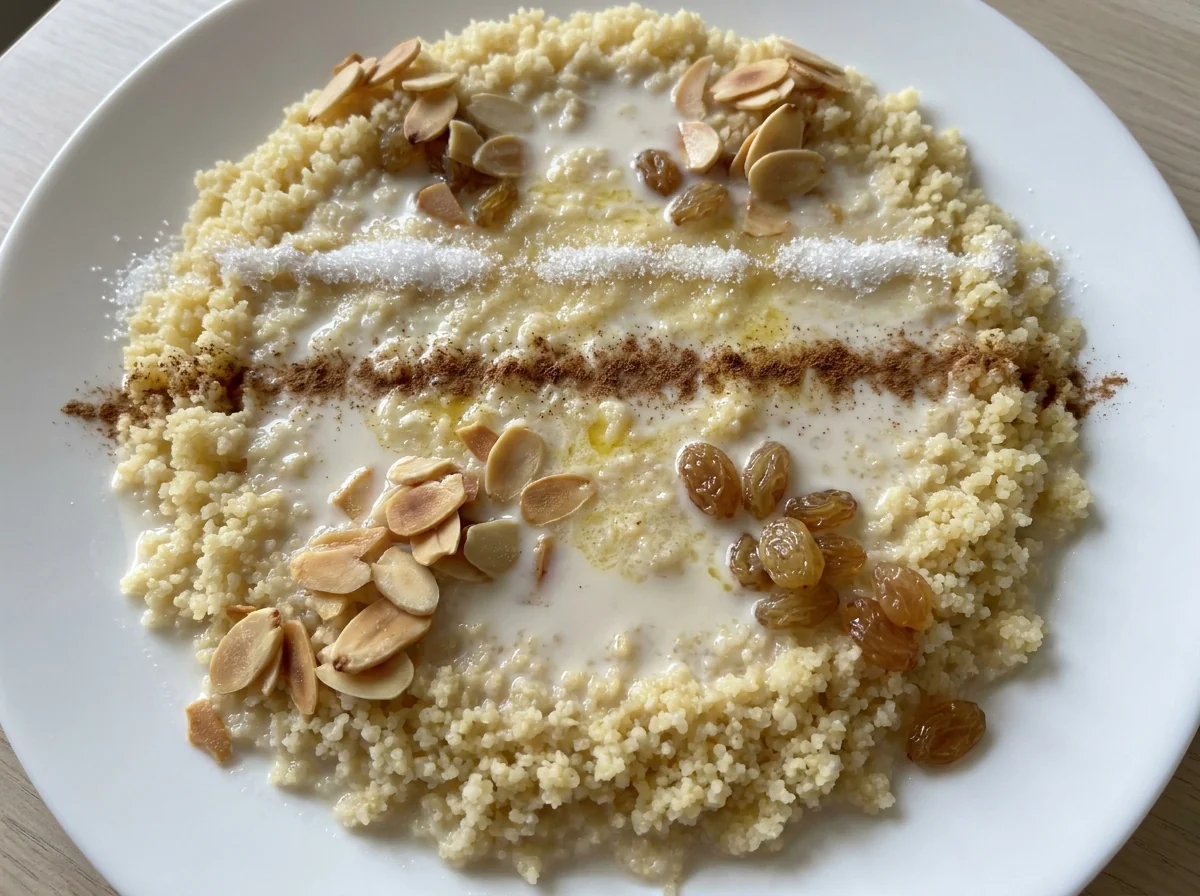
Mound the sweet couscous in deep bowls and pour the warm milk around and over it right at serving. Each person drowns their grains as much as they like, and this is the form of 'couscous with milk' as Moroccan homes know it in the evening and the morning.
Crown and sweeten the final touch
Drizzle the rest of the sugar in a thin thread and scatter the toasted almonds and a final pinch of cinnamon that draws its line on the white of the milk. Warmth, sweetness, and crunch in a single spoon.
Blood Sugar Impact
The glycemic index (GI) measures how quickly a food raises blood sugar, while the glycemic load (GL) measures how much a full serving raises it. Together they give the complete picture.
Glycemic Index
GI
57Medium
Low0–55Medium56–69High70+
A low value (≤55) means a gradual rise in blood sugar — the most suitable range for diabetes and insulin resistance.
Glycemic Load
GL
32High
Low0–10Medium11–19High20+
Glycemic load reflects the impact of the full serving. To lower it: take half a serving, or pair the recipe with a source of protein and fiber.
Nutritional Information
Per ServingMakes 4 servings · one serving is about 230 g of raw ingredients
Calories375 kcal19%of Daily Value*
Protein11 g22%of Daily Value*
Carbohydrates61 g22%of Daily Value*
Fat10 g13%of Daily Value*
Fiber4 g14%of Daily Value*
Sodium350 mg15%of Daily Value*
Potassium350 mg7%of Daily Value*
Phosphorus206 mg16%of Daily Value*
* Percent Daily Values are based on a 2,000-calorie diet per FDA food-label reference values — your daily needs may be higher or lower. Values are derived from the recipe's ingredients via the USDA database.
Troubleshooting
The most common problems when preparing Sweet Milk Couscous with Cinnamon, and how to fix them:
The couscous clumped despite covering
Too much water or fluffing was missed. A cup of water per cup of couscous and the fork with butter are a must, and wet fingers rub out the stubborn lumps.
It turned to porridge in the milk
Milk poured too early and left to soak. The milk at the moment of serving, and the spoon comes before the wait.
Its sweetness is flat
Raisins that were not soaked or sugar scattered all inside. Soaking plumps the raisins with sweetness, and the final thread over the milk is heard in the first spoon.
It came out dry and tough
Coarse couscous treated like medium. The coarse asks for a quarter more water, or extra covered minutes with a splash of hot water.
Storage and Make-Ahead
Warm
With its milk at the hour it is poured. Its Moroccan ritual.
In the fridge
The sweet fluffed couscous alone for two days. Warmed by steam and its milk poured fresh.
Not suitable for freezing
Its grains lose their separateness on thawing.
Tested Ingredient Substitutions
Original Ingredient
Tested Substitute
Ratio
Flavor Difference
Sugar
Honey or date molasses
1:1
A warmer sweetening either way
Raisins
Finely chopped dates
1:1
A Gulf sweetness that suits the milk
Cow's milk
Warm almond milk
1:1
Plant-based to match the occasion (mind the nuts)
Ordinary couscous
Whole-wheat couscous
1:1
Browner, higher in fiber with a deeper flavor
How Much Does It Make? Scaling Guide
Ingredient
4 servings
2 servings
8 servings
Couscous
200 g
100 g
400 g
Milk
400 ml
200 ml
800 ml
Sugar
30 g
15 g
60 g
EEINA Nutrition Tip
Fluff the couscous with a fork and butter while warm before any milk. The fluffed grain swims in the milk on its own and keeps its texture; couscous that meets the milk clumped turns into a porridge in which the dish loses its identity.
Add This Recipe to Your Plan
The EEINA app saves your favorite recipes, calculates them from their real ingredients, and shows your daily numbers toward your goal. Try it free now.
Sweet couscous. Isn't couscous a meat-and-vegetable dish?
In its homeland, couscous has two deep-rooted faces: the savory with its seven vegetables on Friday, and the sweet with milk and raisins for supper and breakfast, and it is this second one that the East knows only a little.
How is it different from Moroccan seffa?
Seffa is vermicelli or couscous steamed and mounded with almonds and powdered sugar, an occasion dish; this is the simple everyday child of the home with milk poured over it. A celebration there and tenderness here.
Is it good for children?
One of the gentlest suppers and breakfasts for them: tender grains with warm milk and sweetness in your hand, and without almonds for those under four per safe-swallowing guidelines.
How do I lighten its sugar?
Soaked raisins sweeten on their own. Fifteen grams of sugar is enough with them, or date molasses in a single thread over the milk.