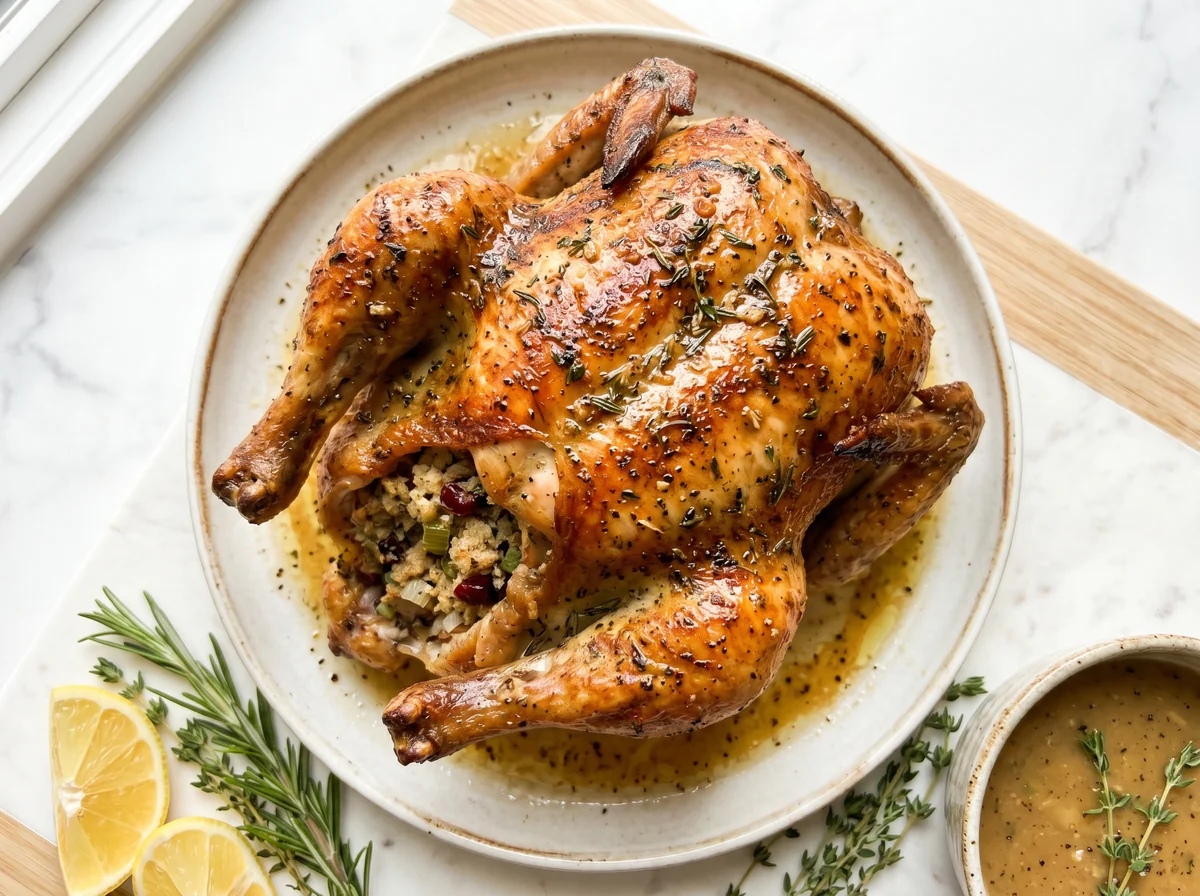
An Arab feast dish — a whole chicken stuffed with spiced rice, ground meat, and nuts, roasted until the skin is golden and the filling is cooked through. High glycemic load from the rice, rich in protein, contains tree nuts.
Stuffed roast chicken is a centrepiece of Arab feast cuisine, present on occasion tables from the Levant to the Gulf and Egypt.
A whole chicken is filled with spiced rice, ground meat, and nuts and roasted until the skin crisps golden, delivering two dishes in one: roasted chicken and rice infused with its juices. It is the dish of generosity and hospitality, presented whole in the centre of the table, with each region adding its own spice blend and variations (raisins, mixed nuts, freekeh instead of rice).
Preparation Steps
Season the chicken
Clean and dry the chicken, then rub it inside and out with the oil, baharat, turmeric, salt, pepper, and lemon juice mixture. Leave to marinate for at least 30 minutes in the refrigerator. Good seasoning and proper drying give a golden, crisp skin.
Make the rice filling
Brown the onion in ghee, add the ground meat with baharat, cinnamon, cardamom, and a pinch of salt, and stir until cooked. Add the washed rice and stir for a minute, then cook it to half-done with a little water (it finishes cooking inside the chicken). Fold in the toasted nuts. Let the filling cool before stuffing.
Stuff the chicken
Fill the chicken cavity with the half-cooked rice filling without packing it too tightly (the rice will expand). Seal the opening with wooden toothpicks or trussing twine, and tie the legs together. A slightly loose filling allows the rice to cook and expand without splitting the skin.
Roast covered
Place the chicken in a roasting pan, add one cup of water or broth to the bottom, cover tightly with foil, and roast at 190°C for about one hour until the meat and filling are cooked through. Covering first steams the chicken so it stays moist and the filling cooks evenly.
Brown
Remove the foil, brush the skin with a little ghee, and return the chicken to the oven for 15 to 20 minutes until the skin is golden and crisp and the internal temperature of the chicken reaches 74°C. This stage delivers the colour and crunch.
Serve
Rest the chicken for 10 minutes, then scoop out the filling onto a platter and place the whole (or carved) chicken on top. Garnish with extra nuts. Serve with a salad and yogurt. A magnificent Arab feast dish — whole roasted chicken over spiced rice and nuts presented as one glorious centrepiece.
Blood Sugar Impact
The glycemic index (GI) measures how quickly a food raises blood sugar, while the glycemic load (GL) measures how much a full serving raises it. Together they give the complete picture.
Glycemic Index
GI
71High
Low0–55Medium56–69High70+
A low value (≤55) means a gradual rise in blood sugar — the most suitable range for diabetes and insulin resistance.
Glycemic Load
GL
42High
Low0–10Medium11–19High20+
Glycemic load reflects the impact of the full serving. To lower it: take half a serving, or pair the recipe with a source of protein and fiber.
Nutritional Information
Per ServingMakes 5 servings · one serving is about 435 g of raw ingredients
Calories922 kcal46%of Daily Value*
Protein67 g134%of Daily Value*
Carbohydrates61 g22%of Daily Value*
Fat43 g55%of Daily Value*
Fiber2 g7%of Daily Value*
Sodium190 mg8%of Daily Value*
Potassium685 mg15%of Daily Value*
Phosphorus517 mg41%of Daily Value*
* Percent Daily Values are based on a 2,000-calorie diet per FDA food-label reference values — your daily needs may be higher or lower. Values are derived from the recipe's ingredients via the USDA database.
Troubleshooting
The most common problems when preparing Arabic Stuffed Roast Chicken with Rice, and how to fix them:
The skin did not brown or crisp
The foil was not removed, or the chicken was not dried. Remove the foil at the end of roasting, brush the skin with ghee, and roast at high heat; dry the chicken thoroughly before seasoning for crisp skin.
The filling is raw but the chicken is cooked
Completely raw rice was used. Cook the rice filling to half-done before stuffing — it finishes inside the chicken at the same time as the meat.
The chicken is dry
Roasted uncovered too long or at too high a temperature. Roast covered with steam for most of the time and uncover only to brown at the end; monitor the internal temperature (74°C) and do not exceed it.
The skin split and the filling came out
Overstuffed. Stuff the cavity loosely (the rice expands), seal the opening securely with toothpicks or twine, and tie the legs.
The rice in the filling is dry
Not enough liquid, or the nuts burned. Cook the rice filling with enough moisture; toast the nuts over low heat; the steam inside the covered chicken keeps the filling moist.
Storage and Make-Ahead
Refrigerator (4°C)
Stuffed roast chicken keeps in an airtight container for three days, filling and chicken together or separately. Reheat covered in the oven to keep the filling moist and restore some skin crispness.
Freezer (-18°C)
Freezes for one month. The stuffed rice holds well and so does the roasted chicken. Thaw in the refrigerator and reheat in the oven.
Advance preparation
Season the chicken and make the filling (half-cooked) ahead of time and keep both refrigerated; stuff and roast before serving. Marinating the chicken overnight deepens the flavour.
Food safety
Cook the chicken to an internal temperature of 74°C with no trace of pink, and the filling must be piping hot throughout. Do not leave out of the refrigerator for more than two hours.
Tested Ingredient Substitutions
Original Ingredient
Tested Substitute
Ratio
Flavor Difference
white rice filling
freekeh or brown rice filling
same quantity
Higher fibre and flavour; freekeh gives a distinctive smoky taste
whole chicken
large chicken pieces with rice on the side
as needed
Easier and faster; loses the whole-chicken presentation but keeps the same flavour
almonds and pine nuts
cashews or pistachios with raisins
same quantity
Raisins add sweetness; all are tree nuts for the filling
How Much Does It Make? Scaling Guide
Servings
Chicken
Rice
Ground meat
3 (half recipe)
1/2 chicken or 1 small chicken
1 cup
100 g
5 (base)
1 chicken (1.5 kg)
2 cups
200 g
10 (large family)
2 chickens
4 cups
400 g
EEINA Nutrition Tip
Stuffed roast chicken is well-balanced in protein (chicken and meat), but the rice filling raises the glycemic load. To lighten it, remove the skin before eating (cuts the fat significantly), keep the rice portion moderate, and serve with a large salad. The nuts add healthy fats. Swap some of the rice for freekeh or brown rice to increase fibre.
Add This Recipe to Your Plan
The EEINA app saves your favorite recipes, calculates them from their real ingredients, and shows your daily numbers toward your goal. Try it free now.
Yes, to half-done. Completely raw rice will not cook in the time it takes the chicken to roast, so cook the filling to half-done and let it finish inside the chicken at the same time as the meat.
How do I get crisp skin?
Dry the chicken thoroughly before seasoning, roast it covered with steam until fully cooked, then uncover, brush the skin with ghee, and roast at high heat at the end until golden and crisp.
Is stuffed roast chicken healthy?
Well-balanced in protein, but the rice filling raises the glycemic load. Remove the skin before eating to cut the fat, keep the rice portion moderate alongside a salad, and use freekeh or brown rice for fibre.
What can replace rice in the filling?
Freekeh (smoked whole grain) or brown rice increases fibre and lowers the glycemic load. Bulgur also works. All deliver a nutritious filling with a different flavour.