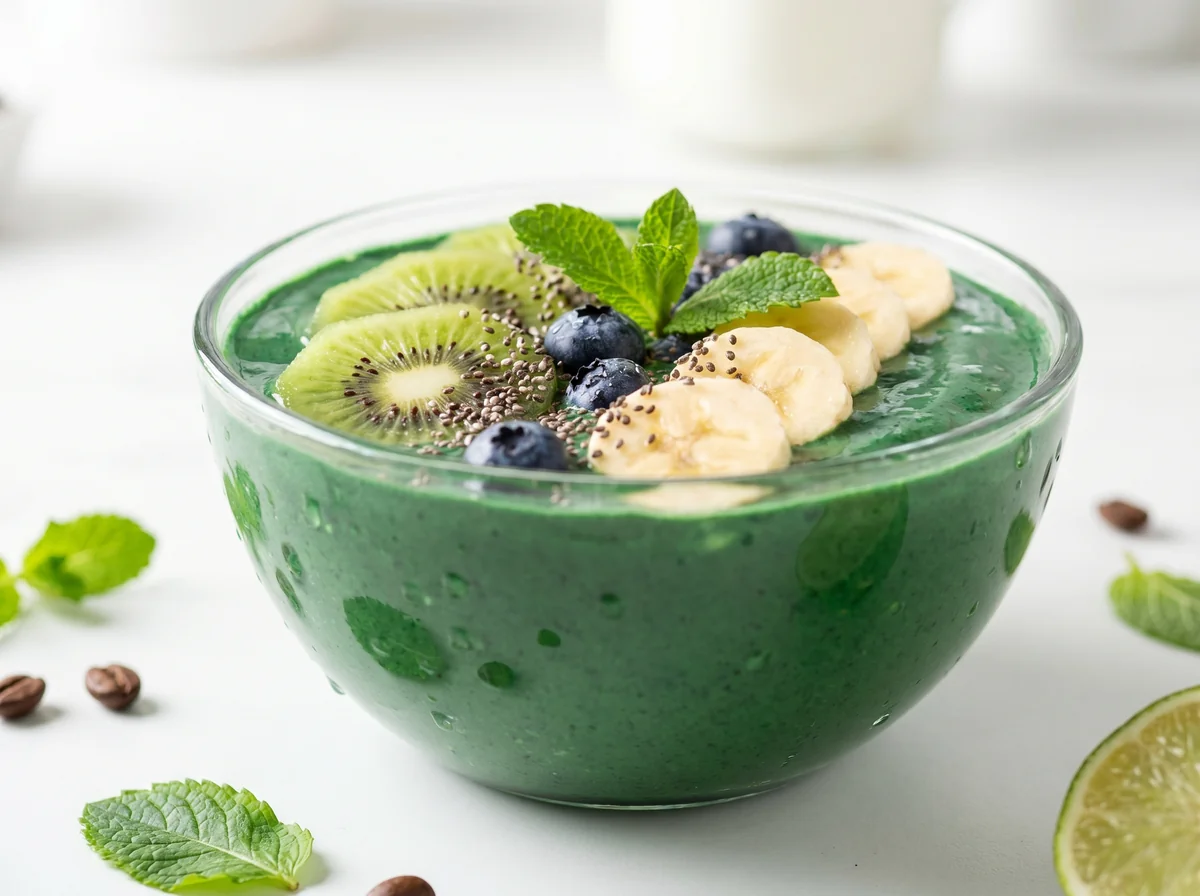
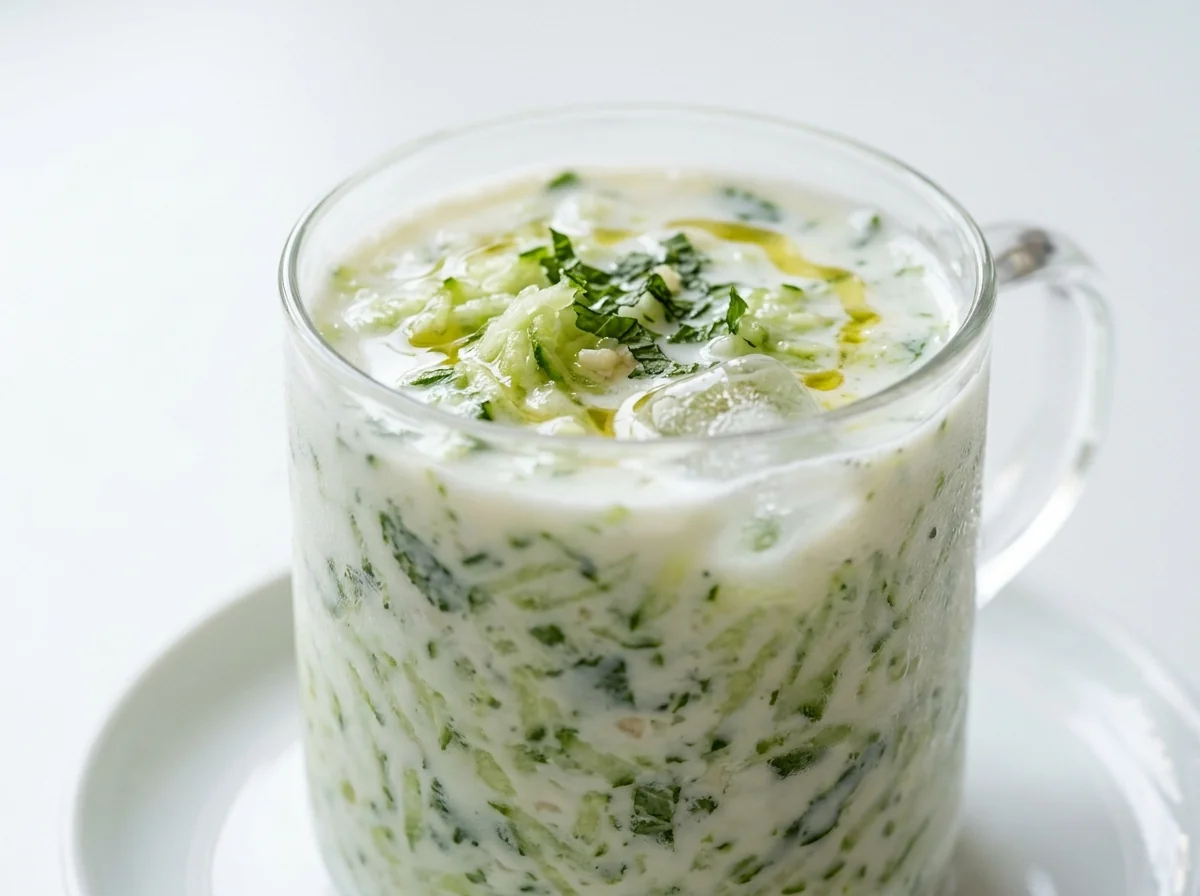
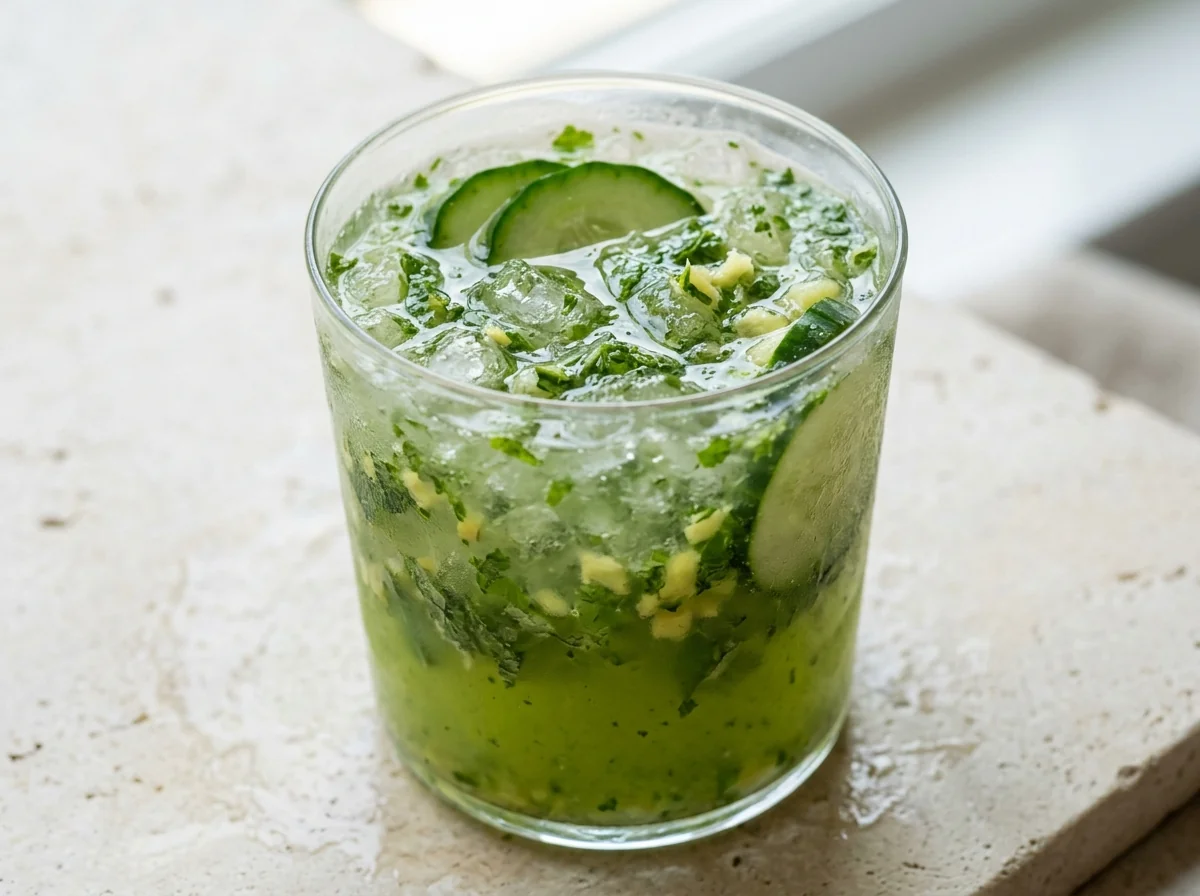
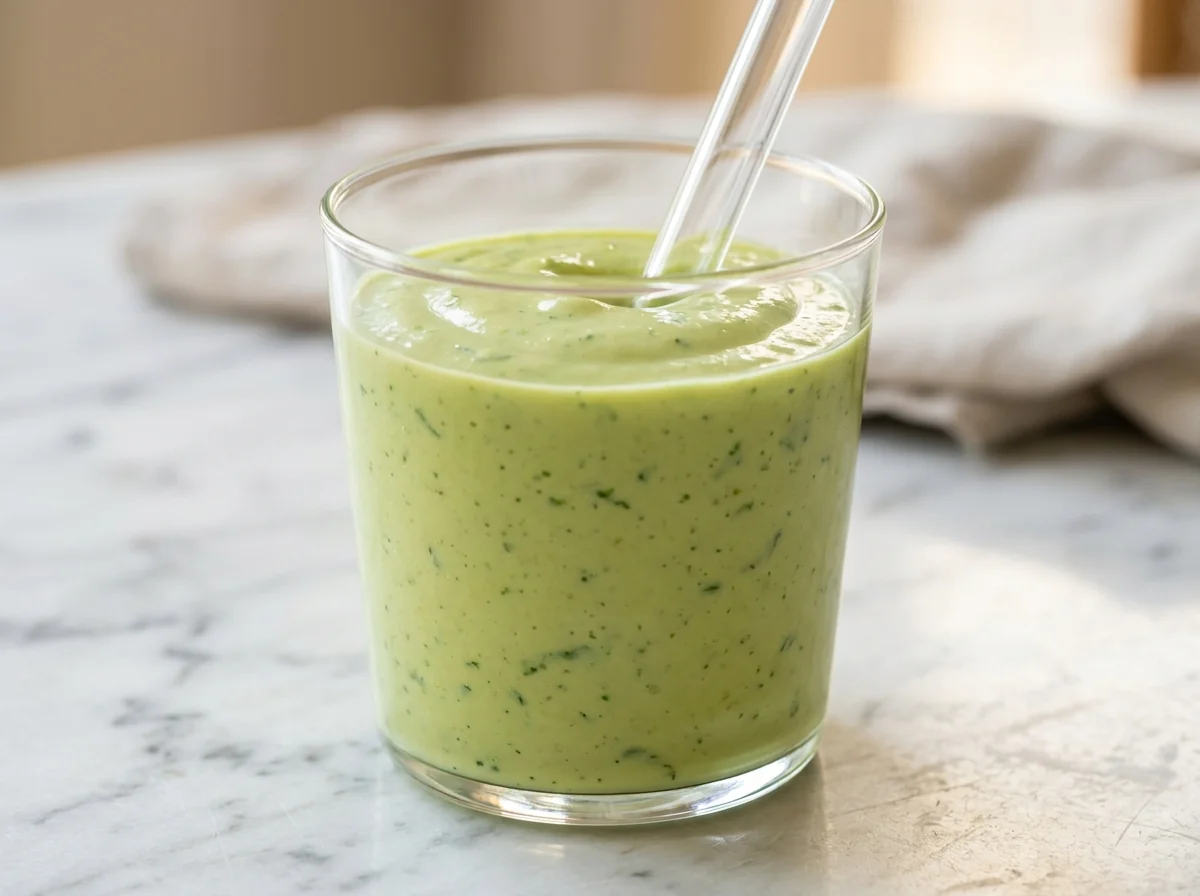
A vivid green smoothie — frozen banana and pineapple blended with spirulina powder, spinach, almond milk and Greek yoghurt. A plant-based protein and iron boost with a refreshing tropical flavour.
This smoothie was born from a desire to go beyond the ordinary spinach-and-apple green drink.
Spirulina — an algae consumed by ancient civilisations as food — was added, giving the glass a deep emerald colour and a boost of plant protein and iron. The sweetness of banana and tropical tang of pineapple tame the earthy taste of the algae, producing a refreshing drink that is perfect as a morning start or a light afternoon pick-me-up.
Preparation Steps
Temper the frozen fruit
Remove the frozen banana and pineapple from the freezer and leave them on the counter for two minutes to soften slightly so they do not strain the blender blade. The ideal consistency is when a knife meets slight resistance rather than stone-hard resistance.
Add liquids first
Pour the almond milk into the blender first, then add the yoghurt and lemon juice. Starting with the liquid at the bottom draws the other ingredients towards the blade and prevents them from clumping at the top.
Add greens and fruit
Add the spinach, banana and pineapple on top of the liquid. The spinach goes in early so it is ground completely smooth before the frozen fruit weighs down the mixture.
Add spirulina and seeds
Scatter the spirulina powder, chia seeds and honey in last. Adding the spirulina at the end minimises its air exposure, keeping the drink a deep emerald colour with a milder taste.
Blend until silky
Blend on medium speed for ten seconds, then increase to maximum for about 45 seconds until the consistency is silky smooth with no lumps. If the mixture spins around without moving down, stop the blender, push the ingredients down with a spatula, then blend again.
Adjust consistency and serve
Taste the consistency: if it is too thick, add a splash of almond milk and blend for five seconds. Pour immediately into two glasses — spirulina loses its colour as it sits and oxidises. Serve chilled within ten minutes for the best flavour.
Blood Sugar Impact
The glycemic index (GI) measures how quickly a food raises blood sugar, while the glycemic load (GL) measures how much a full serving raises it. Together they give the complete picture.
Glycemic Index
GI
50Low
Low0–55Medium56–69High70+
A low value (≤55) means a gradual rise in blood sugar — the most suitable range for diabetes and insulin resistance.
Glycemic Load
GL
19Medium
Low0–10Medium11–19High20+
Glycemic load reflects the impact of the full serving. To lower it: take half a serving, or pair the recipe with a source of protein and fiber.
Nutritional Information
Per ServingMakes 2 servings · one serving is about 365 g of raw ingredients
Calories214 kcal11%of Daily Value*
Protein8 g16%of Daily Value*
Carbohydrates44 g16%of Daily Value*
Fat3 g4%of Daily Value*
Fiber6 g21%of Daily Value*
Sodium138 mg6%of Daily Value*
* Percent Daily Values are based on a 2,000-calorie diet per FDA food-label reference values — your daily needs may be higher or lower. Values are derived from the recipe's ingredients via the USDA database.
Troubleshooting
The most common problems when preparing Green Spirulina Smoothie, and how to fix them:
Earthy or metallic taste from the spirulina
Reduce to half a teaspoon and increase the banana or pineapple. The sweetness of the fruit and the acidity of the lemon mask the earthy flavour effectively.
Consistency too thick to pour
Add almond milk two tablespoons at a time and blend until the consistency is right. Frozen fruit thickens the mixture quickly.
Consistency too thin and watery
Add half an extra frozen banana or a tablespoon of yoghurt. Avoid ice — it dilutes the drink as it melts.
Colour turning brown instead of bright green
Pour the smoothie immediately after blending and serve chilled. Spirulina oxidises and loses its freshness with standing and air exposure.
Chia seeds clumping at the bottom
Blend the seeds thoroughly into the mixture and do not let it stand too long. Alternatively, soak the seeds in the almond milk for five minutes before blending so they distribute evenly.
Bloating or heaviness in the stomach after drinking
Start with a smaller amount of spirulina and sip slowly. Some bodies need a gradual adjustment period to algae.
Storage and Make-Ahead
Serve immediately
Best consumed within ten minutes of blending to preserve the colour, consistency and fresh flavour.
Refrigerator
Store in a tightly sealed jar filled to the brim (to minimise air) for up to 24 hours maximum. Shake well before drinking as the layers separate.
Freezer (ice cubes)
Pour any excess into ice-cube moulds and freeze for up to a month, then blend the cubes later with a splash of fresh almond milk.
Advance preparation
Pre-portion the frozen fruit and spinach into bags in advance. Add the spirulina and liquids only at blending time to preserve the flavour.
Chlorella is a close algae with a milder taste; matcha provides caffeine-driven energy with a different flavour. Each has its own nutritional profile.
Greek yoghurt
Coconut yoghurt (plant-based)
1:1
A fully plant-based substitute that makes the recipe dairy-free, with a similar creamy consistency.
Honey
Pitted dates or maple syrup
2 dates for every 1 teaspoon
Dates add fibre and minerals; both sweeten naturally. Adjust according to the ripeness of the banana.
Pineapple
Frozen mango or half an orange
1:1
Both are sweet and rich in vitamin C, which supports plant-based iron absorption.
How Much Does It Make? Scaling Guide
Amount
1 cup
2 cups (original)
4 cups
Frozen banana
1 piece
2 pieces
4 pieces
Frozen pineapple
75 g
150 g
300 g
Spirulina powder
1/2 teaspoon
1 teaspoon
2 teaspoons
Almond milk
125 ml
250 ml
500 ml
Greek yogurt
1 1/2 tablespoons
3 tablespoons
6 tablespoons
EEINA Nutrition Tip
If this is your first time with spirulina, start with half a teaspoon — its flavour is strong and your digestive system needs gradual adjustment. Split the glass into two smaller servings if you have a sensitive stomach. Because spirulina is a source of plant-based iron, the vitamin C in the pineapple and lemon doubles its absorption, so keep both in the blend.
Add This Recipe to Your Plan
The EEINA app saves your favorite recipes, calculates them from their real ingredients, and shows your daily numbers toward your goal. Try it free now.
No. No food burns fat. Spirulina may support satiety thanks to its protein content, which can help within a balanced diet and caloric deficit, but it is not a fat burner. Any claim to the contrary is marketing, not science.
How much spirulina is safe daily?
Common doses in studies range from 1 to 3 grams per day, and some studies go higher. Start with a small amount (half a teaspoon) and choose a product from a trusted, heavy-metal-free source. Consult your doctor if you are pregnant or taking medication.
Is this smoothie a complete breakfast?
It works as a light breakfast containing protein, fibre and fruit. For a more filling meal, add a tablespoon of almond butter or a handful of oats to raise the protein, fibre and sustained energy.
Why is my smoothie a dark green rather than a bright green?
The deep emerald colour is natural from the concentrated chlorophyll in the spirulina and spinach. For a lighter colour, reduce the spirulina or increase lighter-coloured fruit such as banana.
Can people with autoimmune conditions take spirulina?
Caution is advised. Spirulina may activate certain immune pathways, so people with autoimmune conditions or those taking immunosuppressants are advised to consult their doctor before using it. This is a supportive food, not a substitute for medical advice.