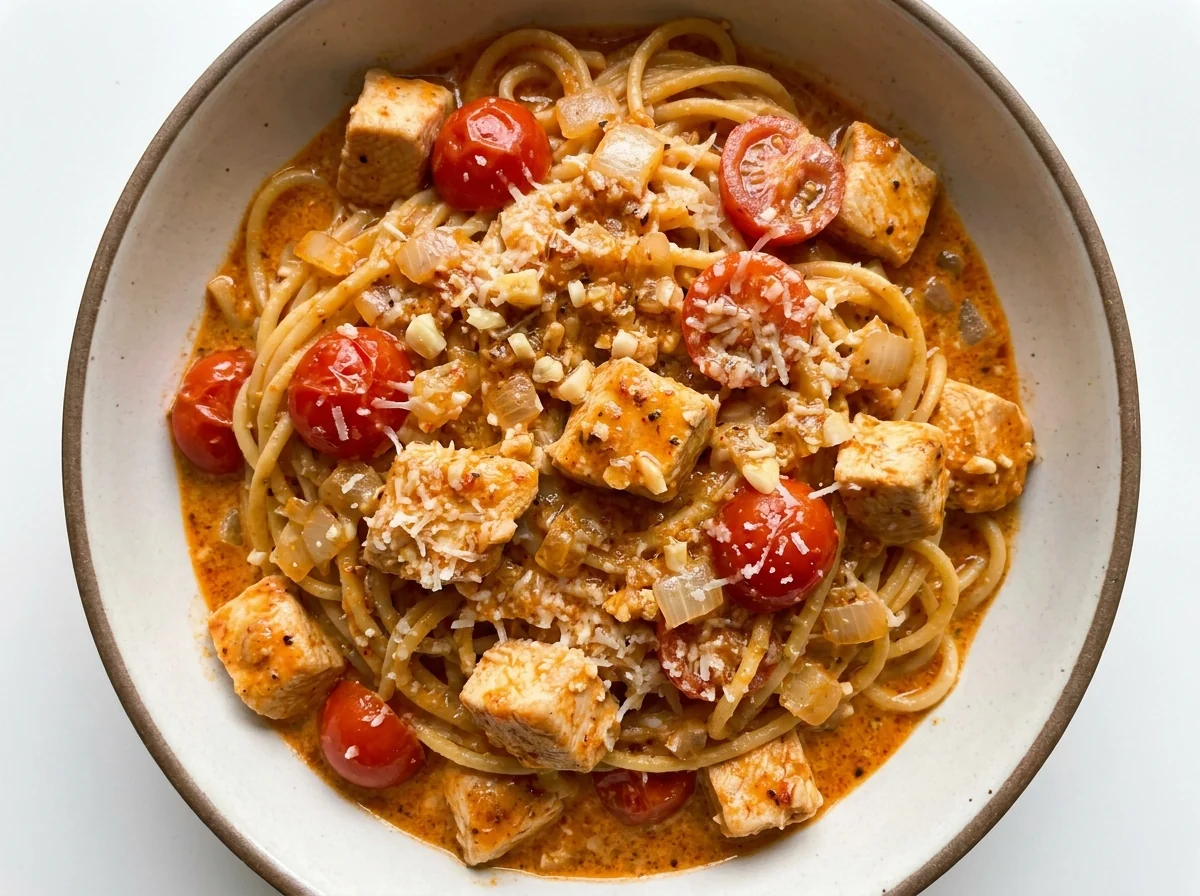
We wanted a warm pasta dish with North African flavor without resorting to hard-to-find nduja, and we found in harissa paste an accessible alternative in our markets that gives the same smoke and heat.
This is our creamy version that balances the heat of harissa with the smoothness of cheese.
Preparation Steps
The pasta
Boil the pasta in salted water until al dente, and reserve a cup of the cooking water before draining, since it binds the sauce later
The chicken
Sear the chicken cubes in the olive oil over medium-high heat until browned and the internal temperature reaches 74°C so they are safely cooked, then set aside
The aromatic base
Lower the heat and sauté the onion and garlic until softened, then add the cherry tomatoes and let them soften and release their juices
The harissa sauce
Add the harissa paste and stir for a minute until fragrant, then pour in the stock and let it simmer briefly, dissolving the cream cheese in it until you get a smooth sauce
Combine and finish
Return the chicken, add the pasta and toss to coat, loosening with the cooking water as needed, then add the parmesan and parsley, adjust the salt and serve right away
Blood Sugar Impact
The glycemic index (GI) measures how quickly a food raises blood sugar, while the glycemic load (GL) measures how much a full serving raises it. Together they give the complete picture.
Glycemic Index
GI
45Low
Low0–55Medium56–69High70+
A low value (≤55) means a gradual rise in blood sugar — the most suitable range for diabetes and insulin resistance.
Glycemic Load
GL
27High
Low0–10Medium11–19High20+
Glycemic load reflects the impact of the full serving. To lower it: take half a serving, or pair the recipe with a source of protein and fiber.
Nutritional Information
Per ServingMakes 4 servings · one serving is about 365 g of raw ingredients
Calories600 kcal30%of Daily Value*
Protein46 g92%of Daily Value*
Carbohydrates64 g23%of Daily Value*
Fat17 g22%of Daily Value*
Fiber3 g11%of Daily Value*
Sodium768 mg33%of Daily Value*
Potassium822 mg17%of Daily Value*
Phosphorus568 mg45%of Daily Value*
* Percent Daily Values are based on a 2,000-calorie diet per FDA food-label reference values — your daily needs may be higher or lower. Values are derived from the recipe's ingredients via the USDA database.
Troubleshooting
The most common problems when preparing Creamy Harissa Chicken Pasta, and how to fix them:
The sauce is too hot
Add a spoonful of cream cheese or a splash of stock; the fat tempers the heat of the harissa without masking it
The sauce is dry
Add the cooking water gradually until it becomes silky again and coats the pasta
The cheese didn't melt smoothly
The heat was too high; lower it and stir until it fully blends in without clumping
The chicken is dry
It was over-seared; remove it as soon as it reaches 74°C and return it only at the end to coat with the sauce
Storage and Make-Ahead
Refrigerator
Store in an airtight container for up to 3 days, and reheat over low heat with a splash of stock to restore the sauce's consistency
Freezer
Freeze the sauce with the chicken without the pasta for up to a month, then thaw, reheat, and add fresh pasta
Tested Ingredient Substitutions
Original Ingredient
Tested Substitute
Ratio
Flavor Difference
Light cream cheese
Mascarpone
Same amount, 125 g
Richer texture and higher fat
Chicken breast
Sliced chicken sausage
Same weight, 450 g
Cook to 74°C; deeper flavor and fuller texture
Harissa paste
Ground red pepper with olive oil
Use less and increase to taste
Milder heat with a different flavor
Wheat pasta
High-protein pasta
Same weight, 300 g
Higher protein and similar texture
How Much Does It Make? Scaling Guide
Ingredient
2 servings
4 servings (base)
8 servings
Pasta
150 g
300 g
600 g
Chicken breast
225 g
450 g
900 g
Harissa paste
25 g
45 g
90 g
Stock
125 ml
250 ml
500 ml
EEINA Nutrition Tip
Stir the harissa paste over the heat for a full minute before adding the liquid; this step opens up its flavor and removes any raw sharpness.
Add This Recipe to Your Plan
The EEINA app saves your favorite recipes, calculates them from their real ingredients, and shows your daily numbers toward your goal. Try it free now.