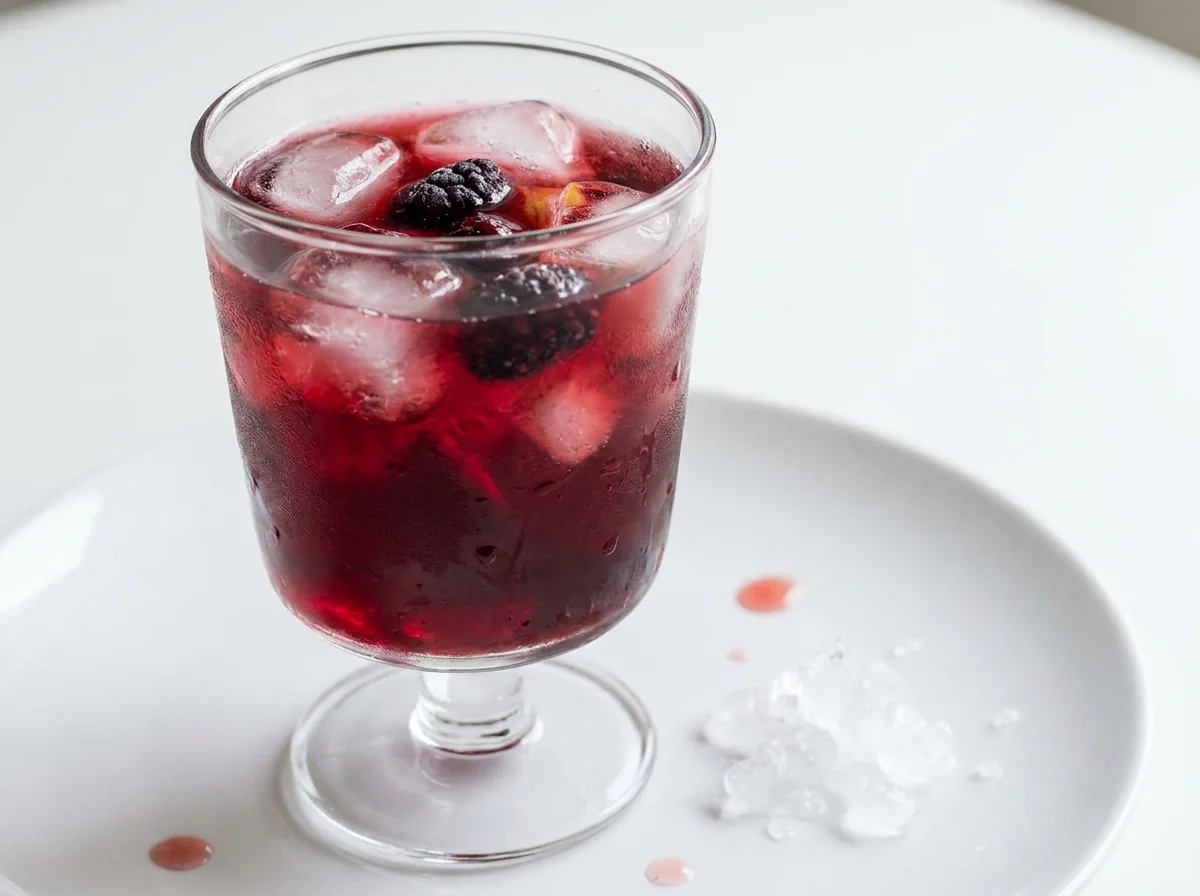
Levantine mulberry syrup is one of the old Levantine summer drinks, in which the dark mulberry is ground and strained, then concentrated with sugar so it can be kept concentrated in the bottle and diluted cup for cup when serving guests.
We build this syrup on a concentrated method that preserves the deep red color of the mulberry and its sweet-tart flavor.
Preparation Steps
Grinding and straining
Grind the mulberries in a blender until they turn into a full juice, then strain them through a clean cloth to separate the clear juice from the seeds and skins, as straining through cloth gives the syrup a clear dark color with no pulp.
Concentrating
Combine the strained mulberry juice with the sugar in a pot over medium heat, and when it starts to boil leave it for a few seconds, then remove it from the heat, as quick concentration dissolves the sugar and preserves the fresh mulberry flavor without losing its deep red color to long cooking.
Adding the lemon
Add the lemon juice to the hot syrup and stir it, as the acidity balances the sweetness of the sugar, fixes the deep red mulberry color, and keeps it from turning brown.
Cooling
Let the concentrate cool completely, then transfer it to a glass bottle and chill it in the refrigerator, because serving it cold brings out the freshness of the Levantine mulberry.
Serving
Pour about a third of a cup of the concentrate into a glass and top it up with cold water and ice cubes, then stir it, as this is a concentrated syrup that is stored and diluted at drinking time so it stays fresh longer.
Blood Sugar Impact
The glycemic index (GI) measures how quickly a food raises blood sugar, while the glycemic load (GL) measures how much a full serving raises it. Together they give the complete picture.
Glycemic Index
GI
62Medium
Low0–55Medium56–69High70+
A low value (≤55) means a gradual rise in blood sugar — the most suitable range for diabetes and insulin resistance.
Glycemic Load
GL
42High
Low0–10Medium11–19High20+
Glycemic load reflects the impact of the full serving. To lower it: take half a serving, or pair the recipe with a source of protein and fiber.
Nutritional Information
Per ServingMakes 8 servings · one serving is about 350 g of raw ingredients
Calories269 kcal13%of Daily Value*
Protein1 g2%of Daily Value*
Carbohydrates69 g25%of Daily Value*
Fat0 g0%of Daily Value*
Fiber1 g4%of Daily Value*
Sodium7 mg0%of Daily Value*
* Percent Daily Values are based on a 2,000-calorie diet per FDA food-label reference values — your daily needs may be higher or lower. Values are derived from the recipe's ingredients via the USDA database.
Troubleshooting
The most common problems when preparing Concentrated Levantine Mulberry Syrup (Mulberry Sharbat), and how to fix them:
The syrup color is pale or turning brown
Reduce the boiling time and add the lemon juice earlier, as long heat fades the mulberry color while the acidity fixes it.
The syrup is too sweet
Add a little more lemon juice or dilute with more cold water at serving, as the acidity and dilution balance the sugar.
Storage and Make-Ahead
Refrigerating
Keep the concentrate in a tightly sealed glass bottle in the refrigerator for up to three weeks.
Freezing
Freeze the concentrate in ice-cube trays for up to three months and thaw what you need at serving.
Tested Ingredient Substitutions
Original Ingredient
Tested Substitute
Ratio
Flavor Difference
Levantine mulberry
blackberry
500 g
Close in dark color and acidity when Levantine mulberry is unavailable.
sugar
raw cane sugar
500 g
Gives a darker color and deeper flavor while keeping the concentration.
lemon juice
dissolved citric acid
3 g
A practical substitute for fixing the color and balancing the sweetness.
ice cubes
chilled iced water
400 ml
Dilutes and cools without adding extra melted water when desired.
How Much Does It Make? Scaling Guide
Ingredient
4 cups
8 cups (base)
16 cups
Levantine mulberry (firsad) · g
250
500
1000
Sugar · g
250
500
1000
Lemon juice · ml
10
20
40
Cold water for dilution · ml
700
1400
2800
Ice cubes · g
200
400
800
EEINA Nutrition Tip
Keep the concentrate in a sealed glass bottle in the refrigerator, and dilute a third of a cup with cold water at serving time so the drink stays fresh longer.
Add This Recipe to Your Plan
The EEINA app saves your favorite recipes, calculates them from their real ingredients, and shows your daily numbers toward your goal. Try it free now.