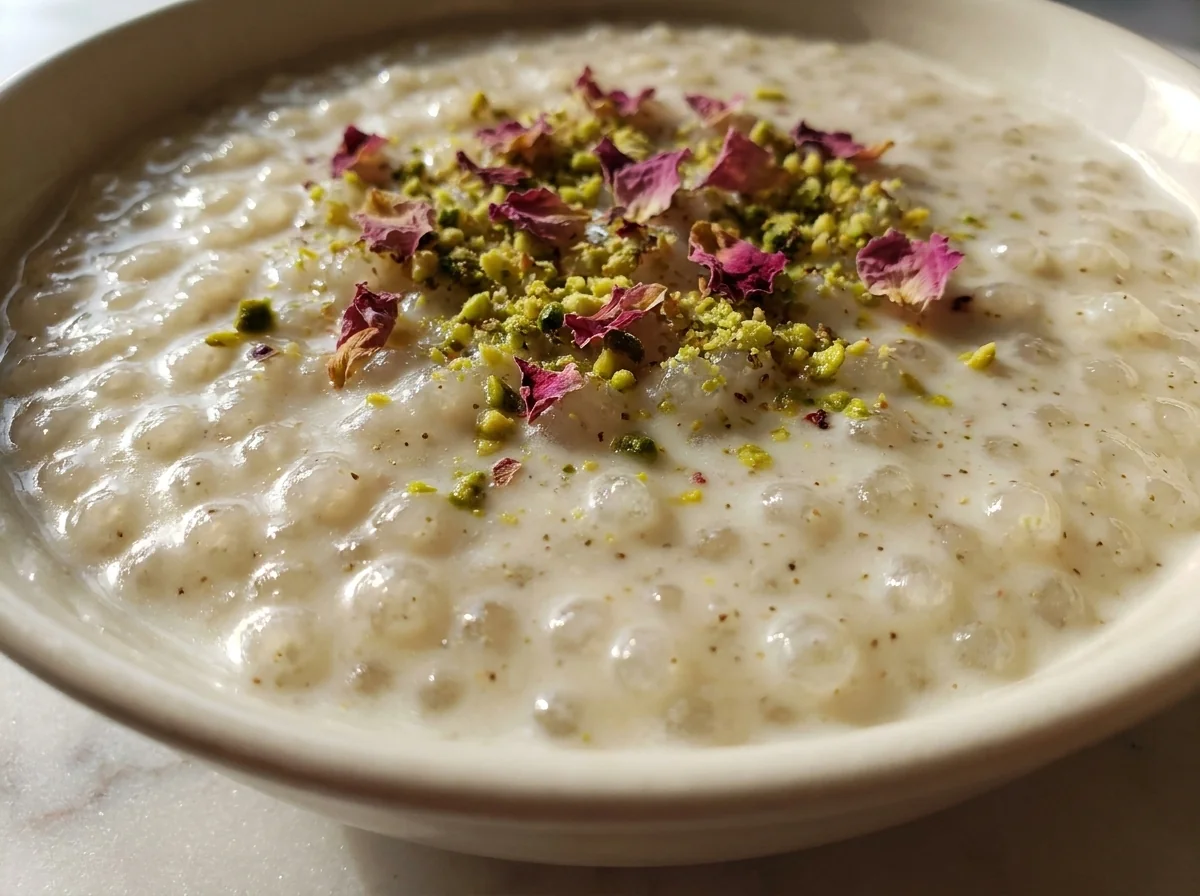
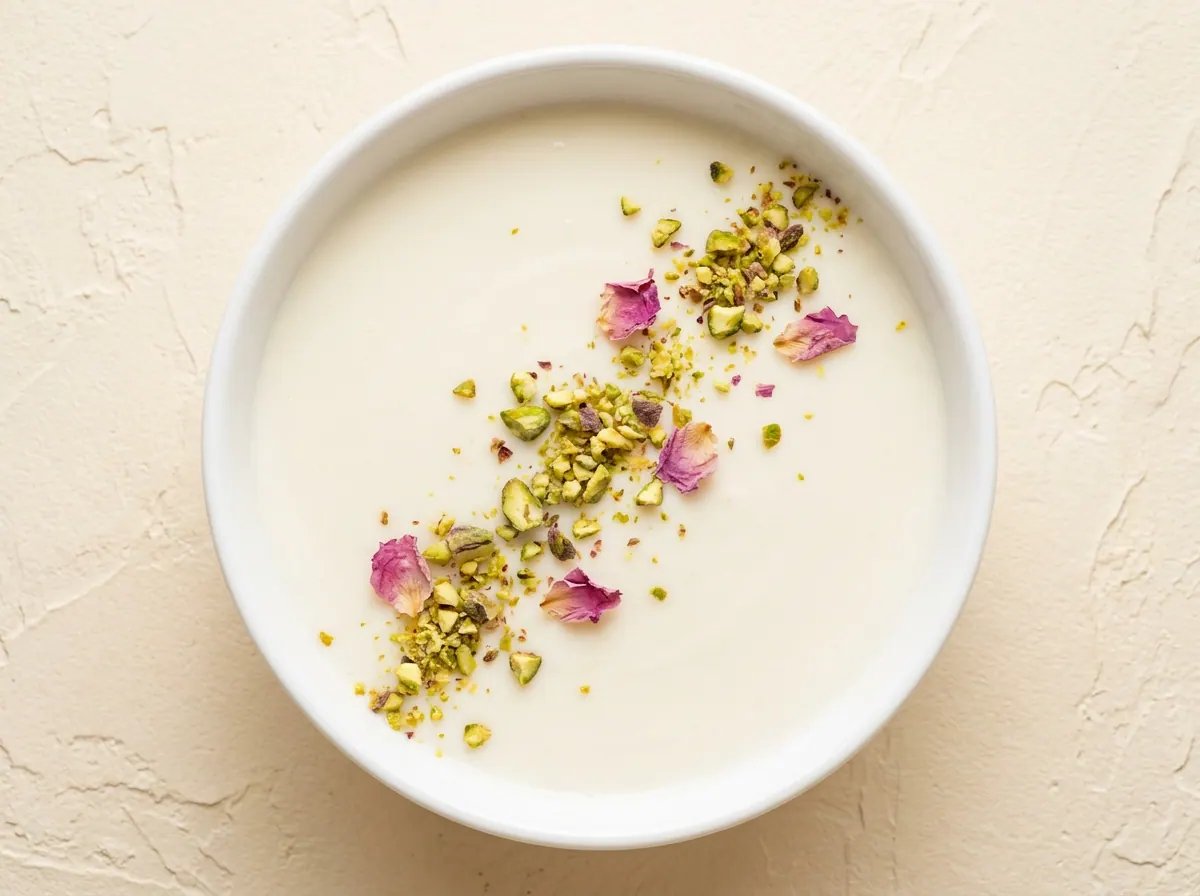
Saqdana is a quiet Hejazi dessert built on sago grains cooked in milk until they swell and turn nearly translucent, scented with cardamom, chilled, and served in cups garnished with pistachio and rose.
A simple homemade sweet tied to the tables of the Hejaz and its hospitality gatherings for its lightness and silky texture.
Preparation Steps
Start cooking
Put the milk and sago together in a pot over medium heat, and stir constantly until it nears a boil, because the sago settles and sticks to the bottom if left without stirring.
Cook until the grains swell
Lower the heat and let the mixture cook, stirring now and then, until the sago grains swell and become translucent and tender, which is the sign they are done.
Sweeten and flavor
Add the cardamom and sugar and stir well until the sugar dissolves completely, then leave the mixture for a few minutes over low heat to blend.
Pour and chill
Pour the saqdana into serving cups and leave them for ten minutes at room temperature, then move them to the refrigerator for about an hour until they set and cool.
Garnish and serve
Before serving, garnish the top with the crushed pistachios and rose petals, and serve it cold and refreshing to close the Hejazi table.
Blood Sugar Impact
The glycemic index (GI) measures how quickly a food raises blood sugar, while the glycemic load (GL) measures how much a full serving raises it. Together they give the complete picture.
Glycemic Index
GI
29Low
Low0–55Medium56–69High70+
A low value (≤55) means a gradual rise in blood sugar — the most suitable range for diabetes and insulin resistance.
Glycemic Load
GL
20High
Low0–10Medium11–19High20+
Glycemic load reflects the impact of the full serving. To lower it: take half a serving, or pair the recipe with a source of protein and fiber.
Nutritional Information
Per ServingMakes 5 servings · one serving is about 220 g of raw ingredients
Calories370 kcal18%of Daily Value*
Protein6 g12%of Daily Value*
Carbohydrates71 g26%of Daily Value*
Fat7 g9%of Daily Value*
Fiber1 g4%of Daily Value*
Sodium66 mg3%of Daily Value*
* Percent Daily Values are based on a 2,000-calorie diet per FDA food-label reference values — your daily needs may be higher or lower. Values are derived from the recipe's ingredients via the USDA database.
Troubleshooting
The most common problems when preparing Hejazi Sago Milk Pudding (Saqdana), and how to fix them:
The sago is still hard in the center
It is not fully cooked; cook it longer over low heat until every grain is completely translucent with no white core.
The texture is runny after chilling
There is less sago than milk or it did not cook enough; cook it a little longer, as the sago thickens more as it cooks.
The grains clumped together
The sago was added without enough stirring; the fix is constant stirring from the first minute until near boiling.
Storage and Make-Ahead
Refrigerator
Keep it covered in the refrigerator for up to three days and garnish it at serving time.
Before garnishing
Keep the cups without pistachio and rose so the garnish does not wilt, and add it fresh when serving.
Tested Ingredient Substitutions
Original Ingredient
Tested Substitute
Ratio
Flavor Difference
whole milk
low-fat milk
same amount
A lighter option with a slightly less rich texture.
cow's milk
coconut milk
same amount
A dairy-free plant-based alternative with a gentle tropical flavor.
white sugar
coconut sugar
same amount
An alternative with a darker color and a light caramel flavor.
pistachios
crushed almonds
same amount
An available garnish when pistachios are unavailable, with a similar crunch.
How Much Does It Make? Scaling Guide
Ingredient
Half (2 to 3 servings)
Base (5 servings)
Double (10 servings)
Rinsed sago · g
63
125
250
Whole milk · ml
375
750
1500
Fine sugar · g
100
200
400
Ground cardamom · g
1
2
4
Pistachios for garnish · g
15
30
60
EEINA Nutrition Tip
Rinse the sago well before cooking to remove excess starch, and keep stirring during the first minutes of cooking so the grains do not clump or stick to the bottom.
Add This Recipe to Your Plan
The EEINA app saves your favorite recipes, calculates them from their real ingredients, and shows your daily numbers toward your goal. Try it free now.