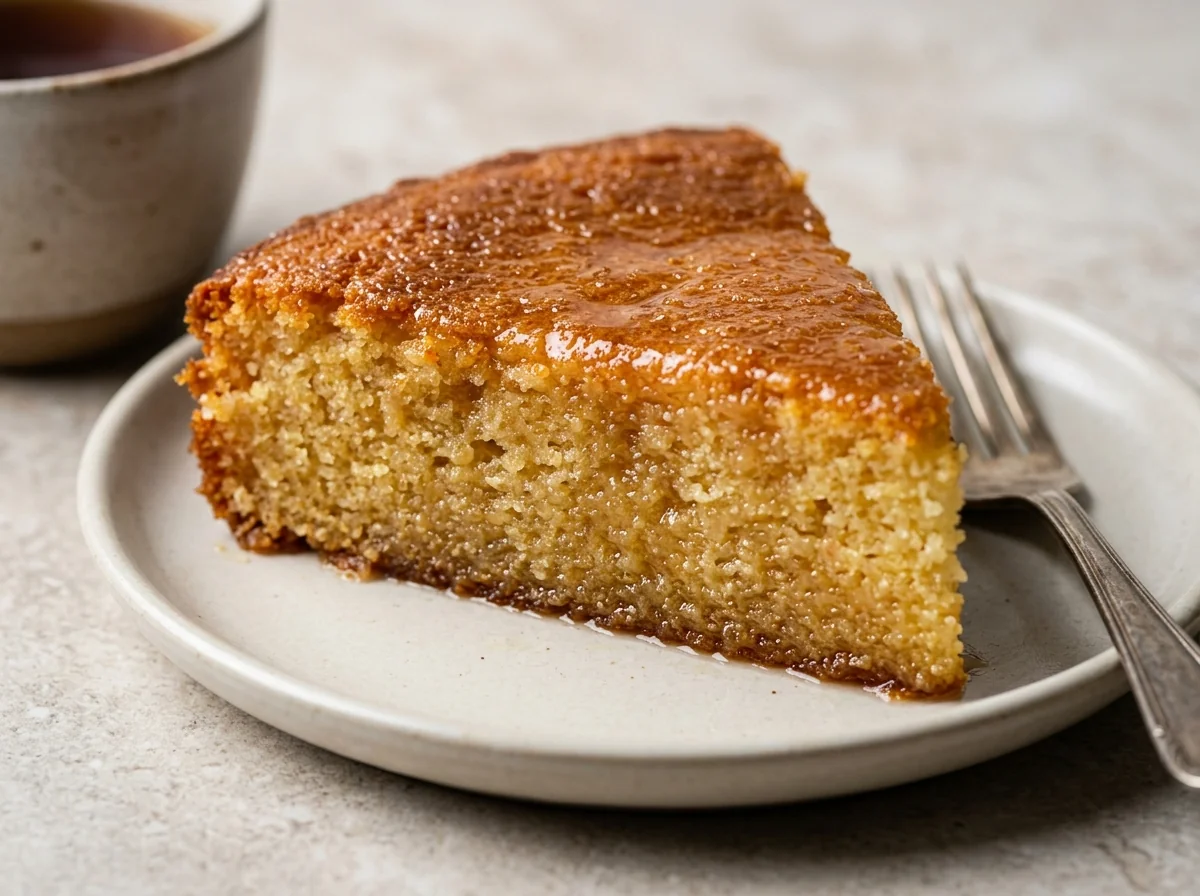
An Arab Gulf cake with a fluffy texture made from fine semolina, soaking up cold syrup until it melts in the mouth. Usually served with tea at gatherings and for hospitality.
Rawani cake originated in the Gulf, and is one of the folk recipes in Yemen and the Arabian Gulf.
It became popular for its fluffy semolina texture and moderate flavor that carries vanilla and sugar syrup, and tops hospitality tables during Ramadan and Eid.
Preparation Steps
Beat the eggs with the sugar
In a deep bowl, place the eggs with the sugar and beat with an electric mixer on medium speed for 4 minutes until the mixture thickens and becomes pale and fluffy, roughly doubling in volume. Then pour in the oil slowly while continuing to beat, and add the milk and vanilla and mix until the ingredients come together.
Add the dry ingredients
In another bowl, mix the fine semolina with the flour and baking powder with a spoon until they are fully combined. Then add this mixture gradually to the egg mixture while beating slowly and continuously, and fold from the bottom up to preserve the air we incorporated and not lose its fluffiness.
Prepare the pan
Grease the cake pan with oil and dust its inside with a little fine semolina, rotating the pan in all directions until the semolina covers the sides and bottom, then shake off the excess. Pour the mixture into the pan and level its surface with a spoon.
Bake the cake
Preheat the oven to 180°C before placing the pan in it. Place the pan in the middle of the oven and leave it for 40 minutes until the top turns a beautiful golden color, and pierce a wooden skewer into the center; if it comes out clean, the cake is fully done.
Add the syrup and serve
Immediately after taking the cake out of the oven, pour the cold syrup over its surface with a spoon in successive batches until it is fully absorbed and reaches the bottom. Then let the cake cool completely before cutting and serving with tea or coffee.
Blood Sugar Impact
The glycemic index (GI) measures how quickly a food raises blood sugar, while the glycemic load (GL) measures how much a full serving raises it. Together they give the complete picture.
Glycemic Index
GI
65Medium
Low0–55Medium56–69High70+
A low value (≤55) means a gradual rise in blood sugar — the most suitable range for diabetes and insulin resistance.
Glycemic Load
GL
65High
Low0–10Medium11–19High20+
Glycemic load reflects the impact of the full serving. To lower it: take half a serving, or pair the recipe with a source of protein and fiber.
Nutritional Information
Per ServingMakes 6 servings · one serving is about 220 g of raw ingredients
Calories658 kcal33%of Daily Value*
Protein10 g20%of Daily Value*
Carbohydrates101 g37%of Daily Value*
Fat25 g32%of Daily Value*
Fiber1 g4%of Daily Value*
Sodium278 mg12%of Daily Value*
* Percent Daily Values are based on a 2,000-calorie diet per FDA food-label reference values — your daily needs may be higher or lower. Values are derived from the recipe's ingredients via the USDA database.
Troubleshooting
The most common problems when preparing Rawani Cake, and how to fix them:
The cake is dry and does not absorb the syrup
Increase the amount of syrup to a cup and a half, and make sure to pour it immediately after taking the cake out of the oven with the syrup cold, so the bottom absorbs it fully.
The cake did not rise
Check the expiration date of the baking powder, and re-beat the eggs with the sugar for longer until the mixture thickens before adding the dry ingredients.
Storage and Make-Ahead
Refrigerator (4°C)
Keep the cake in an airtight container inside the refrigerator for up to 5 days. Take it out half an hour before serving to reach room temperature.
Tested Ingredient Substitutions
Original Ingredient
Tested Substitute
Ratio
Flavor Difference
milk
almond milk
cup for cup
Suitable for those following a vegan diet, but it slightly reduces the cake's flavor.
vegetable oil
melted butter
half cup for an equal quantity
Gives a deeper flavor and a more luxurious texture.
EEINA Nutrition Tip
Take the pan out of the oven and wait only two minutes before pouring the syrup, so the bottom absorbs it without the top drying out. Eggs at room temperature help the mixture thicken quickly with the sugar.
Add This Recipe to Your Plan
The EEINA app saves your favorite recipes, calculates them from their real ingredients, and shows your daily numbers toward your goal. Try it free now.