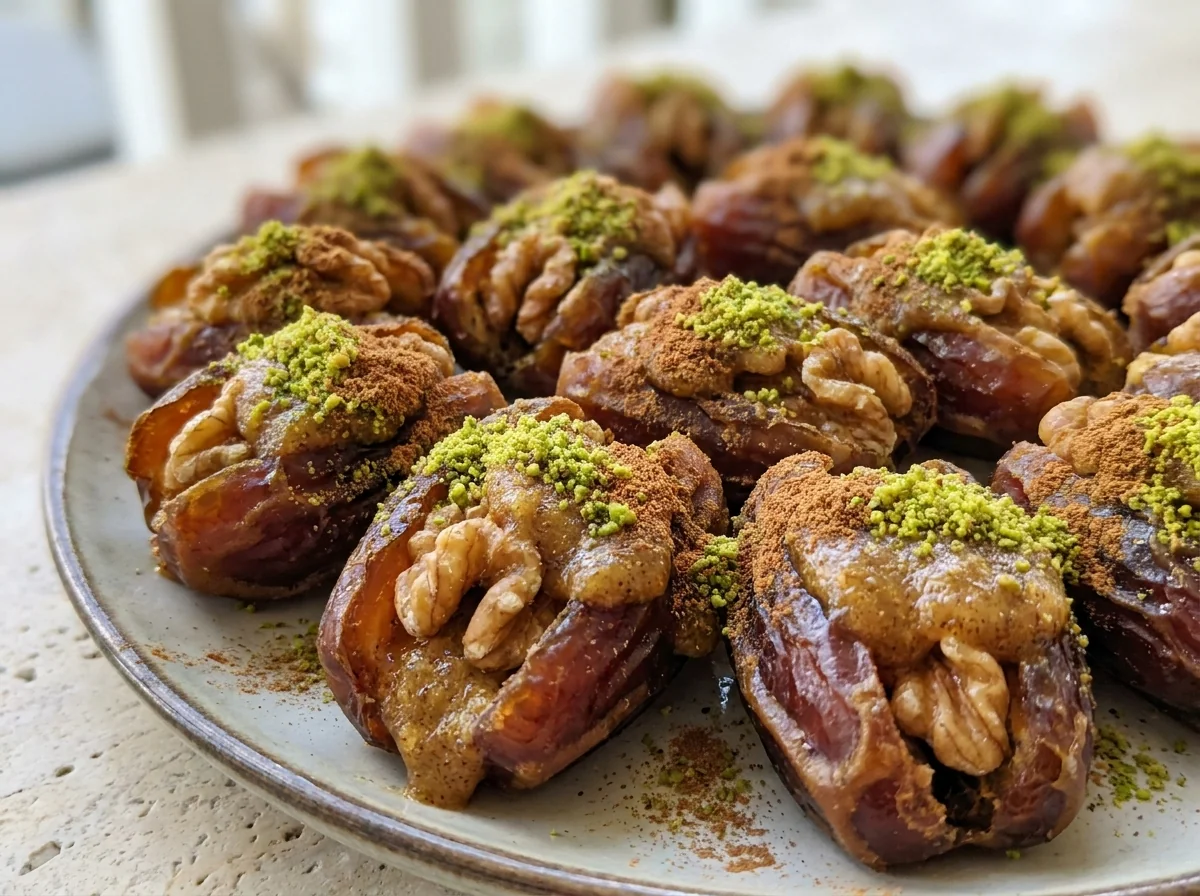
Ranginak is a time-honored Persian date dessert famous in southern Iran where dates are widely grown, and it is often made in Ramadan.
It combines the natural sweetness of the dates with the crunch of walnuts and a layer of flour toasted in butter and scented with cinnamon, so a small piece of it is enough to satisfy a craving for something sweet.
Preparation Steps
The dates
Slit the dates from one side and remove the pits, as slitting from one side keeps them intact for stuffing.
Stuffing
Stuff each date with pieces of walnut and arrange them in a single layer in a dish, as arranging them close together lets the top layer cover them completely.
The flour
Heat the oil, add the butter, then the flour, and stir continuously until it turns golden brown and becomes fragrant, about fifteen minutes, as toasting drives off the raw flour taste.
Covering
Pour the toasted flour mixture over the dates and spread it until it covers them completely, as full coverage gives each piece its layer.
The cinnamon
Sprinkle the cinnamon over the top while it is hot, as the heat sets its flavor on the surface.
Garnishing
Let the dessert rest for ten minutes, then garnish it with ground pistachios and serve it, as resting allows the layer to firm up.
Blood Sugar Impact
The glycemic index (GI) measures how quickly a food raises blood sugar, while the glycemic load (GL) measures how much a full serving raises it. Together they give the complete picture.
Glycemic Index
GI
54Low
Low0–55Medium56–69High70+
A low value (≤55) means a gradual rise in blood sugar — the most suitable range for diabetes and insulin resistance.
Glycemic Load
GL
23High
Low0–10Medium11–19High20+
Glycemic load reflects the impact of the full serving. To lower it: take half a serving, or pair the recipe with a source of protein and fiber.
Nutritional Information
Per ServingMakes 8 servings · one serving is about 85 g of raw ingredients
Calories374 kcal19%of Daily Value*
Protein4 g8%of Daily Value*
Carbohydrates47 g17%of Daily Value*
Fat21 g27%of Daily Value*
Fiber5 g18%of Daily Value*
Sodium2 mg0%of Daily Value*
* Percent Daily Values are based on a 2,000-calorie diet per FDA food-label reference values — your daily needs may be higher or lower. Values are derived from the recipe's ingredients via the USDA database.
Troubleshooting
The most common problems when preparing Walnut-Stuffed Date Dessert (Ranginak), and how to fix them:
The flour tastes raw
Toast the flour longer until its color turns golden brown and its toasted aroma rises.
The layer is bitter
Lower the heat at the end of toasting and watch the color constantly, as over-toasting brings bitterness.
The dates are hard
Choose soft, large dates, and if they are dry, soak them briefly in warm water then dry them before stuffing.
The layer did not cover the dates
Arrange the dates close together with no gaps, and pour the flour mixture while it is hot so it flows over them.
Storage and Make-Ahead
Refrigerator
Keep it in an airtight container for up to a week.
Freezer
Freeze it for up to six months, and thaw it in the refrigerator overnight before serving.
Tested Ingredient Substitutions
Original Ingredient
Tested Substitute
Ratio
Flavor Difference
walnuts
coarsely chopped almonds
same weight, 75 g
A softer crunch and a gentler taste.
butter
ghee
same weight, 85 g
A warmer, more Eastern flavor.
flour
rice flour
same weight, 120 g
A gluten-free option with a lighter texture.
cinnamon
ground cardamom
same weight, 2 g
A different, more floral Persian aroma.
How Much Does It Make? Scaling Guide
Ingredient
2 servings
4 servings
8 servings (base)
Pitted dates
90 g
180 g
360 g
Walnuts
19 g
37 g
75 g
Flour
30 g
60 g
120 g
Unsalted butter
21 g
42 g
85 g
EEINA Nutrition Tip
Toast the flour until it turns golden brown and becomes fragrant, as this toasting is what gives ranginak its distinctive flavor, but be careful not to overdo it so it does not turn bitter.
Add This Recipe to Your Plan
The EEINA app saves your favorite recipes, calculates them from their real ingredients, and shows your daily numbers toward your goal. Try it free now.