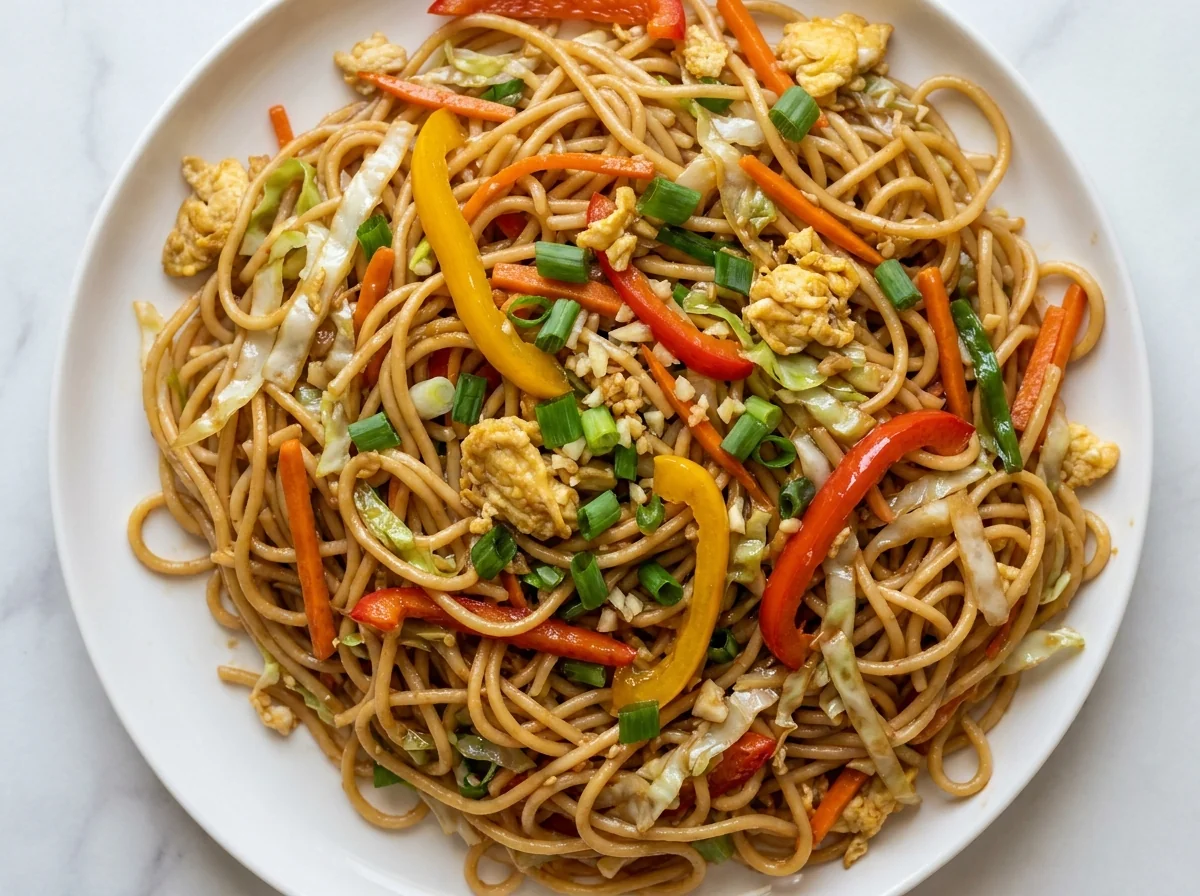
Instant noodles are the world's number-one student food, and their whole bad reputation is in the seasoning packet, not the strands: a whole day's salt and mysterious additives.
The liberated version tosses the packet, builds a real sauce, and floods the pan with vegetables. The same convenience with an easy conscience.
Preparation Steps
Toss the flavor packet and keep the noodles
Plain noodles without their packets, or even the famous packet noodles on the condition of tossing the seasoning packet: it is all the suspect salt and fat, and the noodles themselves are innocent.
Whisk the homemade replacement sauce
The soy, vinegar, honey, sesame oil, and starch. The real flavor-packet sauce at a quarter of its sodium and zero of its mystery: a minute of whisking frees the noodles from captivity.
Boil them two minutes short
The noodles two minutes short of done, and drain. They'll finish in the pan with the sauce.
Stir-fry the vegetables over the highest heat
The garlic and ginger for seconds, then the carrot, then the cabbage and pepper for three minutes that keep them crunchy, and the egg is scrambled in a corner of the pan for whoever wants protein.
Combine and pour the sauce on the wall
The noodles and sauce on the hot wall of the pan (the familiar wok lesson) and a minute of tossing in which the starch thickens, coating. Asian-restaurant noodles at the packet's few riyals and a home's conscience.
Blood Sugar Impact
The glycemic index (GI) measures how quickly a food raises blood sugar, while the glycemic load (GL) measures how much a full serving raises it. Together they give the complete picture.
Glycemic Index
GI
44Low
Low0–55Medium56–69High70+
A low value (≤55) means a gradual rise in blood sugar — the most suitable range for diabetes and insulin resistance.
Glycemic Load
GL
38High
Low0–10Medium11–19High20+
Glycemic load reflects the impact of the full serving. To lower it: take half a serving, or pair the recipe with a source of protein and fiber.
Nutritional Information
Per ServingMakes 2 servings · one serving is about 380 g of raw ingredients
Calories631 kcal32%of Daily Value*
Protein23 g46%of Daily Value*
Carbohydrates94 g34%of Daily Value*
Fat19 g24%of Daily Value*
Fiber8 g29%of Daily Value*
Sodium1236 mg54%of Daily Value*
Potassium755 mg16%of Daily Value*
Phosphorus375 mg30%of Daily Value*
* Percent Daily Values are based on a 2,000-calorie diet per FDA food-label reference values — your daily needs may be higher or lower. Values are derived from the recipe's ingredients via the USDA database.
Troubleshooting
The most common problems when preparing Quick Vegetable Noodles with Homemade Sauce, and how to fix them:
It came out a stuck-together clump
Boiled fully and left to wait. Two minutes short and straight to the pan, or a cold rinse if you're late.
The vegetables wilted and went watery
Low heat and a crowded pan. The highest heat and batches. The crunch of the vegetables is the dish.
The sauce thinned and didn't coat
The starch was forgotten or the sauce was poured cold into the middle of the pile. The three grams and the wall of the pan.
Saltiness took over despite being homemade
Regular soy poured generously. Low-sodium and the measure, and the vinegar and honey broaden the flavor without salt.
Storage and Make-Ahead
Immediately
With the crunch of its vegetables.
In the fridge
One day, and revived in a hot pan: tomorrow's stir-fried noodles are a dish in their own right.
The sauce ahead
A small jar for a week. Noodles faster than any app's delivery.
Tested Ingredient Substitutions
Original Ingredient
Tested Substitute
Ratio
Flavor Difference
The noodles
Thin spaghetti or rice noodles
~
The strands swap and the soul stays
The egg
Our shredded chicken or tofu
~
Protein from the pantry
The recipe's vegetables
Whatever's on hand. Cabbage alone is enough
~
The cheapest vegetable to stir-fry and the most resilient
A peanut touch
A spoon of peanut butter in the sauce
15 g
The other famous sauced noodles
How Much Does It Make? Scaling Guide
Ingredient
2 servings
1 serving
4 servings
Noodles
200 g
100 g
400 g
Vegetables
380 g
190 g
760 g
Sauce
70 ml
35 ml
140 ml
EEINA Nutrition Tip
Toss the seasoning packet and make your own sauce. The flavor packet carries on its own about 1600 mg of sodium (two-thirds of the whole day's ceiling) along with artificial flavor enhancers; soy sauce thinned with vinegar, honey, and starch gives the same addictiveness at a quarter of the number and with names you know. The noodles were never the problem: the little packet is the whole story.
Add This Recipe to Your Plan
The EEINA app saves your favorite recipes, calculates them from their real ingredients, and shows your daily numbers toward your goal. Try it free now.
The strands are ordinary fried flour like nearly any pasta, and the packet is runaway sodium: toss the packet and add vegetables and protein and it becomes a perfectly legitimate meal: the judgment is on the ingredients, not the name.
How is it counted?
The serving with its egg is about 605 calories at about 650 mg of sodium. Compared to a whole packet at 1600+ sodium and zero vegetables: the liberation's gain is double.
A real student meal?
A few riyals, ten minutes, and one pot. It was built for this life: and the vegetables make it last a night of studying.
How does it differ from our peanut butter noodles?
Those are a rich creamy peanut sauce; this is light soy with crunchy vegetables. Two sisters for one pan.