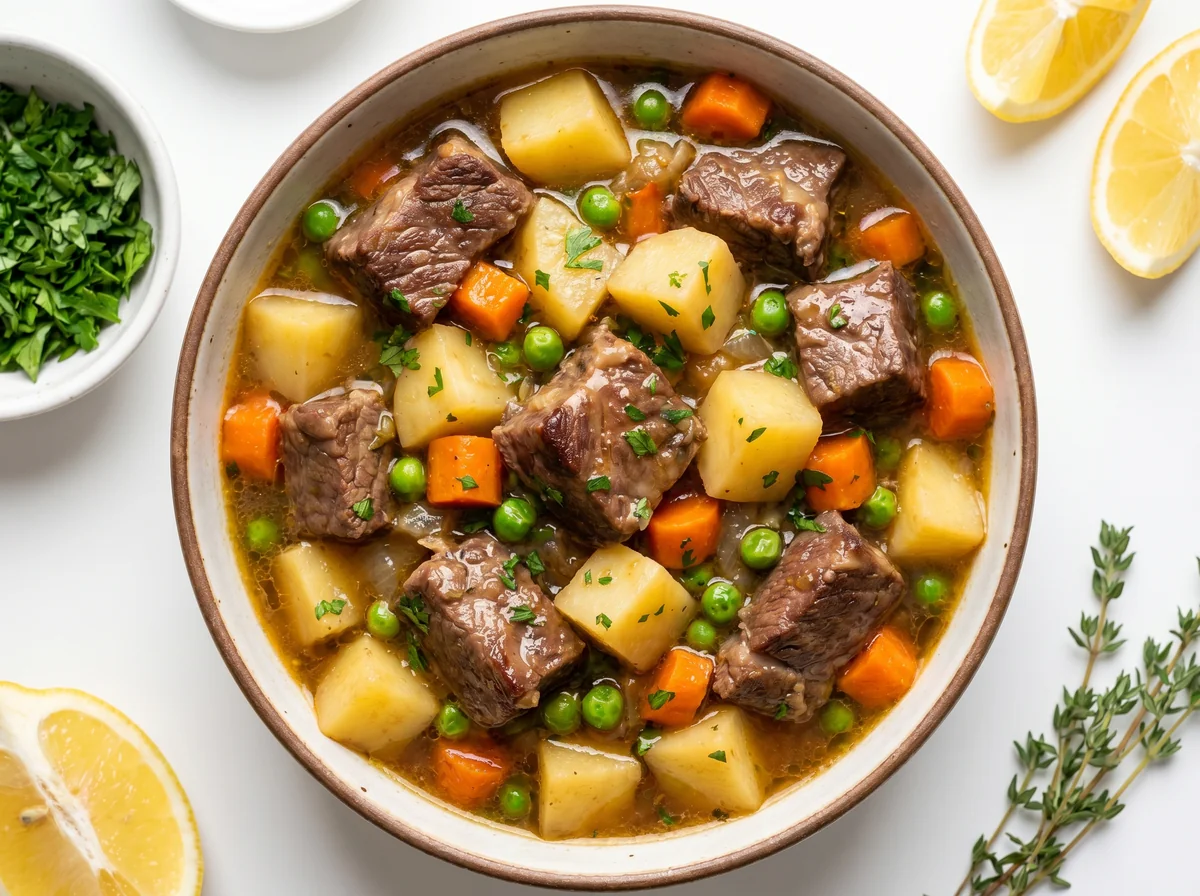
A homestyle Levantine stew — potatoes and meat simmered in tomato sauce with onion, garlic, and spices, served over rice. Satisfying and balanced, medium glycaemic load, and free from common allergens.
Potato and meat stew is a beloved homestyle Levantine dish from the wide family of Levantine stews (peas, green beans, zucchini, and molokhiya) that combine a vegetable or legume with meat in a tomato sauce, served over rice.
Potatoes are an affordable, always-available, much-loved vegetable, so this stew is one of the most regular dishes on the Levantine table. Its simplicity, balance (starch, protein, and vegetables in one dish), and always-available ingredients have made it the standard family lunch — carrying the warmth of home and the memory of simple, filling everyday meals.
Preparation Steps
Cook the meat
Brown the meat cubes in a little oil until the colour changes, then cover with water together with a whole onion, bay leaf, and cardamom, and cook until the meat is tender — about one hour (or less in a pressure cooker). Reserve the broth. Tender meat is the foundation of the stew, so cook it through before combining.
Prepare the potatoes
Peel the potatoes and cut into large cubes (so they do not break apart during cooking). Optionally brown them briefly in oil for a firmer texture and extra flavour, or add them raw directly to the sauce for a lighter version.
Make the sauce
Fry the chopped onion until softened, add the garlic and stir, then add the tomato sauce, tomato paste, baharat, salt, and pepper and let it bubble and thicken slightly. Onion, garlic, and tomatoes are the sauce base.
Combine and simmer
Add the cooked meat and potatoes to the sauce, pour in enough of the meat broth to just cover the ingredients, and stir. Cover the pot and cook over low heat until the potatoes are tender, have absorbed the flavour, and the sauce has thickened — about 30 minutes.
Adjust the consistency
Once the potatoes are tender, uncover if the sauce is too thin and let it reduce, or add more broth if it has dried out. The potatoes should be tender but not completely falling apart, and the sauce should be rich and coating. Taste and adjust the seasoning.
Serve
Serve the stew hot over white rice or with bread, alongside a salad or labneh (strained yogurt). It is a beloved homestyle Levantine stew from the large family of Levantine stews (peas, green beans, zucchini), combining satisfying potatoes and meat in a rich tomato sauce — a comforting, economical family lunch and one of the most treasured everyday dishes.
Blood Sugar Impact
The glycemic index (GI) measures how quickly a food raises blood sugar, while the glycemic load (GL) measures how much a full serving raises it. Together they give the complete picture.
Glycemic Index
GI
61Medium
Low0–55Medium56–69High70+
A low value (≤55) means a gradual rise in blood sugar — the most suitable range for diabetes and insulin resistance.
Glycemic Load
GL
16Medium
Low0–10Medium11–19High20+
Glycemic load reflects the impact of the full serving. To lower it: take half a serving, or pair the recipe with a source of protein and fiber.
Nutritional Information
Per ServingMakes 5 servings · one serving is about 350 g of raw ingredients
Calories402 kcal20%of Daily Value*
Protein23 g46%of Daily Value*
Carbohydrates31 g11%of Daily Value*
Fat21 g27%of Daily Value*
Fiber5 g18%of Daily Value*
Sodium719 mg31%of Daily Value*
* Percent Daily Values are based on a 2,000-calorie diet per FDA food-label reference values — your daily needs may be higher or lower. Values are derived from the recipe's ingredients via the USDA database.
Troubleshooting
The most common problems when preparing Potato and Meat Stew, and how to fix them:
Potatoes broke apart
Cubes were too small, cooked too long, or stirred too vigorously. Cut into large cubes, simmer over low heat without harsh stirring until just tender. Browning them first firms up the surface.
Meat is tough
Not cooked long enough before combining. Cook the meat on its own until completely tender (one hour or pressure cooker) before adding the potatoes; potatoes cook faster than meat, and combining them raw leaves the meat tough.
Sauce is bland
Not enough onion, tomato paste, or spices. Brown the onion well, add tomato paste for depth of colour and flavour, and season with baharat and garlic. The meat broth adds richness to the sauce.
Stew is watery
Too much water or insufficient reduction. Uncover at the end and simmer until the sauce thickens; tomato paste also helps with consistency. Do not swamp the ingredients with water — just enough to barely cover.
Potatoes are undercooked
Heat was too high or not enough liquid. Simmer covered over low heat and make sure the liquid covers the potatoes — they cook by gentle simmering in the sauce. Very large cubes will need more time.
Storage and Make-Ahead
Refrigerator (4°C)
Keep in an airtight container in the refrigerator for three days; the flavour actually improves on the following day (as with stews in general). Reheat over low heat. The potatoes absorb the sauce, so add broth if needed.
Freezer
Freezes for two to three months in an airtight container. Potatoes may soften further after thawing but remain acceptable in the stew. Thaw in the refrigerator then reheat.
Meal prep
Cook the meat ahead and store with its broth, then prepare the stew with the potatoes and sauce at serving time in about 30 minutes. Cooking the meat is the longest step, so doing it ahead speeds things up considerably.
Food safety
Cook the meat until completely tender and cooked through. Do not leave the stew outside refrigeration for more than two hours; cool quickly and reheat thoroughly before serving.
Tested Ingredient Substitutions
Original Ingredient
Tested Substitute
Ratio
Flavor Difference
Red meat
Chicken or vegetarian version (chickpeas)
Same quantity
Chicken is lower in fat; chickpeas make it plant-based and rich in fibre and vegetable protein
Browning the potatoes
Adding them raw to the sauce
—
Reduces fat; add raw potatoes directly to the sauce and cook them through (lighter version without frying)
Serving over white rice
Brown rice or wholemeal bread
Same quantity
Raises fibre and lowers the glycaemic load of the complete meal
How Much Does It Make? Scaling Guide
Servings
Potatoes
Meat
Sauce
3 (half recipe)
2 pieces
250 g
1 cup
5 (base)
4 pieces
500 g
2 cups
10 (gathering)
8 pieces
1 kg
4 cups
EEINA Nutrition Tip
This stew is a balanced dish: the meat provides protein and iron, potatoes provide carbohydrates, potassium, and vitamin C, tomatoes provide lycopene, and the sauce brings it all together in a complete meal. Its challenges are the moderate glycaemic load from the potatoes and the fat from the meat. To lighten it: use lean meat and trim visible fat, do not brown the potatoes (add them raw to the sauce), and balance the accompanying rice or switch to brown rice. A satisfying, balanced family dish with these adjustments.
Add This Recipe to Your Plan
The EEINA app saves your favorite recipes, calculates them from their real ingredients, and shows your daily numbers toward your goal. Try it free now.
A homestyle Levantine stew of potatoes and meat cooked in tomato sauce with onion, garlic, and spices, served over rice. Part of the large Levantine stew family (peas, green beans, zucchini) — an economical, satisfying, balanced family lunch.
How do I keep the potatoes from breaking apart?
Cut them into large cubes; optionally brown them first so the surface firms up. Simmer over low heat without vigorous stirring until just tender. Fresh, firm potatoes hold better, and over-stirring and overcooking break them down.
Is the stew healthy?
A balanced dish: meat provides protein and iron, potatoes provide energy, potassium, and vitamin C, and tomatoes provide lycopene. Its challenges are the moderate glycaemic load from the potato and the fat from the meat. Use lean meat, trim fat, balance the rice, and it becomes a satisfying, balanced family dish.
What is served alongside?
White rice (or brown) to soak up the rich sauce, or Arabic bread, and a green salad or labneh (strained yogurt) to balance the table. Rice is the traditional accompaniment to Levantine stews, so balance the portion to manage the glycaemic load of the complete meal.