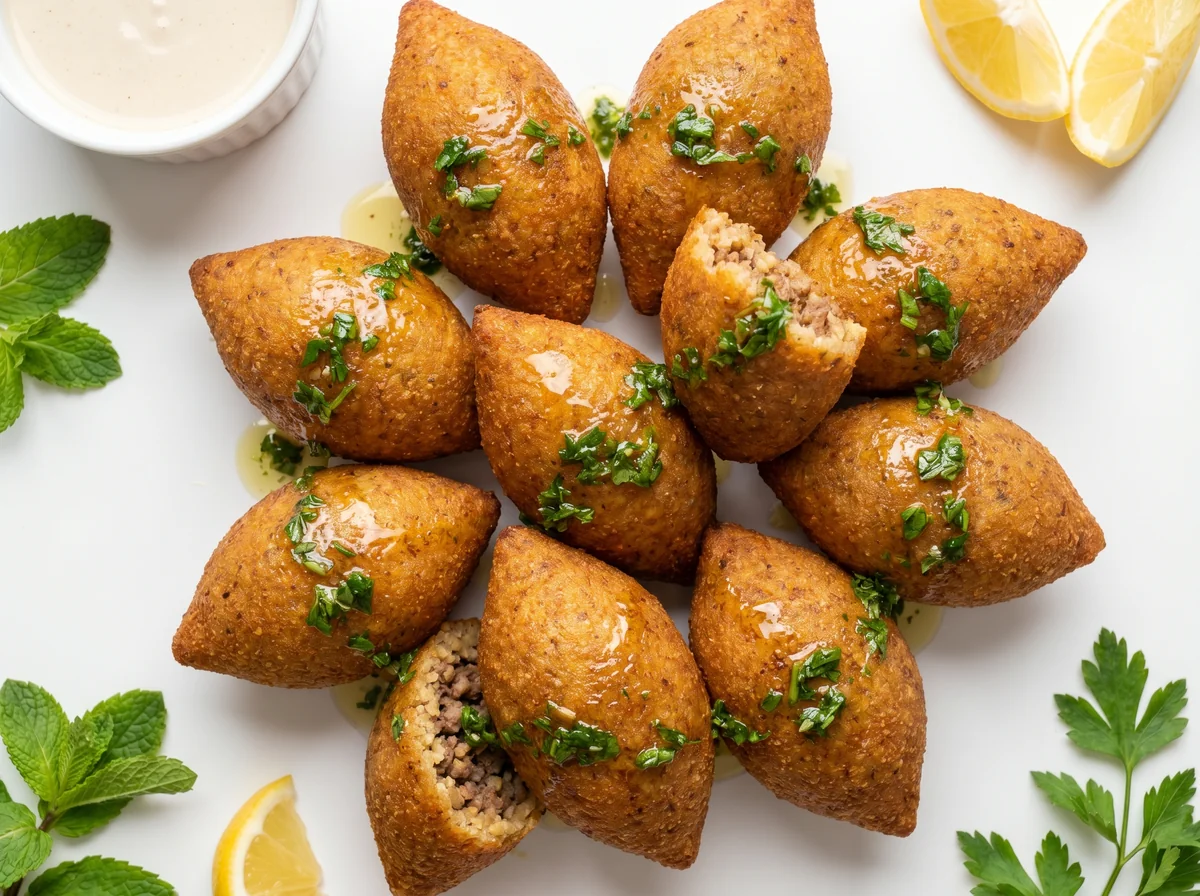
A Levantine vegetarian kibbeh — mashed potatoes kneaded with fine bulgur, fresh herbs, and spices, served cold with olive oil. A fasting-day alternative to meat kibbeh, high in fibre, low glycaemic load, and contains gluten (bulgur).
Potato kibbeh (kibbeh batata or kibbeh siyam — fasting kibbeh) is a Levantine vegetarian substitute for raw kibbeh (kibbeh nayyeh), which is made from raw meat and bulgur. Here the meat is replaced by mashed potatoes, kneaded with bulgur, generous herbs, and red pepper paste, then served cold with olive oil.
It is popular during Christian fasting periods and on the mezze table as a refreshing plant-based dish. Its lightness, herb and fibre richness, and meat-free nature have made it a beloved choice — especially for those who want the kibbeh experience without the meat.
Preparation Steps
Prepare the potatoes and bulgur
Boil the potatoes until tender, peel and mash them smooth, then let cool slightly. Soak the fine bulgur in a small amount of water for ten minutes until softened, then squeeze out all the water. The dry, squeezed bulgur and the cooled mashed potato together give a cohesive dough.
Prepare the herbs
Finely chop the onion, mint, and parsley. The generous herbs are the soul of potato kibbeh — they give it its green colour and refreshing flavour (similar to the generous herb philosophy of Tabbouleh).
Knead
In a bowl, knead the mashed potatoes with the squeezed bulgur, herbs, red pepper paste, cumin, baharat, salt, and pepper, adding half the olive oil. Knead by hand until everything comes together into a cohesive, pliable dough. Taste and adjust the seasoning.
Adjust the texture
If the dough is too soft, add a little extra fine bulgur (it absorbs moisture); if it is too dry, add a splash of water or oil. The target consistency holds its shape when formed without sticking too much — close to a kibbeh dough.
Shape
Spread the potato kibbeh onto a serving plate and smooth with the back of a spoon, or shape into rounds or balls, or press a kibbeh pattern into it. Drizzle the remaining olive oil and lemon juice over the top. Usually served cold.
Serve
Serve potato kibbeh cold with fresh vegetables, lettuce, and bread as a starter or a vegetarian fasting dish. Garnish with mint and olive oil. It is a plant-based Levantine alternative to raw kibbeh (kibbeh nayyeh), popular during fasting days and as a mezze — light, refreshing, and herb-rich.
Blood Sugar Impact
The glycemic index (GI) measures how quickly a food raises blood sugar, while the glycemic load (GL) measures how much a full serving raises it. Together they give the complete picture.
Glycemic Index
GI
62Medium
Low0–55Medium56–69High70+
A low value (≤55) means a gradual rise in blood sugar — the most suitable range for diabetes and insulin resistance.
Glycemic Load
GL
24High
Low0–10Medium11–19High20+
Glycemic load reflects the impact of the full serving. To lower it: take half a serving, or pair the recipe with a source of protein and fiber.
Nutritional Information
Per ServingMakes 5 servings · one serving is about 200 g of raw ingredients
Calories397 kcal20%of Daily Value*
Protein6 g12%of Daily Value*
Carbohydrates47 g17%of Daily Value*
Fat22 g28%of Daily Value*
Fiber8 g29%of Daily Value*
Sodium314 mg14%of Daily Value*
Potassium624 mg13%of Daily Value*
Phosphorus146 mg12%of Daily Value*
* Percent Daily Values are based on a 2,000-calorie diet per FDA food-label reference values — your daily needs may be higher or lower. Values are derived from the recipe's ingredients via the USDA database.
Troubleshooting
The most common problems when preparing Potato Kibbeh, and how to fix them:
Dough is too soft and will not hold its shape
Potatoes were watery or bulgur was not squeezed dry. Use well-drained boiled potatoes (not watery) and squeeze the bulgur thoroughly; add more fine bulgur to absorb any excess moisture until the dough holds together.
Dough is dry and stiff
Not enough moisture or oil. Add a splash of water and some olive oil and knead; bulgur absorbs a lot. The target is a soft, cohesive dough — not dry.
Bland flavour
Not enough herbs, red pepper paste, or lemon. Add more mint, parsley, and onion, increase the red pepper paste and cumin, and squeeze lemon over at serving for freshness.
Bulgur is hard
Not soaked long enough. Soak fine bulgur in a little water for ten minutes until soft, then squeeze. Fine bulgur softens by soaking, not cooking.
Pale colour, not green
Not enough herbs. Good potato kibbeh is green from the generous herbs — increase the mint and parsley; the red pepper paste adds colour and flavour.
Storage and Make-Ahead
Refrigerator (4°C)
Keep in an airtight container in the refrigerator for two to three days and eat cold. Add olive oil and lemon juice at serving to keep it fresh. It may release a little water; just stir it.
Freezer
Not recommended (potatoes and herbs change texture on thawing). Prepare fresh and store chilled for a few days.
Meal prep
Boil the potatoes and soak the bulgur ahead of time; knead the kibbeh closer to serving for the most vibrant herb colour. The flavour actually improves after a few hours in the refrigerator.
Food safety
Potato kibbeh is vegetarian and cooked (potatoes are boiled). Keep chilled and do not leave out of refrigeration for extended periods (it contains oil and fresh herbs).
Tested Ingredient Substitutions
Original Ingredient
Tested Substitute
Ratio
Flavor Difference
Potatoes
Sweet potato or mashed pumpkin
Same quantity
Sweet potato adds colour and sweetness; pumpkin makes a seasonal version — both work as vegetarian kibbeh bases
Fine bulgur
More bulgur for a thicker texture
As needed
Bulgur absorbs moisture and provides texture; use more for a denser dough and higher fibre
Red pepper paste
Tomato paste with a pinch of paprika
Same quantity
Red pepper paste (dibs fleifleh) is a distinctive Levantine ingredient; tomato paste is a simpler substitute for colour and flavour
How Much Does It Make? Scaling Guide
Servings
Potatoes
Bulgur
Olive Oil
3 (half recipe)
2 pieces
1/2 cup
1/4 cup
5 (base)
4 pieces
1 cup
1/2 cup
10 (gathering)
8 pieces
2 cups
1 cup
EEINA Nutrition Tip
Potato kibbeh is a light vegetarian option: bulgur is a high-fibre whole grain, potatoes provide energy, the generous herbs supply vitamins and antioxidants, and olive oil provides healthy fat. Its glycaemic load is low and it is fibre-rich. The only challenge is the olive oil quantity (healthy but calorie-dense), so adjust accordingly. A nourishing vegetarian starter, especially served with fresh vegetables.
Add This Recipe to Your Plan
The EEINA app saves your favorite recipes, calculates them from their real ingredients, and shows your daily numbers toward your goal. Try it free now.
A Levantine vegetarian substitute for raw kibbeh (made from raw meat and bulgur) — the meat is replaced by mashed potatoes kneaded with bulgur, generous herbs, and red pepper paste, served cold with olive oil. Popular during fasting days and as a mezze.
Is potato kibbeh healthy?
Yes — a light vegetarian option: bulgur is a high-fibre whole grain, herbs provide vitamins, olive oil provides healthy fat, and the glycaemic load is low. The only challenge is the oil quantity. A nourishing, refreshing plant-based starter.
How do I get a cohesive dough?
Use well-drained boiled potatoes (not watery) that have been allowed to cool, and squeeze the fine bulgur dry. Add extra bulgur to absorb any surplus moisture. The target is a soft, cohesive dough that can be shaped without sticking.
Is it eaten hot or cold?
Cold, usually — like raw kibbeh and Tabbouleh. Served on the mezze table with vegetables and bread. It is a refreshing cold dish, especially during fasting days and in summer.