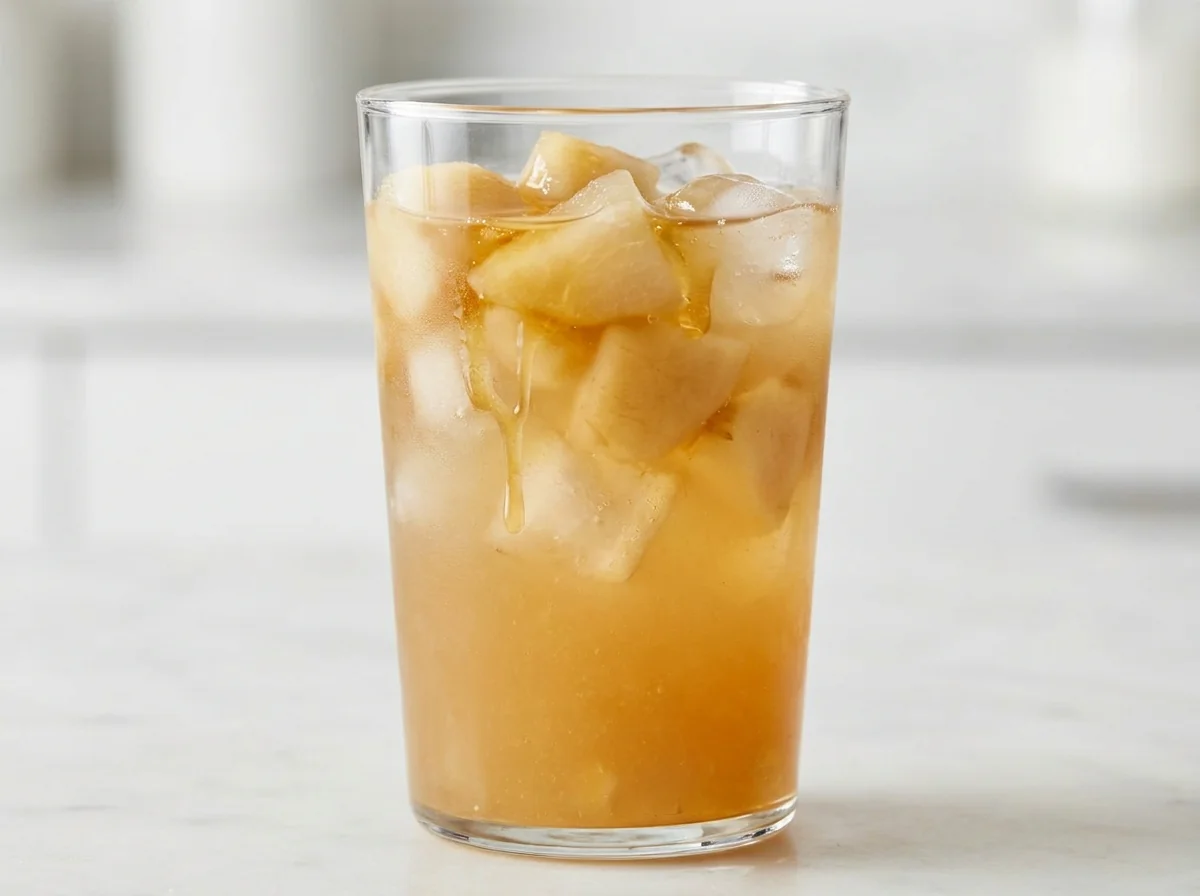
A concentrated fruit syrup we make by poaching pears, straining them, and thickening them with honey, then diluting with sparkling water over ice into a refreshing drink fit for Arab summer gatherings, where the poached fruit gently perfumes the glass without sharpness.
Preparation Steps
Preparing the pears
Remove the seeds and stems and cut the pears into bite-sized cubes, as small pieces cook faster and release their flavor fully during poaching.
Poaching
Put the pears with the water in a pot and bring to a gentle boil, then lower the heat, cover, and leave the mixture fifteen to twenty minutes until the pears soften completely, so their natural sugar dissolves into the water.
Straining
Take the pot off the heat and let the mixture cool slightly, then strain it through a fine sieve lined with cloth, and press the pulp gently with a wooden spoon to extract the last of the liquid without clouding it.
Thickening the syrup
Return the strained liquid to the pot over low heat and dissolve the honey in it by stirring until fully combined, so we get a concentrated syrup that we let cool then keep in a glass container.
Diluting and serving
Pour about three tablespoons of the concentrated syrup into a glass over ice, then top it up with sparkling water and stir gently, so bubbles rise carrying the pear's fragrance into a refreshing drink.
Blood Sugar Impact
The glycemic index (GI) measures how quickly a food raises blood sugar, while the glycemic load (GL) measures how much a full serving raises it. Together they give the complete picture.
Glycemic Index
GI
52Low
Low0–55Medium56–69High70+
A low value (≤55) means a gradual rise in blood sugar — the most suitable range for diabetes and insulin resistance.
Glycemic Load
GL
13Medium
Low0–10Medium11–19High20+
Glycemic load reflects the impact of the full serving. To lower it: take half a serving, or pair the recipe with a source of protein and fiber.
Nutritional Information
Per ServingMakes 8 servings · one serving is about 370 g of raw ingredients
Calories100 kcal5%of Daily Value*
Protein0 g0%of Daily Value*
Carbohydrates27 g10%of Daily Value*
Fat0 g0%of Daily Value*
Fiber2 g7%of Daily Value*
Sodium1 mg0%of Daily Value*
Potassium83 mg2%of Daily Value*
Phosphorus8 mg1%of Daily Value*
* Percent Daily Values are based on a 2,000-calorie diet per FDA food-label reference values — your daily needs may be higher or lower. Values are derived from the recipe's ingredients via the USDA database.
Troubleshooting
The most common problems when preparing Pear Sharbat (Pear), and how to fix them:
The syrup is cloudy, not clear
We pressed the pulp hard so the fine pulp passed through; the solution is to strain gently then pass the syrup a second time through finer cloth.
The syrup is thin with no flavor
The pears were not ripe enough or we diluted it too much; start with two tablespoons of syrup in the glass and increase to taste.
Storage and Make-Ahead
Concentrated syrup
Kept in an airtight glass container in the refrigerator for about a month.
After diluting
Served immediately over ice, since the sparkling water loses its bubbles over time.
Tested Ingredient Substitutions
Original Ingredient
Tested Substitute
Ratio
Flavor Difference
honey
white sugar
150 g
An economical plant-based alternative that dissolves easily in the hot syrup with a more neutral flavor.
sparkling water
plain cold water
same amount
For those who prefer a calm drink without bubbles.
fresh pears
canned pears in their juice
500 g drained
A practical out-of-season alternative with reduced sweetener since they are sweeter.
ice
pre-chilling in the refrigerator
as needed
For those who want a cold drink without extra dilution from melting ice.
How Much Does It Make? Scaling Guide
Ingredient
For four cups
For eight cups (base)
For sixteen cups
pears
250 g
500 g
1000 g
water for poaching
250 ml
500 ml
1000 ml
honey
85 g
170 g
340 g
sparkling water to dilute
700 ml
1400 ml
2800 ml
ice
200 g
400 g
800 g
EEINA Nutrition Tip
We choose fully ripe pears, as their natural sweetness reduces the need for honey and gives the syrup more depth.
Add This Recipe to Your Plan
The EEINA app saves your favorite recipes, calculates them from their real ingredients, and shows your daily numbers toward your goal. Try it free now.