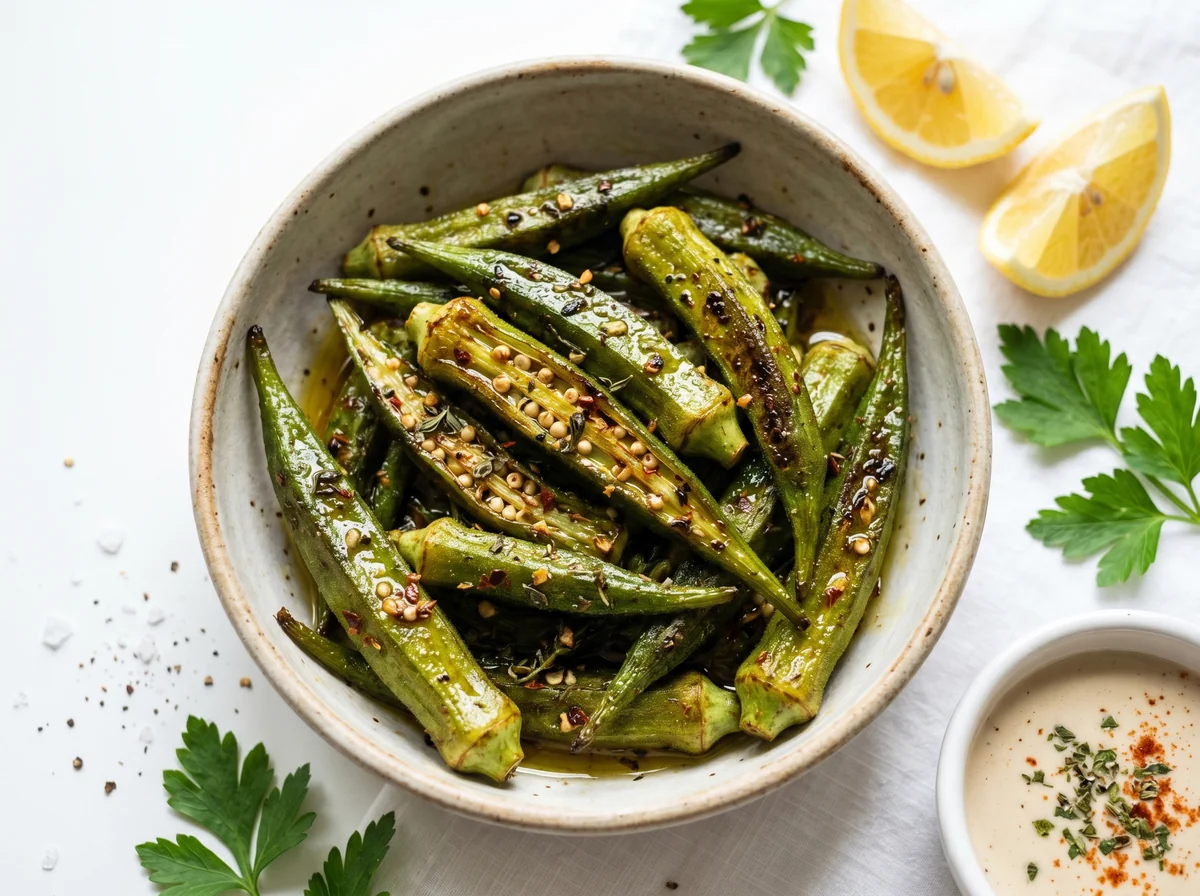
A classic Levantine cold dish of tender young okra braised with tomatoes, garlic and lemon juice in olive oil — served at room temperature or chilled as a mezze, side dish or light vegetarian meal.
Bamya bil-zayt belongs to the broader family of Levantine zeitoun (olive oil) dishes — vegetables braised slowly in generous olive oil and lemon, served cold or at room temperature as part of a mezze spread. It is the kind of dish that improves overnight: the okra absorbs the lemony, garlicky sauce and the flavours meld into something far more than the sum of the parts.
In Syria and Lebanon it appears on every table during summer, when small, tender okra pods are at their best. The key is patience — a slow braise, plenty of lemon, and restraint with the stirring spoon so the pods stay whole and the sauce stays clear.
Preparation Steps
Prepare the okra
Trim the cap of each okra pod in a cone shape, removing the tough tip without cutting into the seed pod itself. This prevents the okra from releasing its thickening mucilage into the sauce. Pat dry with kitchen paper.
Fry the okra
Heat 2 tablespoons of the olive oil in a wide pan over medium-high heat. Add the okra in a single layer and cook without stirring for 3 to 4 minutes until lightly golden on one side. Turn and cook for 2 minutes more. Remove and set aside. Browning the okra first seals the outside and further reduces sliminess.
Soften the aromatics
Reduce the heat to medium and add the remaining 2 tablespoons of olive oil to the same pan. Add the sliced onion and cook for 5 minutes until softened and golden. Add the garlic and ground coriander seeds and cook for 1 minute until fragrant.
Build the sauce
Add the diced tomatoes and tomato paste, stir well and cook for 3 to 4 minutes until the tomatoes break down and the sauce concentrates slightly. Add the water and lemon juice, season with salt, and stir.
Braise the okra
Return the browned okra to the pan, nestling the pods into the sauce in a single layer. Reduce the heat to low, cover and cook for 15 to 20 minutes until the okra is completely tender and the sauce has thickened. Do not stir vigorously — turn the okra gently to keep the pods whole.
Cool and serve
Remove the lid and allow to cool to room temperature. Transfer to a serving dish, drizzle with a little extra olive oil if desired, and garnish with fresh coriander leaves. Serve at room temperature or chilled with Arabic bread.
Blood Sugar Impact
The glycemic index (GI) measures how quickly a food raises blood sugar, while the glycemic load (GL) measures how much a full serving raises it. Together they give the complete picture.
Glycemic Index
GI
44Low
Low0–55Medium56–69High70+
A low value (≤55) means a gradual rise in blood sugar — the most suitable range for diabetes and insulin resistance.
Glycemic Load
GL
7Low
Low0–10Medium11–19High20+
Glycemic load reflects the impact of the full serving. To lower it: take half a serving, or pair the recipe with a source of protein and fiber.
Nutritional Information
Per ServingMakes 4 servings · one serving is about 255 g of raw ingredients
Calories221 kcal11%of Daily Value*
Protein5 g10%of Daily Value*
Carbohydrates21 g8%of Daily Value*
Fat14 g18%of Daily Value*
Fiber5 g18%of Daily Value*
Sodium86 mg4%of Daily Value*
Potassium594 mg13%of Daily Value*
Phosphorus121 mg10%of Daily Value*
* Percent Daily Values are based on a 2,000-calorie diet per FDA food-label reference values — your daily needs may be higher or lower. Values are derived from the recipe's ingredients via the USDA database.
Troubleshooting
The most common problems when preparing Okra in Olive Oil, and how to fix them:
The okra is slimy
Three causes: the okra was cut too deeply, not dried before frying, or was stirred too vigorously during braising. Trim the cap without cutting into the pod, dry thoroughly, fry before braising, and turn gently rather than stirring.
The sauce is watery
Remove the lid for the last 5 minutes of cooking to allow excess liquid to evaporate and the sauce to concentrate.
The pods fell apart
Overcooked, or the pods were very large and ripe. Use small young pods and check after 15 minutes. Turn gently, do not stir.
The colour turned dull brown
The lemon juice was added too late, or the heat was too high. Add lemon juice early in the braising stage and cook over low heat only.
The dish is too sour
Reduce the lemon to 2 tablespoons and add a pinch of sugar to balance. Taste as you go — the acidity of lemons varies.
Storage and Make-Ahead
Refrigerator
Stores exceptionally well — up to 4 days in an airtight container in the fridge. The flavour improves markedly after 24 hours as the okra absorbs the lemony sauce.
Serving temperature
Best served at room temperature or cold, never reheated to piping hot. Remove from the fridge 20 minutes before serving to take the chill off.
Freezer
Freezes well for up to 2 months in individual portions. Thaw overnight in the fridge and serve cold or at room temperature — do not reheat to boiling as the pods will lose their texture.
Tested Ingredient Substitutions
Original Ingredient
Tested Substitute
Ratio
Flavor Difference
Fresh tomatoes
Canned whole or crushed tomatoes
400 g tin (drained weight about 240 g)
Use in winter when ripe fresh tomatoes are unavailable. Drain most of the tin liquid to keep the sauce concentrated.
Coriander seeds (ground)
Ground cumin
1 tsp
A slightly warmer, earthier flavour profile. Many Gulf versions use cumin rather than coriander seed.
Lemon juice
Pomegranate molasses
1 tbsp
A Syrian variation that adds a sweet-tart depth. Use alongside a tablespoon of lemon juice, not as a full replacement.
Fresh okra
Frozen okra (whole)
Same weight (500 g)
Available year-round in Gulf supermarkets. Thaw completely, drain and pat dry before frying for best results.
How Much Does It Make? Scaling Guide
Servings
Okra
Tomatoes
Olive oil
2 (half recipe)
250 g
2 tomatoes
2 spoons
4 (base)
500 g
3 tomatoes
1/4 cup
8 (gathering)
1 kg
6 tomatoes
1/2 cup
EEINA Nutrition Tip
Choose the smallest okra pods you can find — they are the most tender and have the least sliminess. If using frozen okra, thaw and dry thoroughly before frying. The lemon juice is not optional: it keeps the colour bright green and cuts the natural mucilage. Do not skimp on it.
Add This Recipe to Your Plan
The EEINA app saves your favorite recipes, calculates them from their real ingredients, and shows your daily numbers toward your goal. Try it free now.
Three steps work together: trim the cap in a cone without exposing the seeds, dry the pods thoroughly before they touch hot oil, and add lemon juice early in cooking. Avoid stirring vigorously during the braise.
Is this dish served hot or cold?
Traditionally served at room temperature or chilled — this is a cold mezze, not a hot stew. Reheating ruins the texture of the pods. Take it out of the fridge 20 minutes before serving.
Can I add meat to this dish?
Yes — a version with lamb or beef is called bamya bil-lahm. Brown the meat first, then follow the same method. Note that the dish is traditionally vegetarian as a zeitoun (olive oil) preparation.
Does okra have any health benefits?
Okra is high in soluble fibre (including mucilage polysaccharides), vitamin C and folate. Its soluble fibre may slow glucose absorption, supporting blood sugar management. It is also a good source of antioxidants from the polyphenols in the green pod.
Can I make this with frozen okra?
Yes — frozen whole okra works well. Thaw completely, drain and dry thoroughly before frying. Small frozen pods are often better than large fresh ones.