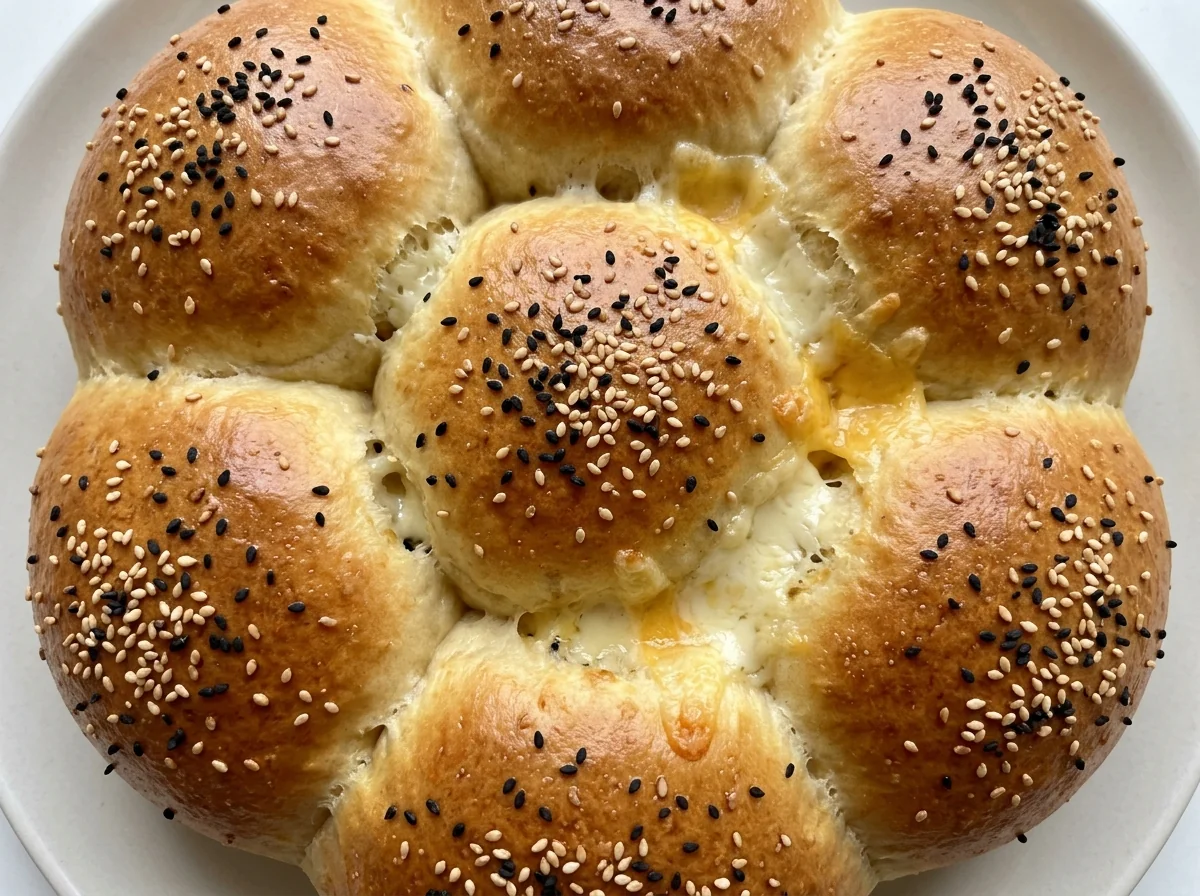
A flaky pastry cut into small rounds and stuffed with three kinds of cheese, then arranged side by side to take on the shape of a honeycomb. A visually striking dish for gatherings and entertaining.
The beehive is a beloved pastry in the Levantine kitchen.
It relies on arranging stuffed dough rounds next to each other to take on the shape of a honeycomb, then baking them until they bond together and form a single hive shape.
Preparation Steps
Roll and cut the dough into rounds
Dust the work surface with a little flour and roll out the dough to medium thickness. Cut the dough into equal rounds with a small round cutter or the rim of a cup, and cover them with a clean cloth so they do not dry out while you work.
Stuff the rounds with cheese
Divide the rounds into three groups by cheese type, and place a small spoon of Kiri cheese in the center of the first group, a small spoon of grated Nabulsi cheese in the second, and a small spoon of grated cheddar in the third. Fold the edges of each round over the filling and seal them tightly with your fingers, then roll each into a small ball.
Arrange the beehive in the pan
Brush a medium round oven pan with a small spoon of butter, and arrange the stuffed dough balls next to each other in a circular pattern from the outside inward. Leave small gaps between them because they will expand a little in the oven, and make sure the balls stick together to take on the honeycomb shape.
Brush the top and decorate with sesame and nigella seeds
Beat the egg in a small bowl and brush it over the entire surface of the beehive with a brush so it browns evenly. Sprinkle a quarter cup of sesame seeds with the nigella seeds over the surface for extra flavor and a visual touch.
Bake and serve the beehive
Place the pan in an oven preheated to 200°C for 20 to 25 minutes, or until the base and top of the beehive are golden. Remove from the oven and let it cool for 5 minutes before serving, so the filling sets inside.
Blood Sugar Impact
The glycemic index (GI) measures how quickly a food raises blood sugar, while the glycemic load (GL) measures how much a full serving raises it. Together they give the complete picture.
Glycemic Index
GI
67Medium
Low0–55Medium56–69High70+
A low value (≤55) means a gradual rise in blood sugar — the most suitable range for diabetes and insulin resistance.
Glycemic Load
GL
70High
Low0–10Medium11–19High20+
Glycemic load reflects the impact of the full serving. To lower it: take half a serving, or pair the recipe with a source of protein and fiber.
Nutritional Information
Per ServingMakes 5 servings · one serving is about 335 g of raw ingredients
Calories907 kcal45%of Daily Value*
Protein30 g60%of Daily Value*
Carbohydrates111 g40%of Daily Value*
Fat38 g49%of Daily Value*
Fiber6 g21%of Daily Value*
Sodium1433 mg62%of Daily Value*
* Percent Daily Values are based on a 2,000-calorie diet per FDA food-label reference values — your daily needs may be higher or lower. Values are derived from the recipe's ingredients via the USDA database.
Troubleshooting
The most common problems when preparing Multi-Cheese Beehive Bread, and how to fix them:
The balls do not stick to each other in the pan
Press them down with your fingers after arranging, and brush the sides of each ball with a little egg so they stick to their neighbors.
The cheese leaks out of the balls during baking
Make sure the edges are sealed well, and reduce the amount of filling so it does not overflow when closing.
Storage and Make-Ahead
Refrigerator (4°C)
Store the leftover beehive in an airtight container in the refrigerator for up to two days, and reheat it in the oven for five minutes to bring back the crunch.
Freezer (-18°C)
Store the stuffed balls before baking in freezer bags, and bake them straight from the freezer, adding five minutes to the baking time.
Tested Ingredient Substitutions
Original Ingredient
Tested Substitute
Ratio
Flavor Difference
Nabulsi cheese
Akawi cheese
1 to 1
Same texture and saltiness with a different local flavor
Cheddar cheese
Gruyère cheese
1 to 1
Same meltability with a more complex flavor
EEINA Nutrition Tip
For a deeper crunch, brush the top with egg twice with a light splash of milk, and bake until the surface turns a deep golden color.
Add This Recipe to Your Plan
The EEINA app saves your favorite recipes, calculates them from their real ingredients, and shows your daily numbers toward your goal. Try it free now.
Yes, mix half a kilo of flour with two spoons of butter, a quarter cup of warm water, and a spoon of yeast, and knead until cohesive. Let it rise for an hour before using.
How long does the beehive stay fresh?
It stays fresh for two days in the refrigerator, and it is best reheated in the oven before serving to bring back the crunch.
Sources: USDA · University of Sydney · Our methodology · Updated on