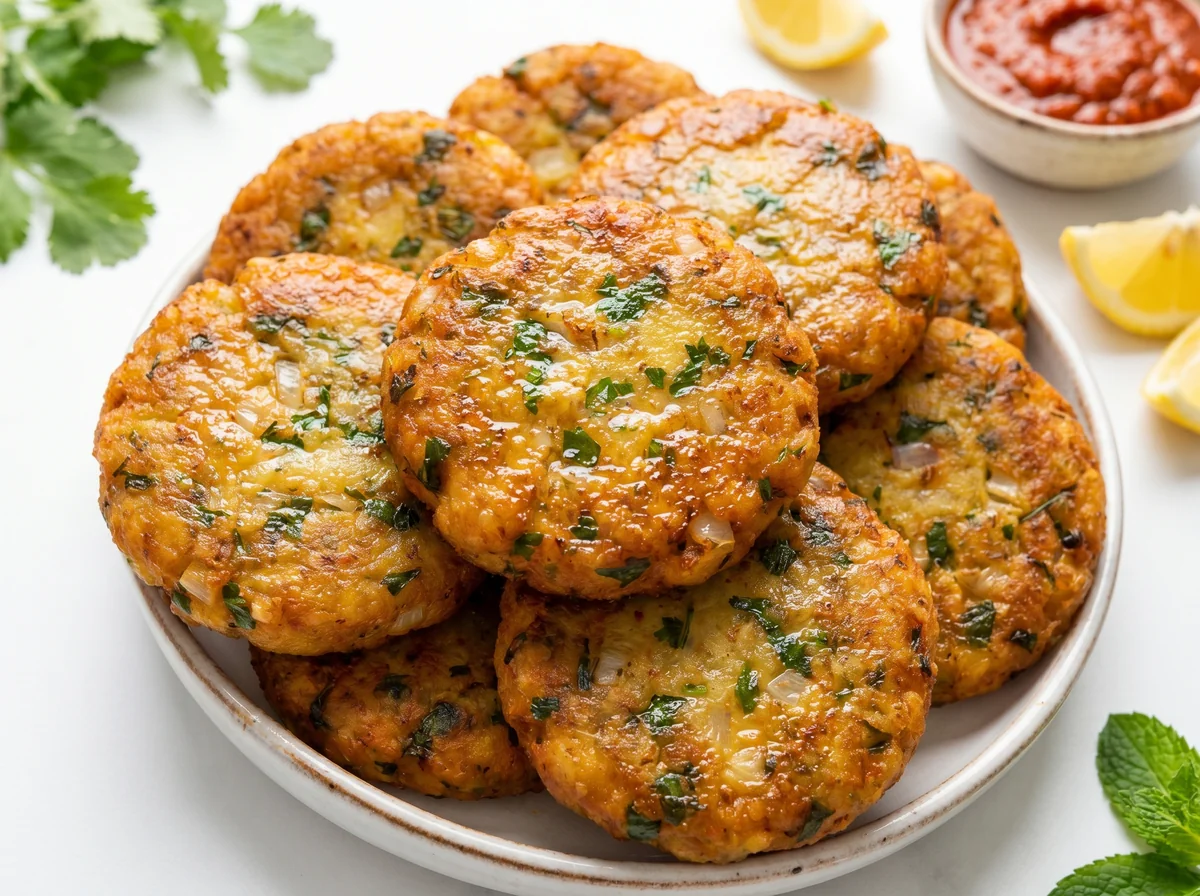
Golden Moroccan potato fritters seasoned with cumin, coriander, garlic and turmeric — crispy outside, soft inside; a popular street food and snack; high glycemic load; contains eggs.
Maakouda is one of the most iconic Moroccan street foods — spiced potato fritters that are a staple of Moroccan street markets (souks), cafés and homes. The name comes from the Arabic root meaning 'tied' or 'bound', referring to how the eggs bind the mashed potatoes.
They are sold by street vendors tucked into Moroccan bread (khobz) as a sandwich — the famous 'maakouda sandwich' — eaten on the go across Moroccan cities. Fragrant with cumin, coriander and garlic, golden and crispy outside, soft inside, maakouda is the taste of Moroccan street life.
Preparation Steps
Boil and mash the potatoes
Boil the potatoes until completely tender, drain well and mash until smooth with no lumps. Drain very well — excess moisture makes the fritters fall apart. Mash while still hot for a smoother texture.
Mix the filling
Add the eggs, garlic, cumin, coriander, turmeric, fresh parsley, coriander, salt and pepper to the mashed potatoes and mix until well combined. Taste and adjust the seasoning — the mixture should be well seasoned. If too soft to shape, refrigerate for fifteen minutes to firm up.
Shape
With lightly oiled or damp hands, shape the mixture into small patties (or balls, then flattened) of even size. Even sizing ensures even cooking. Handle gently — the mixture is soft.
Fry
Heat oil in a pan over medium heat and shallow-fry the maakouda fritters (or deep-fry if preferred) until golden and crisp on both sides, turning once, about three to four minutes per side. Medium heat is essential — too high and the outside burns before the inside warms through.
Drain
Remove the fritters with a slotted spoon and drain on kitchen paper to absorb excess oil. Serve hot — maakouda is best eaten fresh and crisp.
Serve
Serve maakouda hot as a snack or starter with harissa, yogurt dip or Moroccan chermoula sauce, or tucked into Moroccan bread as a sandwich (a popular Moroccan street food serving). A beloved Moroccan street food — crispy, golden potato fritters fragrant with spices, enjoyed at markets, cafés and homes throughout Morocco.
Blood Sugar Impact
The glycemic index (GI) measures how quickly a food raises blood sugar, while the glycemic load (GL) measures how much a full serving raises it. Together they give the complete picture.
Glycemic Index
GI
75High
Low0–55Medium56–69High70+
A low value (≤55) means a gradual rise in blood sugar — the most suitable range for diabetes and insulin resistance.
Glycemic Load
GL
20High
Low0–10Medium11–19High20+
Glycemic load reflects the impact of the full serving. To lower it: take half a serving, or pair the recipe with a source of protein and fiber.
Nutritional Information
Per ServingMakes 6 servings · one serving is about 140 g of raw ingredients
Calories151 kcal8%of Daily Value*
Protein5 g10%of Daily Value*
Carbohydrates29 g11%of Daily Value*
Fat2 g3%of Daily Value*
Fiber2 g7%of Daily Value*
Sodium76 mg3%of Daily Value*
Potassium473 mg10%of Daily Value*
Phosphorus97 mg8%of Daily Value*
* Percent Daily Values are based on a 2,000-calorie diet per FDA food-label reference values — your daily needs may be higher or lower. Values are derived from the recipe's ingredients via the USDA database.
Troubleshooting
The most common problems when preparing Moroccan Maakouda (Spiced Potato Fritters), and how to fix them:
Fritters fell apart in the oil
Mixture too wet, not enough egg, or oil not hot enough. Drain the potatoes very well, refrigerate the mixture before shaping if it is too soft, and heat the oil well before frying. The egg binds the mixture — make sure it is fully incorporated.
Outside burned and inside cold
Oil too hot. Fry over medium heat (not high) so the outside crisps gradually while the inside warms through. Make sure the fritters are not too thick — about 1.5 cm is ideal.
Greasy
Oil not hot enough when added, or not drained well. Hot oil (not smoking) creates a quick crust that seals and prevents oil absorption. Drain on kitchen paper immediately after frying.
Bland flavour
Not enough spicing. Maakouda needs generous garlic, cumin, coriander and fresh herbs — the potatoes absorb a lot. Season well and taste the raw mixture before shaping.
Lumpy texture
Potatoes not mashed smooth enough. Mash very well (or pass through a ricer) while hot — cold lumpy potato gives a rough texture. A smooth, even mash makes a better fritter.
Storage and Make-Ahead
Fridge (4°C)
Cooked maakouda keeps in a sealed container in the fridge for two to three days. Reheat in the oven or air fryer to restore crispiness — do not reheat in the microwave (goes soggy).
Raw mixture
The shaped raw fritters (uncooked) keep in the fridge for a day, or freeze for one month. Fry straight from frozen, adding an extra minute or two — fresh-fried is always best.
Freezer (cooked)
Cooked maakouda freezes for up to one month. Reheat from frozen in the oven at 190°C until hot and crisp. Practical for making a big batch and reheating as needed.
Food safety
Cook the fritters until fully heated through (the eggs inside must be cooked). Do not leave cooked maakouda out of the fridge for more than two hours.
Tested Ingredient Substitutions
Original Ingredient
Tested Substitute
Ratio
Flavor Difference
Frying in oil
Baking or air-frying
200°C · 20 min
Significantly reduces fat and calories; brush lightly with oil before baking for a golden colour
Potatoes
Sweet potatoes
Same weight
Sweet potato adds fibre, beta-carotene and a slightly lower glycemic index; a nutritious variation
Eggs
Flax egg (1 tbsp ground flax + 3 tbsp water)
1 flax egg = 1 egg
Vegan option for binding; the texture is slightly different but works for shallow frying
How Much Does It Make? Scaling Guide
Discs
Potatoes
Eggs
3 (half recipe)
2.5 potatoes
1/2 egg
6 (base)
5 potatoes
1 egg
12 (gathering)
10 potatoes
2 eggs
EEINA Nutrition Tip
Maakouda is made from potatoes (a high glycemic index starch when mashed and fried), so the glycemic load per serving is high. For those managing blood sugar: eat a small portion alongside a protein (egg, chicken, yogurt) and plenty of vegetables to slow sugar absorption. Baking instead of frying significantly reduces the fat and calories. The spices (cumin, turmeric, coriander) add anti-inflammatory benefits. Enjoy as an occasional treat in a balanced meal, not as a main starch.
Add This Recipe to Your Plan
The EEINA app saves your favorite recipes, calculates them from their real ingredients, and shows your daily numbers toward your goal. Try it free now.
Spiced potato fritters — mashed potatoes bound with eggs and seasoned with cumin, coriander, garlic, turmeric and fresh herbs, then shaped and fried until golden. A famous Moroccan street food, served as a snack or tucked into bread as a sandwich.
Are maakouda naturally gluten-free?
Yes — the basic recipe is naturally gluten-free (no flour). Check the oil and any dips for gluten. They are suitable for people with gluten intolerance.
Can I bake instead of fry?
Yes — place on a lined baking sheet, brush lightly with oil and bake at 200°C for about twenty minutes, turning once, until golden. Significantly less fat; the texture is slightly less crisp but still delicious.
Why did they fall apart?
Either the potatoes were too wet, there was not enough egg, or the oil was not hot enough. Drain potatoes very well, ensure the egg is fully mixed in, chill the mixture if it is too soft, and heat the oil properly before frying.