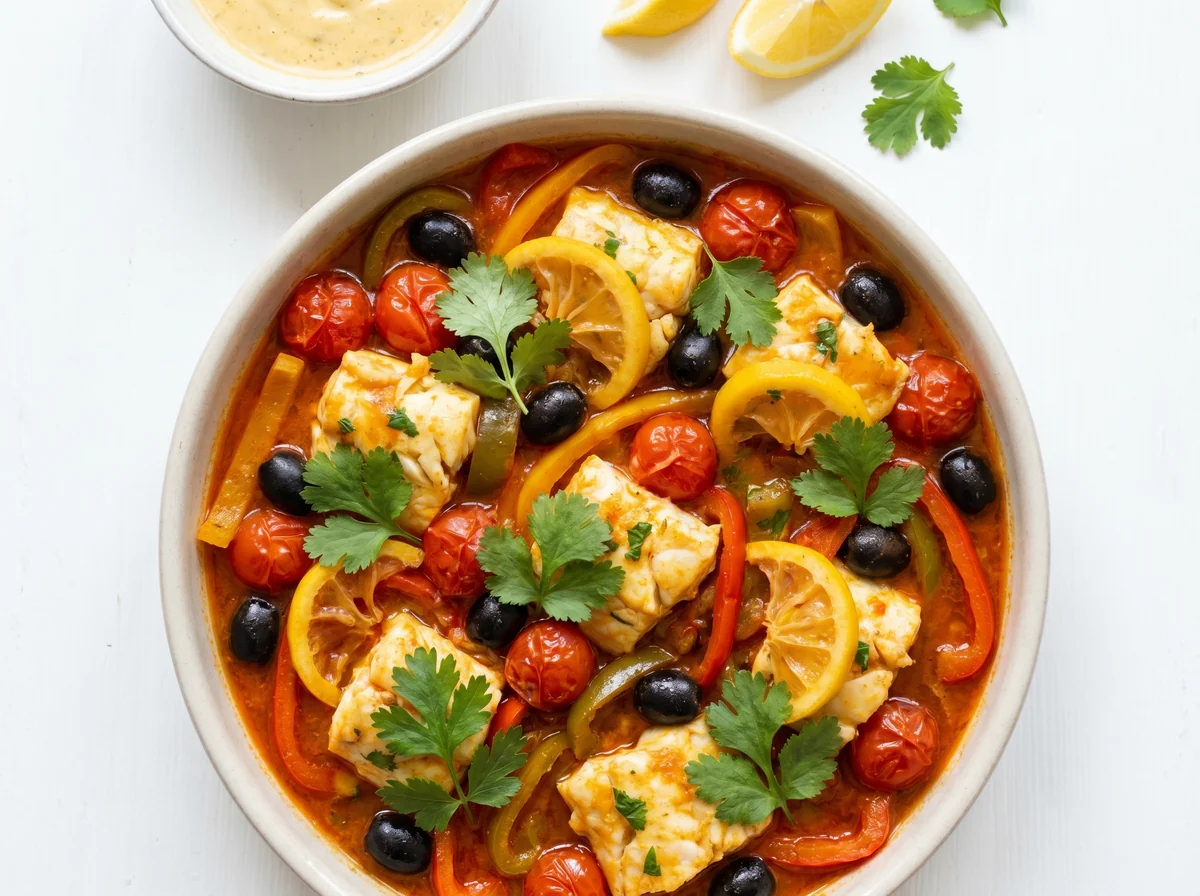
A Moroccan seafood tagine — fish marinated in chermoula cooked with potatoes, tomatoes, peppers and olives in a tagine, rich in protein and omega-3, low glycemic load; contains fish.
Moroccan fish tagine is a distinguished seafood dish from Morocco's coastal cities (Essaouira, Casablanca and Safi). The tagine (the conical clay vessel) cooks slowly by steam, and chermoula (a sauce of coriander, garlic, spices and lemon) marinates the fish and defines its flavour.
The fish is arranged with potatoes, tomatoes, peppers, olives and preserved lemon in beautiful layers and cooked gently. It reflects the richness of the Moroccan coast in seafood and the Moroccan kitchen's mastery in balancing spices and acidity — a celebratory, healthy dish served in its vessel.
Preparation Steps
Make the chermoula
Mix the chopped coriander and parsley with crushed garlic, cumin, paprika, turmeric, lemon juice, olive oil and salt to form the fragrant green chermoula sauce. Chermoula is the soul of the Moroccan tagine and its distinctive flavour.
Marinate the fish
Coat the fish pieces with half the chermoula, rub it in well, and leave to marinate for half an hour in the fridge (or longer). Marinating gives the fish deep flavour and neutralises any fishiness — chermoula and lemon are essential.
Layer the tagine
In the base of the tagine (or a wide pot), layer the sliced onion then the potatoes (they go on the bottom to cook through), and season with salt and a little chermoula. The potatoes go on the bottom because they need the longest cooking time and protect the fish from sticking.
Add the fish and vegetables
Place the marinated fish over the potatoes, then distribute the sliced tomatoes, bell pepper, olives and preserved lemon slices over the top, and pour over the remaining chermoula and a little water. The beautiful arrangement is part of a Moroccan tagine's presentation.
Slow cook
Cover the tagine and cook over low heat until the potatoes are tender, the fish is cooked through and everything has absorbed the flavour, about thirty to forty minutes. Gentle covered cooking steams everything and keeps the fish tender without it falling apart. Do not stir too often.
Serve
Serve the tagine hot directly in its vessel (to keep the heat and presentation), with Moroccan bread for dipping in the sauce. A distinguished Moroccan coastal seafood dish (from Essaouira and Casablanca) where the fish harmonises with the fragrant chermoula, vegetables, olives and preserved lemon — a celebration of Morocco's ocean bounty.
Blood Sugar Impact
The glycemic index (GI) measures how quickly a food raises blood sugar, while the glycemic load (GL) measures how much a full serving raises it. Together they give the complete picture.
Glycemic Index
GI
65Medium
Low0–55Medium56–69High70+
A low value (≤55) means a gradual rise in blood sugar — the most suitable range for diabetes and insulin resistance.
Glycemic Load
GL
9Low
Low0–10Medium11–19High20+
Glycemic load reflects the impact of the full serving. To lower it: take half a serving, or pair the recipe with a source of protein and fiber.
Nutritional Information
Per ServingMakes 4 servings · one serving is about 315 g of raw ingredients
Calories222 kcal11%of Daily Value*
Protein30 g60%of Daily Value*
Carbohydrates17 g6%of Daily Value*
Fat3 g4%of Daily Value*
Fiber3 g11%of Daily Value*
Sodium196 mg9%of Daily Value*
Potassium1215 mg26%of Daily Value*
Phosphorus308 mg25%of Daily Value*
* Percent Daily Values are based on a 2,000-calorie diet per FDA food-label reference values — your daily needs may be higher or lower. Values are derived from the recipe's ingredients via the USDA database.
Troubleshooting
The most common problems when preparing Moroccan Fish Tagine with Chermoula, and how to fix them:
Fish fell apart
Stirred too much or overcooked. Do not stir the tagine (it cooks in layers without tossing); cook the fish only until it flakes. Place the fish over the potatoes, not directly on the base, so it does not stick and fall apart.
Potatoes not done but fish is ready
Potatoes in the wrong position. Arrange the potatoes in the base (they cook first and protect the fish); slice them thinly as they need more time than the fish. The fish goes on top since it cooks quickly.
Tagine dry or stuck
Not enough liquid. Add a little water or vegetable broth to the base — the tagine cooks by steam. Potatoes in the base plus a little water prevent sticking and drying out.
Chermoula bland
Not enough herbs or acid. Use more coriander, garlic, cumin and paprika, and add lemon juice for the distinctive acidity. Fresh, generous chermoula is the tagine's flavour.
Strong fishy smell
Not marinated, or fish not fresh. Marinate the fish in chermoula and lemon for half an hour before cooking (they clean the smell), and use fresh fish. Preserved lemon and coriander also freshen the dish.
Storage and Make-Ahead
Fridge (4°C)
Fish tagine keeps in a sealed container in the fridge for one to two days (cooked fish does not keep long). Reheat gently over low heat or in the oven without stirring so the fish does not fall apart.
Freezer
Not recommended for freezing the whole tagine (fish and potato change texture). The chermoula can be frozen for weeks and the tagine prepared fresh — this preserves quality best.
Meal prep
Prepare the chermoula ahead and refrigerate or freeze it; marinate the fish and arrange the tagine at cooking time. Ready-made chermoula cuts most of the work, and the fish stays fresh.
Food safety
Cook the fish until fully done (63°C per safety guidelines; it turns white and flakes), use fresh fish, and do not leave the tagine out of the fridge for more than two hours.
Tested Ingredient Substitutions
Original Ingredient
Tested Substitute
Ratio
Flavor Difference
Fish
Any firm fish (grouper, cod, salmon, sea bream)
Same weight
Choose a firm fish that holds together; salmon adds more omega-3; locally caught fresh fish is best
Potatoes
Sweet potato or sliced carrots
Same quantity
Sweet potato and carrots increase fibre and antioxidants with a similar or lower glycemic load
Olives and preserved lemon
Reduce them (to lower sodium)
As desired
Lowers salt; fresh lemon juice gives the acidity instead of the preserved version for those watching blood pressure
How Much Does It Make? Scaling Guide
Servings
Fish
Potatoes
Chermoula
2 (half recipe)
300 g
1 potato
half amount
4 (base)
600 g
2 potatoes
full amount
8 (gathering)
1200 g
4 potatoes
double
EEINA Nutrition Tip
Moroccan fish tagine is one of the healthiest main dishes: fish is a lean protein rich in omega-3 beneficial for the heart; the abundant vegetables provide fibre and vitamins; chermoula (coriander, garlic, turmeric) is rich in antioxidants; olive oil is a healthy fat; and its glycemic load is low. Its only challenge is the sodium from the olives and preserved lemon, so control the salt. A perfectly balanced dish for heart health and weight management.
Add This Recipe to Your Plan
The EEINA app saves your favorite recipes, calculates them from their real ingredients, and shows your daily numbers toward your goal. Try it free now.
A Moroccan sauce made from coriander, parsley, garlic, cumin, paprika, turmeric, lemon juice and olive oil. It is used to marinate fish and meat and is a fundamental flavour in Moroccan cooking, giving the tagine its fragrant, distinctive character and gentle acidity.
Do I need a clay tagine vessel?
Not necessarily — the conical clay tagine gives a distinctive slow steam-cooking effect, but you can use a wide, shallow pot with a tight-fitting lid using the same layering method and gentle heat. The result is very close.
Is fish tagine healthy?
Yes, one of the healthiest dishes: fish is lean protein and omega-3 for the heart; vegetables provide fibre and vitamins; chermoula is rich in antioxidants; olive oil is a healthy fat; and its glycemic load is low. The only challenge is sodium from the olives and preserved lemon, so control the salt. Ideal for heart health and weight management.
Why do the potatoes go on the bottom?
Because they need the longest cooking time — placing them on the bottom closest to the heat ensures they cook through. They also protect the delicate fish from sticking to the base and burning, and they absorb the flavour. The fish cooks quickly and therefore goes on top.