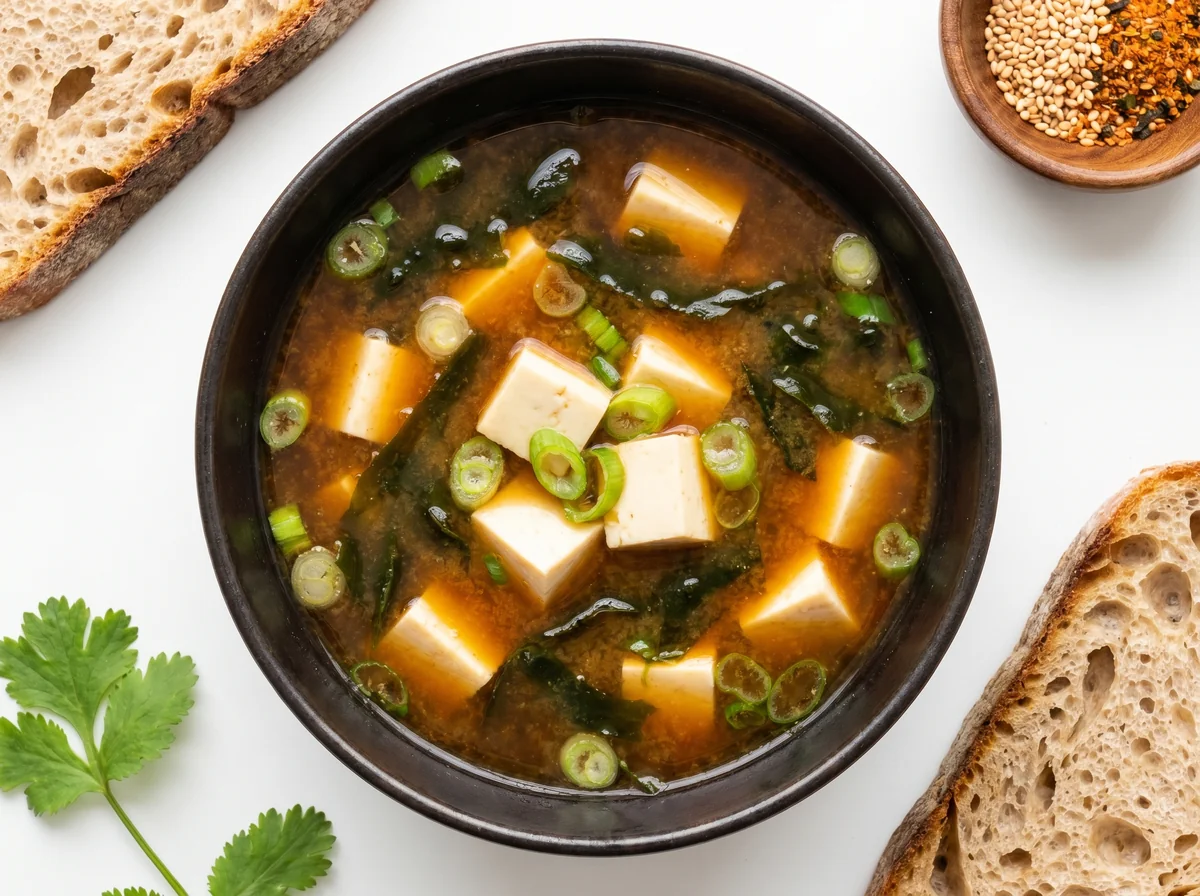
A warm broth with miso paste, tofu, egg, and spring onion — a light Japanese soup low in calories and carbohydrates that works beautifully as a first course.
Miso soup is a cornerstone of the Japanese table: a warm broth brought to life with fermented soybean paste and tofu.
Very light and low in calories yet rich in plant-based protein, it is served as the start of a meal or alongside rice.
Preparation Steps
Prepare the broth
Heat the water with the broth and dashi powder until warm but not vigorously boiling. Add the sea vegetables if using, and let them rehydrate. Dashi provides the characteristic depth of umami flavour.
Dissolve the miso
Ladle a little hot broth into a small bowl and dissolve the miso paste in it until smooth, then return it to the pot. Dissolving it separately prevents clumping in the soup.
Add the tofu
Gently add the silken tofu cubes so they do not break apart, and let them warm through. Tofu boosts the plant-based protein content.
Add the egg
Pour the beaten egg in slowly while stirring gently, so it forms delicate ribbons in the broth. Gentle stirring creates those beautiful egg threads.
Serve
Remove the pot from the heat before boiling so the miso retains its flavour. Garnish the soup with spring onion and serve hot. A light, soothing Japanese soup.
Blood Sugar Impact
The glycemic index (GI) measures how quickly a food raises blood sugar, while the glycemic load (GL) measures how much a full serving raises it. Together they give the complete picture.
Glycemic Index
GI
19Low
Low0–55Medium56–69High70+
A low value (≤55) means a gradual rise in blood sugar — the most suitable range for diabetes and insulin resistance.
Glycemic Load
GL
2Low
Low0–10Medium11–19High20+
Glycemic load reflects the impact of the full serving. To lower it: take half a serving, or pair the recipe with a source of protein and fiber.
Nutritional Information
Per ServingMakes 4 servings · one serving is about 645 g of raw ingredients
Calories163 kcal8%of Daily Value*
Protein14 g28%of Daily Value*
Carbohydrates9 g3%of Daily Value*
Fat9 g12%of Daily Value*
Fiber1 g4%of Daily Value*
Sodium835 mg36%of Daily Value*
* Percent Daily Values are based on a 2,000-calorie diet per FDA food-label reference values — your daily needs may be higher or lower. Values are derived from the recipe's ingredients via the USDA database.
Troubleshooting
The most common problems when preparing Japanese Miso Soup, and how to fix them:
Stuck to the pan
Too little oil or a cold pan. Heat the pan and add enough oil before the ingredients, and do not crowd the pan.
Vegetables wilted and watery
Heat too low or cooked too long. Stir over high heat for a short time to keep the vegetables crisp and bright.
Flavour lacks depth
Not enough salt or seasoning. Season generously and taste, then add a fresh herb or a squeeze of lemon to lift all the flavours.
Storage and Make-Ahead
Refrigerator (4°C)
Three days in an airtight container after cooling. Reheat thoroughly before serving.
Freezer (-18°C)
One to two months in individual portions. Thaw in the refrigerator before reheating.
Meal prep
Prep and chop the ingredients in advance and refrigerate; assembly and cooking takes only minutes at serving time.
Reheating
Over low heat with a splash of water, or in a moderate oven until hot. Do not leave cooked food out of the refrigerator for more than two hours [2].
Tested Ingredient Substitutions
Original Ingredient
Tested Substitute
Ratio
Flavor Difference
Chicken
Turkey or firm tofu
same weight
A lighter or plant-based alternative
Oil/fat
Extra-virgin olive oil
same quantity
Monounsaturated fats better for the heart
Salt
Herbs, spices, and lemon juice
to taste
Reduces sodium while delivering plenty of flavour
How Much Does It Make? Scaling Guide
Servings
Ratio
2 (single × 2)
half the amounts
4 (base)
amounts as written
6 (family)
1.5x amounts
8 (hosting)
double the amounts
EEINA Nutrition Tip
Do not boil the miso or it will lose its flavour and beneficial bacteria. Dissolve it separately to prevent clumping. Miso is high in sodium so use it in moderation, and tofu adds plant protein with very few calories.
Add This Recipe to Your Plan
The EEINA app saves your favorite recipes, calculates them from their real ingredients, and shows your daily numbers toward your goal. Try it free now.
Yes — the glycaemic index is low and the protein and fibre slow sugar absorption. Stick to a moderate portion and serve alongside vegetables or a salad, avoiding too many white starches at the same meal.
How do I store leftovers?
In an airtight container in the refrigerator for a few days, or freeze in portions for later (excluding salads and seafood dishes which have a shorter shelf life). Reheat thoroughly once.
Can I adapt it to my diet?
Yes — see the substitutions table: swap the protein, make it dairy-free or gluten-free, or reduce the salt and fat without losing flavour.
Sources: USDA · University of Sydney · Gulf GSO · Our methodology · Updated on